
Inquiry Basket
 Loading ......
When we think of the nervous system, we often think of neurons, the cells that allow us to think, feel, and move. But there is another type of cell that is just as crucial for the proper functioning of the nervous system: glial cells. Glial cells, also known as neuroglia, are non-neuronal cells that provide support and protection for neurons. Glial cells have the following main functions:
Multiple studies have shown that glial cells play an active role in many central homeostatic processes during development. There are four main types of glial cells: astrocytes, oligodendrocytes, ependymal cells, and microglia. These cells are not just passive support cells, but active participants in the regulation of neuronal function and communication. Each type of glial cell has a unique function and contributes to the overall health and proper functioning of the nervous system.
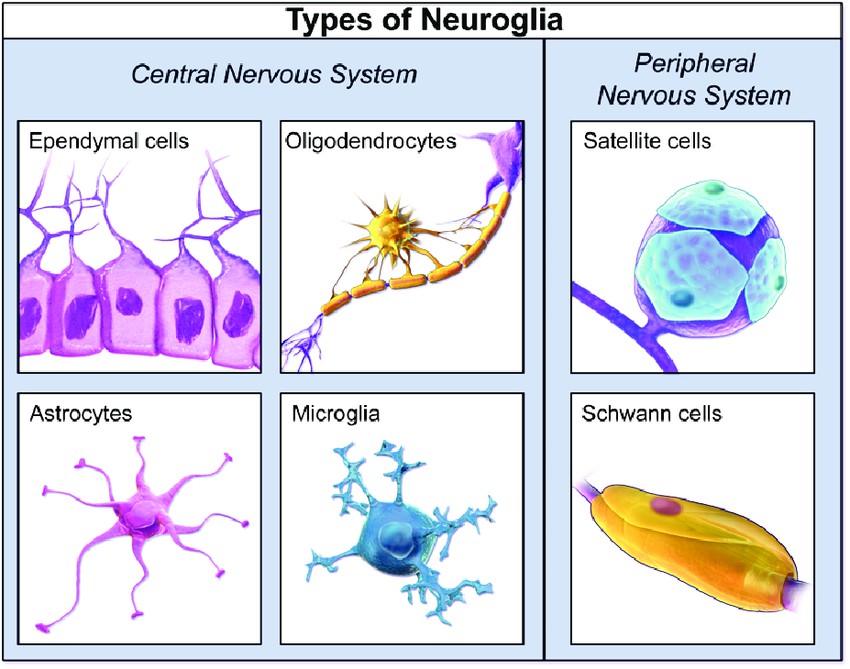 Fig. 1 There are various types of glial cells, also known as neuroglia, which support the nervous system.
(Qin J, et al., 2020)
Astrocytes, the most widespread type of cell in the mammalian brain, are also the largest of the glial cells. Astrocytes have many protrusions that stretch and fill between the cytosol and protrusions of nerve cells, supporting and separating them. These cells perform a variety of functions in health and disease.
Astrocytes regulate glutamate and ion homeostasis, cholesterol and sphingolipid metabolism, and respond to environmental factors, all of which have been implicated in neurological disorders. Astrocytes also exhibit significant heterogeneity, with developmental programs and stimulus-specific cellular responses regulating astrocyte location in the CNS and cell-cell interactions. These cells are involved in key processes related to CNS homeostasis, including neurotransmitter recycling, ion homeostasis, energy metabolism, regulation of synaptogenesis and synaptic transmission, and maintenance of the blood-brain barrier.
Oligodendrocytes are responsible for producing myelin, which is a fatty substance that wraps around the axons and facilitates electrical impulse conduction. Myelin is critical for the proper functioning of the nervous system, and damage to myelin can lead to a range of neurological disorders, including multiple sclerosis.
Oligodendrocytes also play a role in ion homeostasis regulation in the nervous system. They are involved in the uptake and recycling of neurotransmitters, which maintain proper neurotransmitter levels in the brain.
Microglia are widely distributed throughout the brain and spinal cord, accounting for 5-20% of all glial cell populations in the CNS. The normal number and function of microglia are critical for maintaining nervous system homeostasis. Microglia, with multi-synapse and plasticity characteristics, are inherent immune effector cells in the CNS and play an extremely significant role in the physiological processes of the CNS.
Microglia are involved in the development of a range of neurodegenerative diseases, and microglia activation and neuroinflammation are the main features of neuropathology. It mediates the endogenous immune response to CNS injury and disease, resulting in a neuroprotective or neurotoxic effect. In acute neurodegenerative diseases (e.g., stroke, cerebral hypoxia, traumatic brain injury), microglial cells release inflammatory mediators, mainly cytokines and chemokines. These acute inflammation responses are usually beneficial for neuronal cell survival, allowing secondary damage in the brain to be reduced and damaged tissue to be repaired. Microglia-mediated chronic inflammation is involved in the pathology of several chronic neurodegenerative diseases, such as Alzheimer's disease, Parkinson's disease, Huntington's chorea, and amyotrophic lateral sclerosis. During chronic inflammation, microglia are activated over a long time course, followed by the sustained release of a series of inflammatory mediators that lead to oxidative stress.
The ventricular canal is a membrane of cells that surrounds the brain and spinal cord ventricles. It is usually made up of ventricular canal cells that have hair-like projections called cilia that help cerebrospinal fluid (CSF) flow through the spinal column and brain. The ventricular canal membrane also contains cells referred to as tanycytes, which are usually connected to nerve cells that help move various molecules in and out of the brain. These cells can control the function of the pituitary gland and influence the synthesis of nitric oxide, which controls neural activity and blood flow. Structures on the membrane called microvilli can absorb CSF.
CSF flows in a certain direction in the brain to help bring nutrients into the brain and remove harmful metabolites. During early development, ependymal cells are believed to serve as an axonal guidance system.
Given the critical role of glial cells in the nervous system, there is growing interest in the development of glial cell-based therapies for neurological disorders. For example, stem cell-based therapies that target oligodendrocyte progenitor cells have shown promise in multiple sclerosis treatment.
Astrocyte-based therapies are also being explored for neurological disorders. These strategies include pharmacological approaches based on astrocyte enrichment targets, using drugs or genetic means to target pathways in astrocytes, targeting transcription factors to modify the expression of specific genes or proteins in astrocytes, transplanting healthy astrocytes into areas affected by neurodegeneration or converting astrocytes into neurons to replace damaged cells.
In addition, microglia gene therapy, replacement therapy, and transdifferentiation therapy are potential directions for the future treatment of neurological injury and neurodegenerative diseases. The combined application of multi-omics and multi-technology and the progress of multidisciplinary research will be the key to the field of microglia research.
Creative Diagnostics offers a range of research tools and reagents to study glial cell function. Our products include antibodies, proteins, and assays specifically designed for the study of astrocytes, oligodendrocytes, and microglia. These tools can help researchers gain a better understanding of the functions of glial cells in the nervous system, as well as develop new therapies for neurological disorders.
References
Loading ......
