
Inquiry Basket
 Loading ......
The peptide immunogen phage display platform operates to generate monoclonal antibodies that target peptide immunogens effectively. The peptide immunogen phage display platform outperforms traditional peptide binding methods by delivering native-like antigens which are abundant in copy number and produce stronger antibody responses thus positioning it as the leading choice for monoclonal antibody production against peptide immunogens. Creative Diagnostics offers specialized peptide immunogen phage display platforms designed for monoclonal antibody development against peptide immunogens. Our unmatched phage display technology expertise enables us to deliver efficient production with consistent batch quality and scalable methods for diverse scientific research requirements.

Biacore T200

Agilent 1260 Infinity II

BD FACSCanto II
As a reliable leader in the field of antibody manufacturing, Creative Diagnostics provides customized solutions for customers with decades of experience. Its professional technical capabilities cover the entire chain of antibody and antigen production, phage display technology, innovative diagnostic component development, and key detection reagent research and development, and continue to provide solid technical support for the industry. We provide:
To support the diverse demands of scientists and product developers, Creative Diagnostics delivers specialized antibody development solutions utilizing its Peptide Immunogen Phage Display Platform. Leveraging cutting-edge techniques and innovative approaches, we ensure reliable, accurate, and efficient antibody generation. Our services include:
Target sequence analysis: determine the functional region or antigenic epitope in the target protein, and use bioinformatics tools to predict linear B cell epitopes (such as IEDB).
Synthetic antigen peptide: synthesize linear peptides of 15-25 amino acids in length, and add linkers/modifications (such as Cys at the C-terminus for coupling). It can then be coupled with a carrier protein (such as KLH) to enhance immunogenicity.
Immunization animal selection: generally mice, rabbits or rats are selected.
Immunization scheme design: primary immunization + multiple booster immunizations (such as days 0, 14, 28, and 42). Each injection contains antigen peptide-KLH and adjuvants (such as CFA, IFA).
Antibody titer detection: ELISA is used to monitor the antibody titer against antigen peptides in the serum of immunized animals.
B cell isolation and RNA extraction: spleen or bone marrow of immunized animals are taken. Total RNA is extracted for subsequent construction of antibody libraries.
Variable region amplification: RT-PCR is used to amplify the antibody heavy chain VH and light chain VL genes.
Construction of antibody fragment format: generally scFv (VH-linker-VL) or Fab fragment.
Cloning into phage vector: commonly used M13 phage system (such as pComb3X, pDisplay, etc.).
Transformation of E. coli and packaging of phage: obtain antibody display library with high complexity (above 10^8 level).
Monoclonal screening: Pick positive clones from the screened phages. Use ELISA to detect its binding ability to peptide antigens.
DNA sequencing: Sequence the VH/VL fragments of positive clones. Identify unique antibody sequences and confirm antibody diversity.
Construct expression vector: Insert the selected scFv or VH/VL sequence into a mammalian expression vector (such as an IgG expression vector).
Transient or stable expression: Express full-length IgG antibodies in HEK293 or CHO cells.
Purification: Purify antibodies using Protein A/G affinity chromatography or other chromatography methods.
Affinity detection: Validation using methods such as ELISA, SPR (Biacore), BLI (Octet), etc.
Specificity validation: Western blot, IHC, IF, etc. using native proteins or cells.
Neutralization experiment (if applicable): Evaluate antibody functionality.
Expand the production of antibodies with high affinity as screened above.
Basic information communication: display framework selection, target antigen information, antibody application range, immunized animal selection, etc.
Screen high-affinity antibody fragments through phage library and synthesize complete antibodies
Performance testing and parameter fine-tuning in customer analysis
Expanded production of determined antibodies according to customer needs
Provide quality control certificates, stability reports and comprehensive technical support

Creative Diagnostics uses phage library display technology to enrich and screen high-affinity antibody fragments. The screening results are shown in the figure. After two rounds of screening, the number of phages was enriched by 100-1000 times, indicating that the screening was successful.

Creative Diagnostics uses ELISA to measure different positive clones screened by phage display technology, and can demonstrate the significant binding specificity of these clones by comparing them with controls.
The peptide immunogen phage display platform is designed to efficiently produce monoclonal antibodies against peptide immunogens. It provides antigens closer to the native structure, in high copy, and can enhance the antibody response compared to traditional peptide - binding methods.
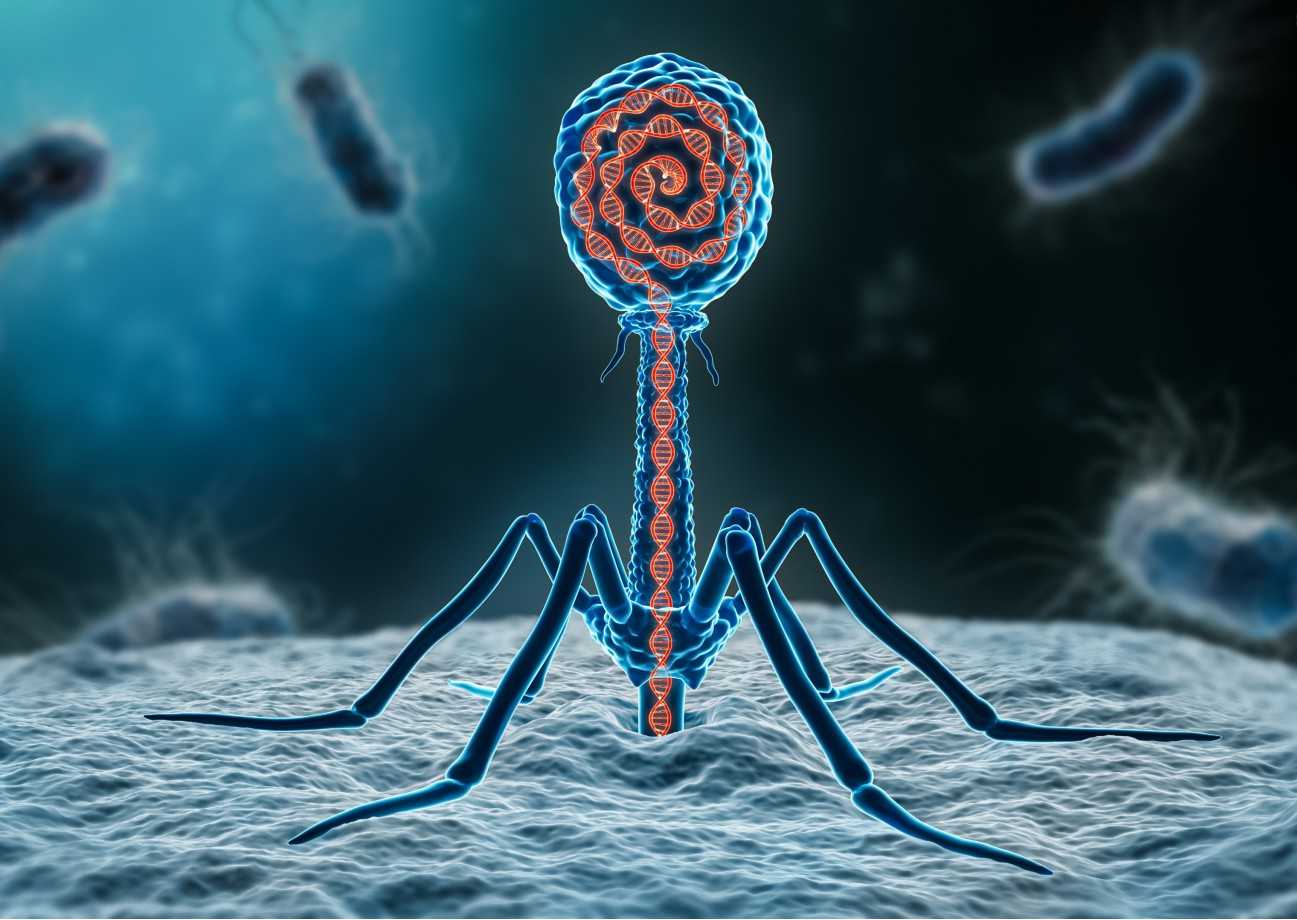
The basic principle is to insert the DNA sequence encoding the exogenous polypeptide into the phage coat - protein structural gene via genetic engineering. The exogenous polypeptide fuses with the phage coat protein and is displayed on the phage surface. A phage display library is constructed by inserting numerous exogenous genes into the phage genome. Through affinity screening, elution, and amplification, phages with high affinity and specificity to the target molecule are selected to obtain the gene sequence of the target protein or polypeptide.
Vaccine development: Screen immunogenic peptide fragments and simulate antigenic epitopes.
Antibody screening: Screen antibodies or antibody fragments that bind to specific antigens.
Drug discovery: Screen bioactive peptides targeting membrane receptors, enzymes, etc.
Protein interaction research: Study protein - protein and protein - ligand interactions.
Epitope mapping: Identify and locate antigenic epitopes.
Targeted therapy: Screen peptides with tissue - homing ability for cancer treatment.
Diagnostic reagent development: Screen high - affinity ligands for diagnostic reagents.
Large antibody library capacity: Reaches 10^9 - 10^11 level, covering various antibody types.
Rapid screening: "Adsorption-elution-amplification" method can increase specific clone enrichment efficiency by 10^3 - 10^6 times after 3 - 5 rounds.
Cost-effective: Offers rapid and low - cost antibody development services.
High-copy single phage display: Has more than 200 peptide copies.
Diverse construction solutions: Supports linear/cyclic peptides, single - chain antibodies, bispecific antibodies, etc., with a fragment insertion rate > 90%.
Fully human antibody screening: Can directly screen fully human antibodies to avoid anti-mouse antibody reactions.
High-affinity ligand screening: For weakly immunogenic targets like toxin epitopes and membrane proteins.
For high affinity antibody development using our Peptide Immunogen Phage Display Platform, please contact your expert antibody manufacturer, Creative Diagnostics. From research-grade tools to industrial-scale antibody production, our team is ready to support your R&D innovation.
Loading ......
