
Inquiry Basket
 Loading ......
Advances in mRNA technology have opened new avenues for antigen delivery in antibody generation. At Creative Diagnostics, our mRNA immunization-based antibody production service combines molecular engineering, lipid nanoparticle (LNP) formulation, and in vivo immunization to offer a reliable alternative to conventional protein/peptide-based immunization. This platform is especially valuable when working with difficult-to-express, conformational, or membrane-associated antigens.
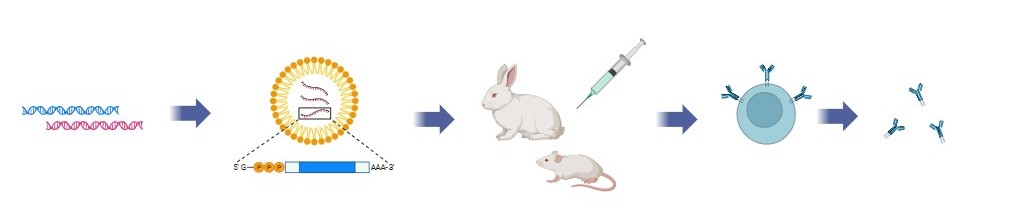 Figure 1. LNP-mRNA-based antibody production platform
Traditional antibody generation relies on recombinant protein immunization, which often requires time-consuming protein expression, purification, and quality control. Some antigens are structurally complex and difficult to present in their native conformations. mRNA immunization bypasses these challenges by allowing host cells to synthesize the antigen in vivo, resulting in more physiologically relevant antigen presentation. Synthetic mRNA is designed to encode the target antigen, and delivered into animals using LNPs. Once inside host cells, the mRNA is translated into protein, triggering both humoral and cellular immune responses.
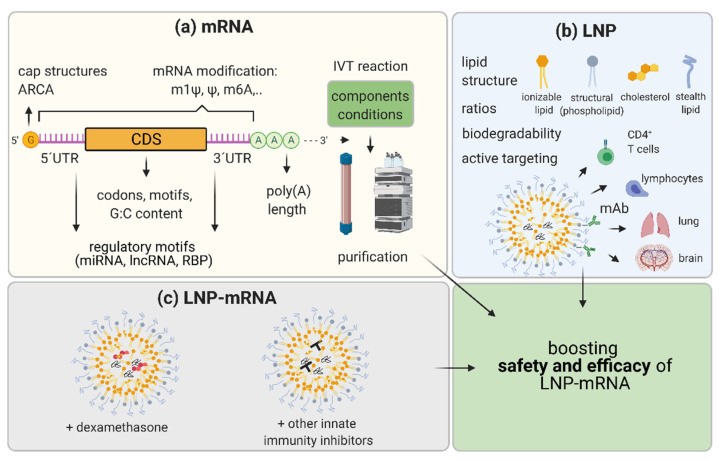 Figure 2. Strategies to boost efficacy and safety of LNP-mRNA.
(Vlatkovic I. Biomedicines. 2021)
Preserving natural structure and post-translational modifications.
Quicker than protein production, enabling earlier immunization and antibody collection.
Easy to update antigen sequences to match variants or new targets without re-optimizing the whole system.
Suitable for membrane proteins, viral antigens, and other proteins that are hard to express or purify.
| Service | Content | Timeline |
|---|---|---|
| Antigen Preparation |
| 4-6 months |
| Animal Immunization |
| |
| Serum Detection |
| |
| Antibody Screening |
| |
| Production and Purification |
| |
| Validation |
|
Experienced Team – Expertise in mRNA design, nanoparticle formulation, and immunology
Customizable Options – From sequence synthesis to monoclonal or polyclonal antibody delivery
Transparent Communication – Scientific rationale and experimental planning shared at every step
Strict Quality Control – All procedures are conducted under strict quality control
Loading ......
