


Inquiry Basket
 Loading ......
Chemiluminescence immunoassay (CLIA) represents an advanced analytical approach that combines immune reactions with chemiluminescent detection techniques to identify biological markers. This technique depends on the antigen-antibody interaction which triggers light emission via chemical contact with luminescent compounds. Luminol derivatives and acridinium esters together with enzyme-driven systems such as alkaline phosphatase (ALP) and horseradish peroxidase (HRP) serve as standard labels in this procedure. Appropriate substrates cause these elements to release measurable light which enables sensitive and precise target substance detection.
This technology is widely used in fields including clinical diagnosis, environmental monitoring, pharmaceutical analysis, and food safety. As a promising approach for selective, sensitive, rapid and simple analysis. CLIA offers the benefits of high CL sensitivity and immunoreaction specificity. Creative Diagnostics is a leading service provider that focuses on immunoassay services. With our well-established chemiluminescent immunoassays (CLIA) platform, the experienced scientists here are dedicated to providing CLIA-based services to meet your specific demands.
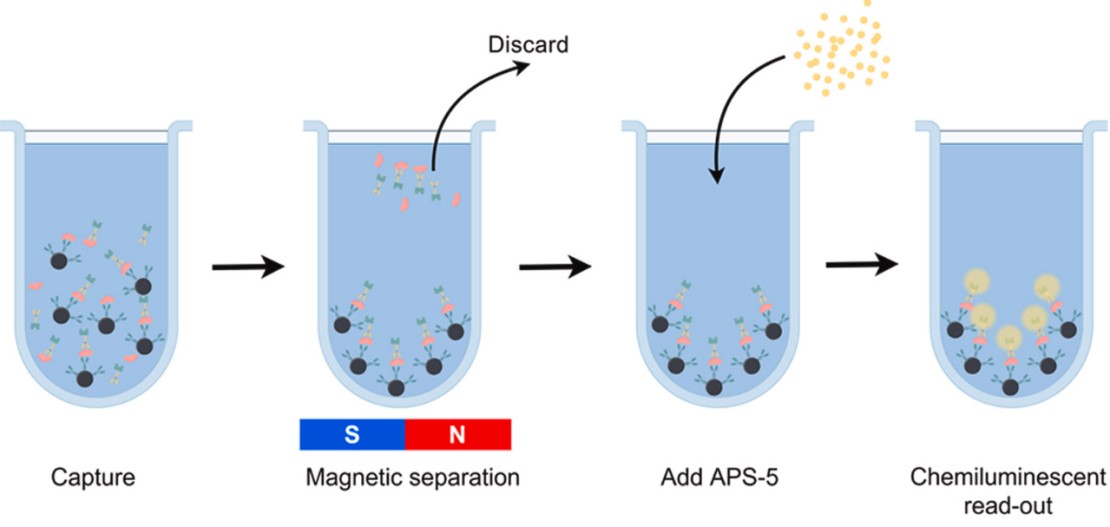 Figure 1. Chemiluminescence immunoassay (CLIA) using antibody-coated magnetic particles (Ab-MPs-CLIA). (Zhang, Liang, Talanta, 2025)
After years of development in the immunology field, Creative Diagnostics has established a complete chemiluminescent immunoassay (CLIA) platform to provide customized high-performance CLIA solutions for our customers in the fields of research and diagnosis. Our scientists have extensive expertise and years of project experience in immunoassay design, signal optimization and analytical validation. We ensure that during the CLIA product development process, we can help you solve various problems and develop high-quality products with high sensitivity, strong specificity and good reproducibility that meet market requirements. Our CLIA platform is designed to meet the stringent requirements of various research fields, including clinical diagnosis, environmental monitoring, drug quality control and food safety testing. Creative Diagnostics is committed to the pursuit of scientific excellence and compliance, and provides customers with support throughout the entire test development life cycle from concept to commercialization. Our customers are welcome to discuss your project with us at any time.
Chemiluminescent Immunoassay Development Services
This technology is widely used in fields including clinical diagnosis, environmental monitoring, pharmaceutical analysis, and food safety.
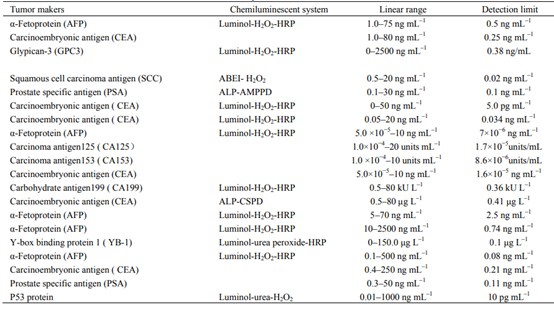
CLIA possess numerous advantages including high sensitivity, simple operation and nonradioactivity. It is usually applied in clinical diagnosis, particularly in cancer screening. The applications of CLIA have been generally accepted by a large number of patients and clinicians as a noninvasive screening for tumor markers and other diseases. CLIA technique applied to the detection of tumor markers not only can be used as an auxiliary early diagnosis in vitro and postoperative monitoring, but also can be used to find new tumor markers.
Table 1. Examples of CLIA for determination of tumor makers
In the clinical diagnosis, besides tumor marker detection, CLIA is widely applied to other diseases assessment such as diabetes, hypertension, heart disease, venereal disease, etc.
Chemiluminescent immunoassay (CLIA) technology has become a powerful tool for detecting trace environmental pollutants. It has the advantages of rapid response and low detection limit and is commonly used to identify pollutants in water, soil and air samples, including endocrine disruptors, heavy metals, pesticides and microbial pathogens.
In the field of drug analysis, chemiluminescent immunoassay (CLIA) is often used for quantitative detection of drugs, metabolites and residual biological agents in drug development and quality control. Supports therapeutic drug monitoring and identification of anti-drug antibodies (ADA). CLIA's high throughput and automation have been introduced in many research laboratories, greatly improving the efficiency of industrial quality control workflows.
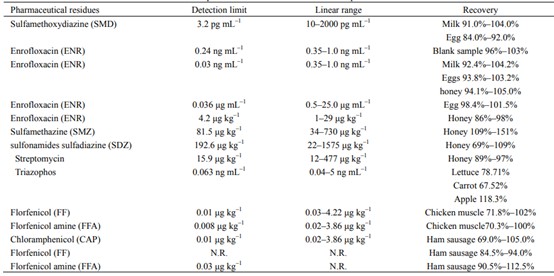
Chemiluminescent immunoassay (CLIA) is mainly used in the field of food safety to detect various pesticide residues, biotoxins and banned additives. Drug residue detection in foods such as milk, eggs and feed additives is becoming increasingly important. For chemiluminescent immunoassay (CLIA) for biotoxin detection in food, research focuses on improving its sensitivity, specificity and high throughput. CLIA can be successfully used for biotoxin detection. CLIA has become an important tool for rapid analysis of food toxins and has gradually been applied and promoted in various fields of food safety monitoring and research.
Table 2. Examples of CLIA for determination of pharmaceutical residues in food
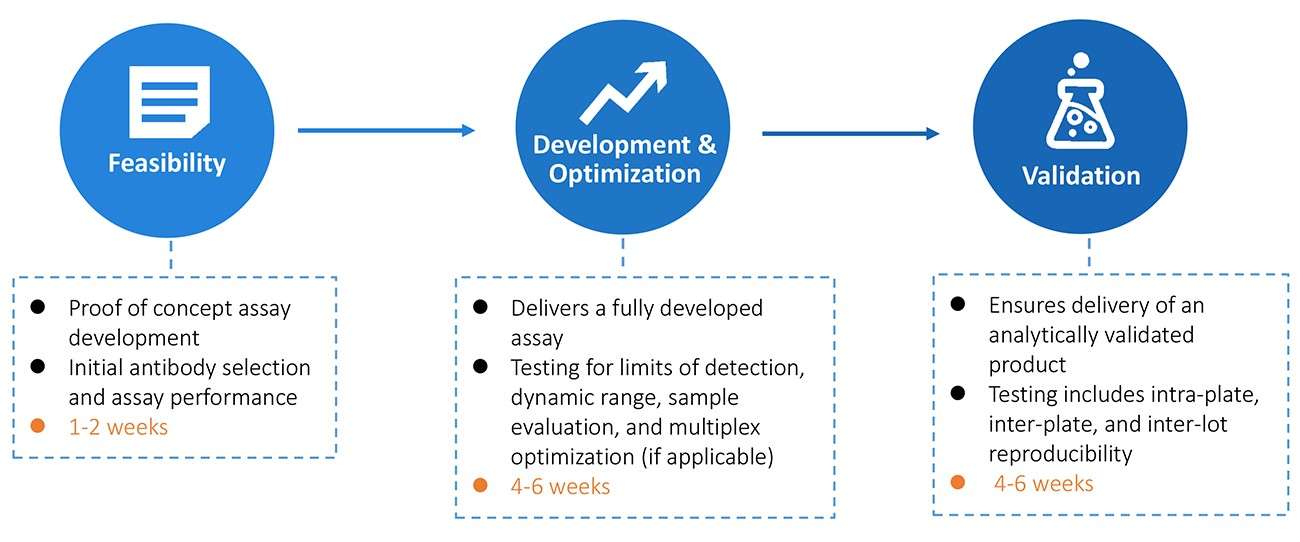
CLIA platform offers a seamless process through which we will develop high-quality assays for your application. Depending on your need, assays may be developed for basic research purposes or designed to include additional qualification and validation.
In the CLIA system, magnetic beads are solid phase carriers and are widely used in the detection of trace targets in complex samples.
ELISA and CLIA differ in detection principle, sensitivity, linear range, detection speed, quantitative accuracy, instrumentation, and reagent stability.
Detection principle: ELISA-based on enzyme-catalyzed substrate to produce color reaction; CLIA-based on chemiluminescent substances producing luminescent signals in chemical reactions.
Sensitivity: CLIA sensitivity is usually higher than ELISA.
Linear range: CLIA has a wider linear range than ELISA and can cover accurate measurements in a larger concentration range.
Detection speed: CLIA generally has a faster detection speed than ELISA and can obtain results in a shorter time.
Quantitative accuracy: CLIA's quantitative accuracy is usually better than ELISA.
Instrumentation: CLIA instrument costs more than ELISA.
Reagent stability: The stability of CLIA reagents is worse than that of ELISA.
Reference
Loading ......
