
Inquiry Basket
 Loading ......
Recombinant mAbs represent a departure from traditional hybridoma-derived antibodies because their production process utilizes synthetic genes to achieve superior production scalability and flexibility while maintaining consistency. The Creative Diagnostics platform delivers detailed insights into the production technology and services for recombinant monoclonal antibodies serving as a vital tool for researchers and biopharmaceutical organizations along with CDMO partners.
Monoclonal antibodies are highly uniform antibodies. They are usually prepared using hybridoma technology. Hybridoma antibody technology is based on cell fusion technology, which fuses sensitized B cells with the ability to secrete specific antibodies and myeloma cells with unlimited reproduction ability into B cell hybridomas. The use of recombinant monoclonal antibodies in medical treatments delivers targeted therapy for cancer and autoimmune diseases as well as infectious and cardiovascular disorders by attaching to specific antigens related to diseases which improves treatment precision and reduces side effects and toxicity.
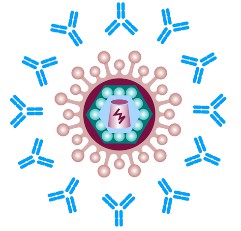
 Figure 1. Surface of recombinant monoclonal antibody.
The recombinant monoclonal antibody production platform excels by utilizing advanced technologies to produce superior quality products through streamlined methods. Key features include:
| Advantages | Key Features |
| Customization and Flexibility | The platform supports the generation of humanized and fully human monoclonal antibodies to provide tailored therapeutic treatments. The platform enables scientists to enhance antibody affinity and specificity while reducing immunogenicity through antibody modifications. |
| Advanced Expression Systems | The platform incorporates multiple expression systems such as mammalian cell lines (e.g., CHO, NS/0), yeast, baculovirus, plant systems, and bacteria to make the most of their individual benefits related to post-translational modifications scalability and cost efficiency. |
| Comprehensive Quality Control | Throughout the production process we implement stringent quality control methods from gene synthesis through expression to final purification and formulation steps. |
The recombinant monoclonal antibody production platform addresses essential requirements for several industries and research disciplines.
The platform enables the creation of highly sensitive diagnostic antibodies for quick infectious disease detection (for example COVID-19 neutralizing antibody test kits) tumor marker screening (such as ELISA-based CEA antigen detection) and pathogen identification and typing.
This platform uses mammalian cell lines, yeast, and prokaryotic expression systems to provide smooth transition from laboratory research at microgram levels to industrial production at kilogram levels according to clients' antibody yield needs at different development stages.
Creative Diagnostics provides an extensive variety of services through its recombinant monoclonal antibody production platform which supports both antibody development and production stages. These include:



A well-defined workflow oversees the production process of recombinant monoclonal antibodies which generates high-quality outputs that remain consistent and scalable. The workflow consists of the following essential steps:

Scientists design and synthesize the target antigen to achieve the highest possible binding efficiency and specificity. The purification and characterization processes verify the antigen's identity and purity.

Phage display technology creates a library of antibody fragments which is used alongside cloning and mammalian cell line expression of antibody-producing genes from hybridoma to generate recombinant mAbs.

The antibody genes are synthesized using high-fidelity DNA synthesis techniques and cloned into expression vectors. Vectors are transformed into host cells (e.g., mammalian, yeast, or bacterial) for expression.

For optimal antibody production host cells grow in bioreactors or shake flasks under ideal conditions. The production process uses real-time monitoring systems to maintain expression consistency.

Scientists test antibodies to confirm their physical, chemical, and biological properties meet established specifications. Research, diagnostic, and therapeutic applications receive the final product for usage.
 Figure 11. Antigen immunization efficacy and serum titer dynamics. The findings show how serum titer differences in animals given antigen A prove the platform's ability to generate strong antigen-specific immune responses through optimized immunization processes while fulfilling the necessary scalability and consistency requirements for recombinant monoclonal antibody production.
The production of traditional monoclonal antibodies through hybridoma cell fusion faces scalability limitations and demands extensive cloning work. Synthetic genes and engineered expression systems enable recombinant mAbs to achieve humanization and affinity optimization for consistent large-scale production.
The production range of recombinant monoclonal antibodies ranges from micrograms to grams or kilograms for commercial production. We provide customers with precise quantities of products through our professional production platform.
Our production technology enables the generation of antibodies equipped with exact post-translational modifications. Through mammalian cell systems our platform produces tailored antibody glycosylation patterns to meet unique application specifications. We possess the necessary expertise to manufacture antibodies with specific modifications such as phosphorylation and acetylation upon request.
The recombinant monoclonal antibody production platform from Creative Diagnostics delivers a scalable solution which supports both the development and production phases of high-quality monoclonal antibodies through its flexible and comprehensive features. Researchers and biopharmaceutical companies get their support from the platform through advanced technologies and rigorous quality control combined with a wide array of services. Contact us for more service information.
Loading ......
