Biotinylated proteins are powerful tools widely used across diverse assay formats, including immunoprecipitation, flow cytometry, immunoassays, biopanning, and surface plasmon resonance. By exploiting the exceptionally high affinity between biotin and streptavidin (or avidin; Ka ≈ 10¹⁵ M⁻¹), biotinylated proteins enable robust and highly sensitive detection, immobilization, and capture across a broad range of experimental platforms.
Conventional chemical biotinylation methods, while convenient, typically result in random modification of multiple lysine residues on the protein surface. This lack of control can lead to heterogeneous labeling, potentially compromising protein activity, masking critical binding epitopes, and introducing batch-to-batch variability. As modern assay development increasingly prioritizes precision, reproducibility, and preservation of protein function, site-specific biotinylation strategies have emerged as the preferred approach.
What Is Avi-tag?
The Avi-tag is a short, well-defined peptide sequence (GLNDIFEAQKIEWHE) that is specifically recognized by the E. coli biotin ligase BirA. When fused genetically to the N- or C-terminus of a recombinant protein, the Avi-tag enables highly specific, enzymatic biotinylation of a single lysine residue within the tag.
This enzymatic reaction occurs under mild conditions and results in one biotin moiety per protein molecule, producing a homogeneous and precisely labeled product. Because the modification site is spatially separated from the protein's functional domains, Avi-tag biotinylation preserves native structure, biological activity, and binding properties.
Principles of Avi-tag Site-Specific Biotinylation
Avi-tag biotinylation relies on a tightly controlled enzymatic process:
The target protein is expressed as a recombinant fusion containing an Avi-tag.
Purified BirA enzyme catalyzes the transfer of biotin to the specific lysine residue within the Avi-tag.
Excess biotin and enzyme are removed during purification, yielding a uniform, mono-biotinylated protein.
Fig. 1 Principles of Avi-tag Site-Specific Biotinylation
Advantages of Avi-tag Biotinylated Recombinant Proteins
Site Specificity and Homogeneity. Avi-tag biotinylation occurs exclusively at a single lysine residue within the Avi-tag, eliminating the heterogeneity associated with random chemical labeling.
Uniform Orientation. Single-site biotinylation enables Avi-tagged proteins to bind streptavidin-coated surfaces in a uniform and controlled orientation, thereby improving signal-to-noise ratios in surface-based applications.
Preserved Protein Function. Because the biotinylation site is engineered away from active or binding regions, protein conformation, ligand affinity, and biological activity remain intact.
Superior Reproducibility. Enzymatic labeling yields consistent biotinylation efficiency and uniform products, making Avi-tag proteins ideal for quantitative and regulated assays.
Broad Compatibility. Avi-tag biotinylated proteins are fully compatible with streptavidin-coated plates, beads, biosensor chips, and imaging reagents.
Applications of Avi-tag Biotinylation
Avi-tag biotinylation enables precise, site-specific protein labeling, supporting controlled immobilization, sensitive detection, and reliable interaction analysis in both in vitro and in vivo research applications.
Interaction Analysis. Avi-tag biotinylated proteins are widely used in surface-based interaction platforms such as SPR and BLI. Streptavidin-coated sensor surfaces allow stable and oriented immobilization, enabling accurate measurement of binding affinity, kinetics, and specificity for protein–protein and protein–ligand interactions.
Affinity Purification. The high specificity of the biotin–streptavidin interaction enables efficient affinity-based purification of Avi-tag biotinylated proteins. This approach minimizes nonspecific binding while maintaining protein integrity and biological activity.
Antibody Screening. Site-specific biotinylation ensures uniform antigen orientation and consistent epitope exposure, improving assay sensitivity and reproducibility in ELISA, flow cytometry, biopanning, SPR, and BLI-based antibody screening and characterization workflows.
Cell Signaling Studies. Avi-tag biotinylated proteins support the investigation of receptor–ligand interactions, signal transduction pathways, and protein localization by providing controlled and reproducible ligand or receptor presentation.
Drug Discovery. In drug discovery and high-throughput screening, Avi-tag biotinylated proteins serve as reliable targets with preserved bioactivity, reducing assay variability and supporting efficient identification of candidate compounds.
Creative Diagnostics provides a comprehensive panel of Avi-tag biotinylated recombinant proteins, covering popular targets such as cell therapy, antibody drugs, and vaccines. Each Avi-tag antigen is produced under controlled processes to ensure defined biotinylation, high biological activity, excellent stability, and robust batch-to-batch reproducibility, supporting reliable performance in downstream applications such as ELISA, flow cytometry, surface plasmon resonance, and bio-layer interferometry.

 Loading ......
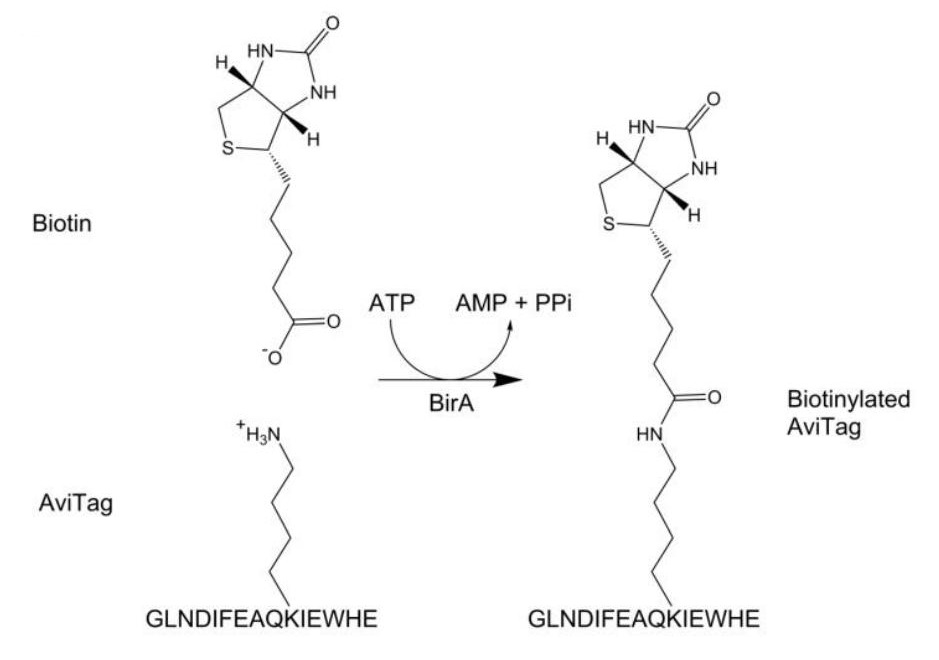 Fig. 1 Principles of Avi-tag Site-Specific Biotinylation