
Inquiry Basket
 Loading ......
Alzheimer's disease (AD) is a neurodegenerative disease characterized by progressive cognitive, functional, and behavioral impairment. AD is known to have a long pre-symptomatic phase that occurs before the onset of mild cognitive impairment (MCI). During this period, individuals have Alzheimer's pathology changes in the brain that may eventually progress to a level of severity that induces cognitive, functional, and behavioral changes. Therefore, early diagnosis and interventional treatment of this disease are particularly important. Aβ, Tau, GFAP, NFL, BDNF, UCHL1, and other biomarkers have been widely studied and used in the diagnosis of AD.
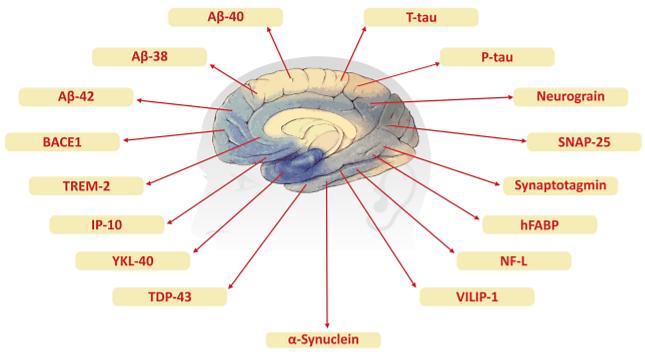 Fig. 1 Brain-specific biomarker associated with Alzheimer's disease. (Mumtaz I.; et al. Front Aging Neurosci. 2022)
Biomarker tests may be paramount to early (preclinical) diagnosis, treatment monitoring, and continued Alzheimer's research. Over the past 2 decades, several biomarkers of amyloid and tau pathology have been developed to assist with more accurate diagnosis. In recent years, Blood-based biomarkers for AD and other dementias are now becoming a reality. In addition to Tau and Aβ, GFAP, NFL, BDNF, etc. also have important application value in the in vitro diagnosis of AD.
Aβ is the main pathological hallmark of AD. The diagnosis of AD requires the presence of biomarker-confirmed Aβ in the brain. Plasma biomarkers used to confirm the presence of AD are emerging. A reduced Aβ 42/40 ratio is consistent with the diagnosis of AD.
Creative Diagnostics' Aβ paired antibodies (Cat. No: CABT-ZB005; CABT-ZB007; CABT-ZB006) have been validated for the recognized epitopes and have good sensitivity.
 Fig. 2 Epitopes recognized by the three Aβ antibodies.
(Cat. No: CABT-ZB005; CABT-ZB007; CABT-ZB006)
 Fig. 3 Sensitivity of Aβ antibody pairs (LFIA).
(Ab pairs Cat.No: CABT-ZB006 & CABT-ZB005; CABT-ZB006 & CABT-ZB007)
Tangles containing hyperphosphorylated Tau in full-length or truncated forms are another major pathological hallmark of Alzheimer's disease. Tau has more than 70 post-translational modification sites, including more than 40 phosphorylation sites, as well as several truncated forms. The concentrations of plasma Tau phosphorylated at different sites (pTau181, pTau217, or pTau231) are strongly increased (more than two-fold) in individuals with clinically diagnosed Alzheimer's disease compared with both cognitively unimpaired controls and people with non-Alzheimer's disease dementias.
The p-Tau antibodies provided by Creative Diagnostics (Cat. No: DMAB-JXL2367; CABT-ZB003 & DMAB-JXL2360) show excellent specificity, and the Tau antibody pairs also demonstrate good correlation with positive quality controls.
 Fig. 4 Specificity of p-Tau181 antibody.
(Cat. No: DMAB-JXL2367)
 Fig. 5 Correlation analysis between Tau antibody pair and positive quality control.
(Ab pairs Cat. No: CABT-ZB003 & DMAB-JXL2360)
To support assay development against these targets, Creative Diagnostics also provides a complete Tau antigen toolbox: full-length recombinant Tau isoforms (including 2N4R/441 aa, 1N4R, 2N3R, and fetal 0N3R), site-specific phospho-Tau proteins (pT181, pT217), synthetic phospho-Tau peptides spanning the key diagnostic epitopes (pTau217 in two sequence variants, pTau181, pTau231, and pTau205) available as free peptides or BSA conjugates, and active Tau pre-formed fibrils (wild-type, P301L, P301S, delta-K280, and truncated dGAE). Consecutive lots of each phospho-Tau peptide are held in stock, with >=96% purity (HPLC) documented across lots, securing long-term lot-to-lot consistency for calibrator and immunogen use. View the neurodegeneration antigen collection.
 Fig. 6 Tau Protein Domains and AD-Associated Phosphorylation Sites (Xia Y, et al. (2021))
NFL is an axonal scaffolding protein and one of two core neurofilament proteins in the CNS and it has emerged as a strong cross-disease biomarker candidate for neurodegeneration. NFL can be measured in CSF and blood and was the first neuro-specific biomarker for which clinical value was proven in a multitude of publications after development of an ultrasensitive assay.
The NFL antibodies (Cat. No: DPAB-JXL23190; DPAB-JXL23191) provided by Creative Diagnostics have a good application performance in WB and IHC analysis.
 Fig. 7 Western blot analysis of different tissue lysates using NFL antibody.
(Cat. No: DPAB-JXL23190)
 Fig. 8 Immunohistochemical analysis of paraffin-embedded mouse brain tissue slide
using NFL antibody (Cat. No: DPAB-JXL23191)
GFAP is a major cytoskeletal constituent of astrocytes. In Alzheimer's disease, reactive astrocytosis has been implicated as a potential driver or effect of Alzheimer's disease pathological changes. Plasma or serum GFAP concentrations are elevated in individuals within the clinical Alzheimer's disease continuum. Despite GFAP being less thoroughly investigated than Aβ, tau, and NFL, promising results for its usefulness as a fluid biomarker have been obtained using ultrasensitive immunoassays.
Creative Diagnostics' GFAP antibodies (Cat. No: CABT-CS657 & CABT-CS658) are highly reactive to recombinant antigens and correlate well with positive control products in CLIA platform.
 Fig. 9 Reactivity of GFAP antibody pairs with recombinant antigens.
(Ab pairs Cat. No: CABT-CS657 & CABT-CS658)
 Fig. 10 Correlation analysis between GFAP antibody pair and a positive quality control.
(Ab pairs Cat. No: CABT-CS657 & CABT-CS658)
In addition to those described above, there are many AD-related biomarkers, such as UCHL1, BACE1, ApoE, CLU, etc., which also play important roles in in vitro diagnostic researches of AD. Creative Diagnostics also provides material reagents for these targets. Please see the following list for details.
References
Creative Diagnostics provides a series of antibodies against different Alzheimer's biomarkers with comprehensive target coverage to promote your Alzheimer's in vitro diagnostic research. The product list is as followed.
Aβ is the main pathological hallmark of AD. The diagnosis of AD requires the presence of biomarker-confirmed Aβ in the brain.
| Anti-Aβ Antibodies | |||
| Cat. No | Product Name | Application | |
| CABT-ZB005 | Human Anti-Human beta Amyloid (1-40) Monoclonal antibody, Clone A9 | ELISA | Inquiry |
| DMABB-JX331 | Mouse Anti-Human Aβ40 (C-Term) monoclonal antibody, clone JL3 | WB, IHC, ELISA | Inquiry |
| DPAB-JXL23186 | Rabbit Anti-Mouse Aβ40 Polyclonal antibody | IHC | Inquiry |
| CABT-ZB007 | Human Anti-Human beta Amyloid (1-42) Monoclonal antibody, Clone B2 | ELISA | Inquiry |
| DMAB-JXL2354 | Mouse Anti-Human Aβ Monoclonal antibody, clone MOAB-2 | WB, IHC, IP, IF, ELISA | Inquiry |
| DMABB-JX329 | Mouse Anti-Human Aβ42 (N-Term) monoclonal antibody, clone JL1 | WB, IHC, ELISA | Inquiry |
| DMABB-JX330 | Mouse Anti-Human Aβ42 (C-Term) monoclonal antibody, clone JL2 | WB, IHC, ELISA | Inquiry |
| DMABB-JX332 | Mouse Anti-Human Aβ42 (middle region) monoclonal antibody, clone JL4 | WB, IHC, ELISA | Inquiry |
| DPAB-JXL23187 | Rabbit Anti-Human Aβ42 Polyclonal antibody | ELISA, WB, IHC | Inquiry |
| CABT-ZB006 | Human Anti-Human beta Amyloid 42 (aa 1-5) Monoclonal antibody, Clone A6 | ELISA | Inquiry |
Tau has more than 70 post-translational modification sites, including more than 40 phosphorylation sites and several truncated forms.
Tau has more than 70 post-translational modification sites, including more than 40 phosphorylation sites and several truncated forms.
NFL is an axonal scaffolding protein and one of two core neurofilament proteins in the CNS and it has emerged as a strong cross-disease biomarker candidate for neurodegeneration.
GFAP is a major cytoskeletal constituent of astrocytes. In Alzheimer's disease, reactive astrocytosis has been implicated as a potential driver or effect of Alzheimer's disease pathological changes.
| Anti-GFAP Antibodies | |||
| Cat. No | Product Name | Application | |
| CABT-CS657 | Human Anti-Human GFAP(aa 188-204) Monoclonal antibody, clone B5 | sELISA (Capture - Detection) CABT-CS657- CABT-CS658 | Inquiry |
| CABT-CS658 | Human Anti-Human GFAP(aa 117-130) Monoclonal antibody, clone C9 | Inquiry | |
| DCABH-11706 | Mouse Anti-Human GFAP(aa 131-230) Monoclonal antibody, clone 3F0 | WB, ELISA | Inquiry |
| DMABB-JX1135 | Magic™ Mouse Anti-Human GFAP monoclonal antibody, clone 92 | WB, IHC, sELISA(Capture - Detection) DMABB-JX1134 - DMABB-JX1135 | Inquiry |
| DMABB-JX1134 | Magic™ Mouse Anti-Human GFAP monoclonal antibody, clone 94 | Inquiry | |
Down-regulation of UCHL1 induces the aggregation of ubiquitinated proteins and promotes cell death in neurons. The decrease of this enzyme was observed in both ischemic injury and AD.
| Anti-UCHL1 Antibodies | |||
| Cat. No | Product Name | Application | |
| CABT-CS655 | Human Anti-Human UCHL1(aa 26-38) Monoclonal antibody, clone C5 | sELISA (Capture - Detection) CABT-CS654 - CABT-CS656 | Inquiry |
| CABT-CS654 | Human Anti-Human UCHL1(aa 96-108) Monoclonal antibody, clone B4 | Inquiry | |
| CABT-CS656 | Human Anti-Human UCHL1(aa 140-150) Monoclonal antibody, clone D8 | sELISA (Capture - Detection) CABT-CS654 - CABT-CS656; CABT-CS655 - CABT-CS656 | Inquiry |
| DMABT-H15195 | Mouse Anti-Human UCHL1(aa 2-223) Monoclonal antibody, clone 2C9-5E3 | WB, IHC, sELISA, ELISA | Inquiry |
| CABT-L6546Z | Mouse Anti-Human UCH-L1 monoclonal antibody, clone 26 | LFIA, sELISA(Capture - Detection) CABT-L6546Z - CABT-L6547Z | Inquiry |
| CABT-L6547Z | Mouse Anti-Human UCH-L1 monoclonal antibody, clone 33 | Inquiry | |
ApoE seeds amyloid-β (Aβ) plaques in the brain with apoE4 driving earlier and more abundant amyloids. APOE4 is a major genetic risk factor for AD in a gene dose-dependent manner increasing risk in homozygotes.
| Anti-APOE Antibodies | |||
| Cat. No | Product Name | Application | |
| DMAB-JXL2357 | Mouse Anti-Human APOE Monoclonal antibody, clone 5F5 | WB | Inquiry |
| DMAB-JXL2358 | Mouse Anti-Human APOE Monoclonal antibody, clone 2G0 | ELISA | Inquiry |
The presynaptic protein α-synuclein (αSyn), mainly associated with synucleinopathies like Parkinson's disease (PD), dementia with Lewy bodies (DLB) and multiple system atrophy (MSA), is involved in the pathophysiology of AD.
| Anti-Alpha Synuclein Antibodies | |||
| Cat. No | Product Name | Application | |
| CABT-L6126 | Human Anti-Human alpha Synuclein Monoclonal antibody, clone A1 | sELISA (Capture - Detection) CABT-L6126- CABT-L6127 | Inquiry |
| CABT-L6127 | Human Anti-Human alpha Synuclein Monoclonal antibody, clone B2 | Inquiry | |
Clusterin (CLU) is a multifunctional glycoprotein considered the third most significant genetic risk factor for late-onset Alzheimer's disease (LOAD). Higher plasma CLU levels have been associated with increased hippocampal atrophy and increased rate of clinical progression.
| Anti-CLU Antibodies | |||
| Cat. No | Product Name | Application | |
| DCABY-3973 | Mouse Anti-Human CLU Monoclonal antibody, clone 460380 | sELISA (Capture - Detection) DCABY-3973- DCABY-4283 | Inquiry |
| DCABY-4283 | Mouse Anti-Human CLU Monoclonal antibody, clone 460308 [Biotin] | Inquiry | |
Alzheimer's disease may occur when RAGE binds to Aβ and releases reactive oxygen species, further exacerbating Aβ deposition and eventually leading to SPs and NFTs.
| Anti-AGER Antibodies | |||
| Cat. No | Product Name | Application | |
| DCABH-5751 | Rabbit Anti-Human AGER Monoclonal antibody, clone KG1086 | WB, ICC/IF, IHC, FC | Inquiry |
BDNF is a well-studied growth factor in the mammalian brain. In the context of AD, BDNF depletion is associated with tau phosphorylation, Aβ accumulation, neuroinflammation and neuronal apoptosis.
| Anti-BDNF Antibodies | |||
| Cat. No | Product Name | Application | |
| CABT-L622 | Rabbit Anti-Human BDNF Monoclonal antibody, clone TK23-10 | WB, IHC, ICC/IF | Inquiry |
| DPAB-JXL23196 | Rabbit Anti-Human BDNF Polyclonal antibody | ELISA, WB, IHC, IF | Inquiry |
Targeting BACE1 (β-site APP cleaving enzyme 1 or β-secretase) is also the focus of Alzheimer's disease (AD) research because this aspartyl protease is involved in the abnormal production of β amyloid plaques (Aβ), the hallmark of its pathophysiology.
| Anti-BACE1 Antibodies | |||
| Cat. No | Product Name | Application | |
| CABT-B9831 | Mouse anti-Human BACE1(aa 22-501) Monoclonal antibody, clone 3D2 | WB, IHC, ELISA | Inquiry |
| DPAB-JXL23197 | Rabbit Anti-Human BACE1 Polyclonal antibody | ELISA, WB, IP, IHC | Inquiry |
In addition to antibodies, Creative Diagnostics offers a broad collection of recombinant antigens, synthetic peptides, and pre-formed fibrils for AD biomarker assay development, antibody screening, and aggregation research.
Loading ......
