
Inquiry Basket
 Loading ......
Alzheimer's disease (AD) is a neurodegenerative disease that develops slowly and worsens over time. This disease accounts for 60 to 70% of dementia cases. The most common early symptom is loss of short-term memory. As the disease progresses, symptoms may gradually appear, including aphasia, disorientation, emotional instability, loss of motivation, inability to care for oneself, and various behavioral problems. As the condition worsens, patients often become disconnected from family or society, gradually lose physical function, and eventually die. Although the progression of the disease varies from person to person, the average life expectancy after diagnosis is about three to nine years.
According to the development of cognitive dysfunction, AD can be divided into early, middle, and late stages. In the early stage, patients may not exhibit obvious symptoms, with most only experiencing forgetfulness and anxiety, making it difficult to detect or diagnose. In the middle stage, more pronounced symptoms emerge, including changes in personality and temperament, and confusion in memory. In the later stage, patients exhibit complete symptoms of dementia, inability to care for themselves, and ultimately succumb to death from various secondary diseases.
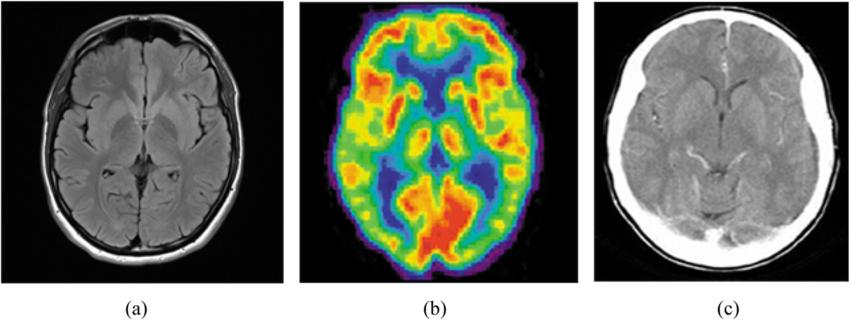
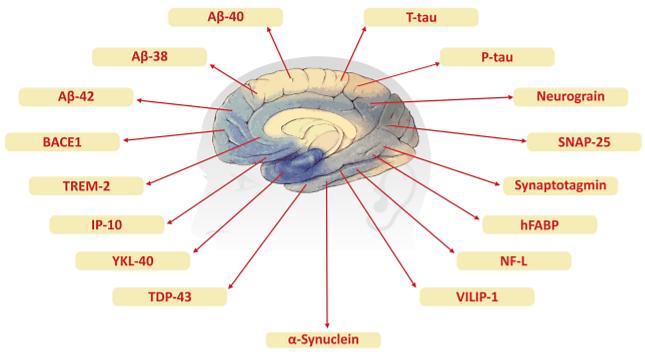
Early diagnosis and prevention of AD are crucial for reducing disease severity and improving prognosis. Current tools for monitoring AD pathology include neuroimaging biomarkers using MRI or PET and CSF biomarkers. The NIA-AA proposed amyloid-tau-neurodegeneration (ATN) as a classification system for AD biomarkers. "A" refers to the value of a β-amyloid biomarker (amyloid PET or CSF Aβ42); "T," the value of a tau biomarker (CSF phospho tau, or tau PET); and "N," biomarkers of neurodegeneration or neuronal injury ([18F]-fluorodeoxyglucose–PET, structural MRI, or CSF total tau).
Amyloid-β
Amyloid-β is one of the most common markers of AD. In the brains of individuals with AD, amyloid-β forms abnormal deposits known as amyloid plaques. Among these deposits, Aβ42/Aβ4 can better predict brain amyloid deposition.
Tau
Tau protein is a structural protein found in axons from neurons. In the brains of individuals with AD, Tau protein aggregates abnormally to form neurofibrillary tangles, resulting in damage to neuron function. Typical biomarkers include p-tau181, p-tau217, and p-tau231, with p-tau217 being one of the most promising emerging biomarkers for AD.
Neurofilament light (NfL)
Neurofilament light (NfL) is one of the four subunits of neurofilaments, located in the neuronal cytoplasm, which helps maintain the structural stability of neurons and enables the radial growth of axons. NfL has served as an important biomarker for many neurodegenerative diseases such as multiple sclerosis, AD, and Parkinson's disease.
Neuron-specific enolase (NSE)
Neuron-specific enolase (NSE) is a glycolytic enzyme localized in neurons, and alterations in cerebrospinal fluid levels are observed following acute or prolonged neuronal damage. NSE is regarded as a biomarker of neurodegeneration.
S100β
S100β is a calcium-binding protein with a molecular weight of 21 kDa. It is mainly produced by astrocytes and exists in the central nervous system in the form of dimer. The association of astrocytic S100β expression has previously been linked to the pathogenesis of AD, as well as cerebral amyloidosis and gliosis. Moreover, its presence in the cerebrospinal fluid is directly correlated with the severity of AD.
TNF-α
TNF-α is a monomeric, nonglycosylated type 2 transmembrane protein that belongs to the TNF/TNF receptor (TNF/TNFR) superfamily of proteins. In the central nervous system, TNF-α can be synthesized in the brain by microglia, neurons, and astrocytes. TNF-α is a key molecule in orchestrating chronic inflammation and can influence the synthesis of Aβ plaques, as well as the formation of neurofibrillary tangles. Therefore, it can potentially curb the progression of AD pathology.
BACE1
The β-site amyloid precursor protein cleaving enzyme (BACE1) plays a rate-limiting role in the Aβ production pathway. BACE1 proteolytically cleaves the amyloid precursor protein (APP), catalyzing the initial step in the generation of the Αβ peptide, a key pathogenic driver early in AD pathogenesis. Both the concentration and activity of BACE1 are elevated in the brains of individuals with AD compared to those of cognitively normal individuals. Consequently, BACE1 is considered a promising therapeutic target in the early stages of AD, prompting extensive research into various BACE1 inhibitors.
Key targets in our portfolio:
Amyloid-β Tau Neurofilament light (NfL) Neuron-specific enolase (NSE) S100β BACE1 CHI3L1
Loading ......
