
Inquiry Basket
 Loading ......
Cervical cancer (CC) is the fourth most common malignant tumor in women worldwide, with incidence and mortality rates second only to breast cancer, colorectal cancer, and lung cancer. It seriously threatens women's lives and mental health. Research shows that there will be more than 600,000 cervical cancer cases globally in 2020, accounting for 3.1% of the total incidence of all malignant tumors. About 340,000 people will die from cervical cancer, with a mortality rate of 3.4%. In recent years, the incidence and mortality of cervical cancer have been increasing and are gradually getting younger. Among them, persistent high-risk HPV infection is widely considered to be the main cause of the development of cervical cancer.
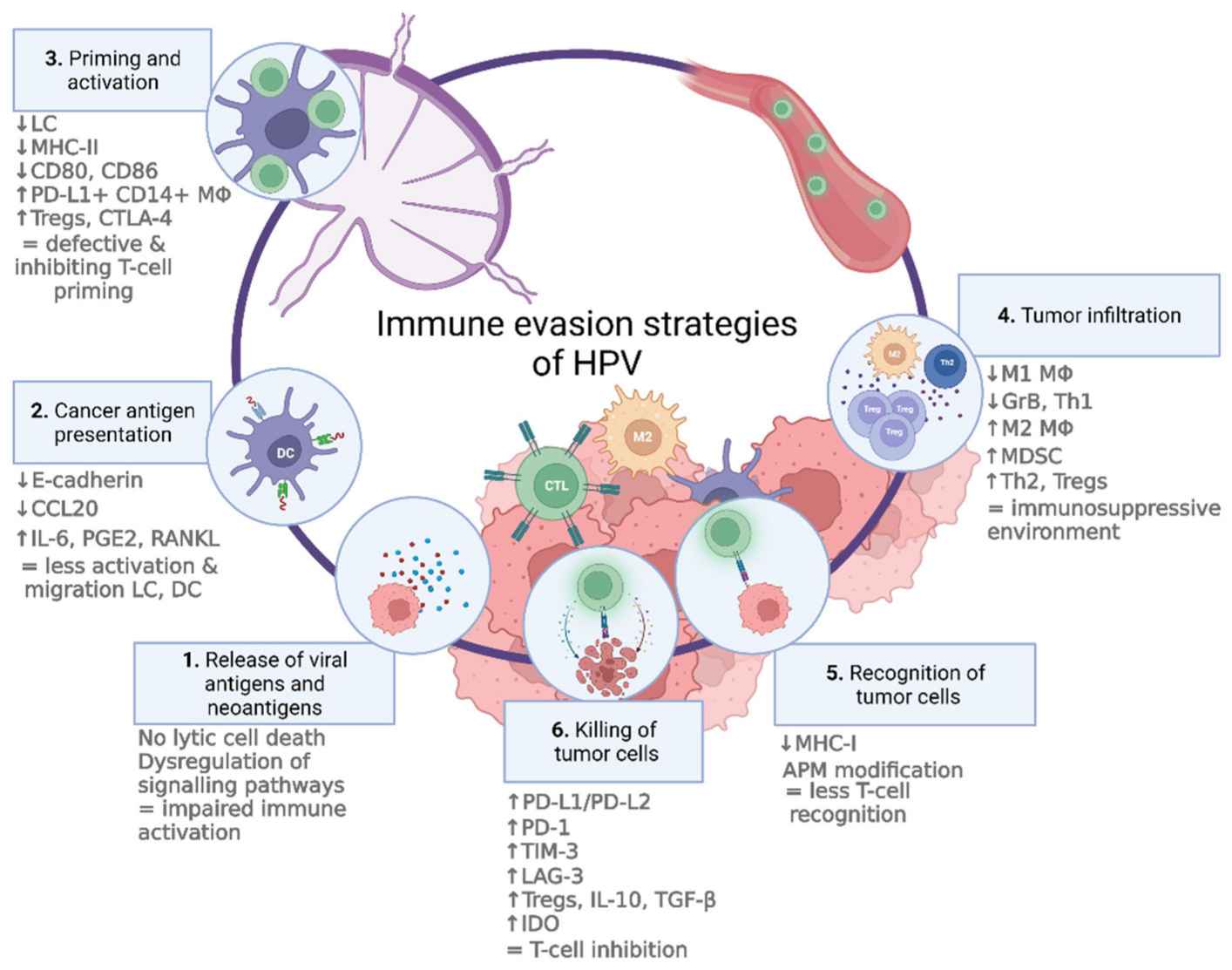 Figure 1. The intracellular and extracellular evasion strategies of human papillomavirus (HPV).(Rafael TS, et al.; 2022)
HPV is a non-enveloped small double-stranded circular DNA virus with a diameter of about 55nm. The viral genome contains about 8000 base pairs, consisting of an early region (E region), a late region (L region) and a long control region (LCR region). The E region is the coding region, which is mainly involved in the replication, transcription, translation regulation and cell transformation of viral DNA. The E region has 6 open reading regions (ORFs), namely E1, E2, E4, E5, E6, E7; E1 and E2 Regulating the replication of the viral genome and the transcription of early proteins, the E5-E7 gene edits oncoproteins and induces tumorigenesis; the L region includes two coding regions, L1 and L2, which mainly encode the viral capsid protein; the LCR region is a non-coding region, which mainly Regulate viral gene replication and expression. Nearly 200 types of HPV have been discovered so far, about 40 of which are related to reproductive tract infections. According to the degree of lesions induced by HPV, they are divided into high-risk HPV (HR-HPV), low-risk HPV (LR-HPV) and suspected high-risk HPV Type (PHR-HPV), high-risk types include 15 types of HPV (HPV types 16, 18, 31, 33, 35, 39, 45, 51, 52, 56, 58, 59, 66, 68), which can cause cervical cancer, anus-penile cancer, esophageal cancer, oral cancer, etc.; there are also 31 low-risk HPV types and 6 suspected high-risk types (HPV26, 53, 67, 70, 73 and 82).
Human papillomavirus (HPV) is a genus papillomavirus A belonging to the family Papovaviridae. It is a spherical DNA virus that can cause the proliferation of squamous epithelium in human skin and mucous membranes. More than 130 species have been isolated, and different types cause different clinical manifestations. HPV16 refers to (HPV) human papillomavirus type 16. There are many types of HPV, among which low-risk HPV infection mainly causes genital warts, while high-risk HPV infection causes epithelial cell lesions of genital cancer and cervical cancer. This virus is the beginning of genital cancer and cervical precancerous cell virus. HPV16 is a high-risk type. The HPV virus can cause genital warts. Long-term infection may be related to the occurrence of cervical cancer in women.
Cervical cancer is the most common malignant tumor of the female reproductive tract, and HPV infection is closely related to the occurrence of cervical cancer. A large amount of epidemiological and molecular biology data show that HPV infection is closely related to the occurrence of cervical cancer, especially high-risk HPV, which is an important causative factor of cervical cancer. Among them, HPV16/18 is the main type, followed by HPV33.
Previous methods for detecting HPV infection were technically complicated, had poor reproducibility of results, required sample collection again, and had poor patient compliance, making it difficult to be widely used in clinical practice. Therefore, most hospitals failed to routinely conduct cytological and histological examinations of cervical lesions. Detect HPV infection, and persistent infection with high-risk HPV causes the continued development of CIN and increases the relative risk of cervical cancer.
In 1999, Bernhard detected 70% of the specimens infected with HPV16/18 in 180 cervical cancer patients, indicating that most cervical cancer patients were infected with HPV16/18. HPV16 and 18 infection are closely related to the occurrence of cervical cancer and bladder cancer, and are also related to the occurrence of endometrial cancer and penile cancer. That is to say, HPV16 and 18 are related to tumors of the genitourinary system.
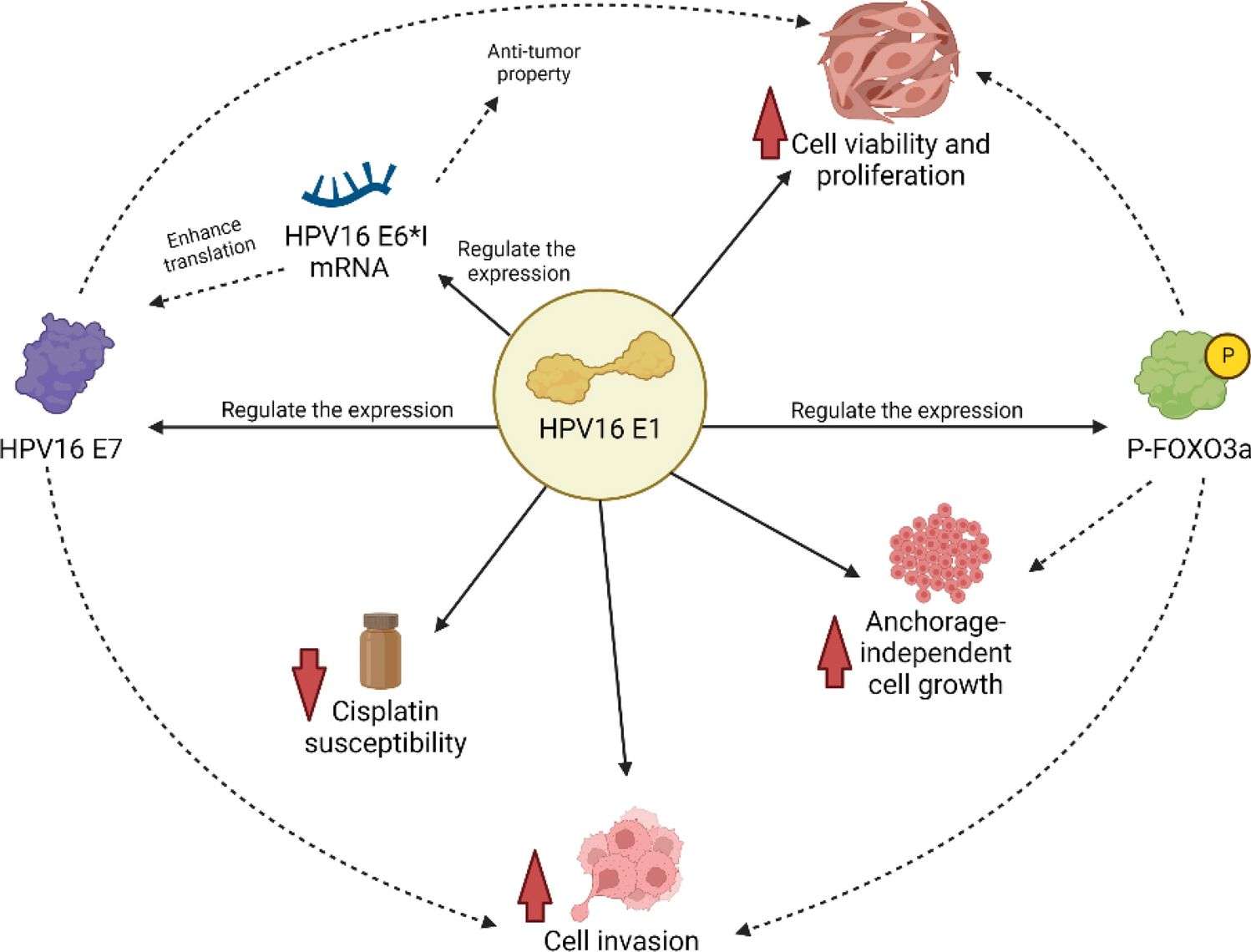 Figure 2. The possible role of HPV16E1 in the regulation of cancer cell properties.(Sasivimolrattana T, et al.; 2023)
In recent years, studies have found that HPV-DNA is frequently integrated into host cells in cervical intraepithelial neoplasia and cervical cancer, and the rate of integration increases as the degree of cervical lesions increases. Studies have proven that the integration mechanism of viruses is the basic reason for initiating tumorigenesis. According to reports, viral integration was found in 100% of HPV18 and 76% of HPV16-positive cervical cancers. HPV can integrate as a single gene or as multiple tandem repeats of the viral genome into the cellular genome. Previous studies believed that integration only occurs in late stages of cervical lesions, but recent studies have found that integration can also be detected in early stages of cervical lesions. Integration of viruses can lead to loss of tumor suppressor gene function, increased expression of oncogenes, and inter- and intra-chromosomal rearrangements, providing a permissive environment for the occurrence of cervical cancer. Early research believed that the integration sites of the virus are randomly distributed in the human genome, but integration still tends to occur in fragile site areas. Because its genes are unstable, gaps, breaks, and rearrangements are easy to form, so integration is more likely to occur. These most of the genes are related to cell repair pathways, tumor suppression, growth and cell proliferation. Some people believe that host DNA and HPV-DNA breaks must occur for integration to occur. It was first proposed that the break site for HPV DNA integration is in the E2 gene, which mainly regulates the transcription of E6 and E7 genes, regulates the replication cycle of the virus, and makes E6 and E7 Expression is controlled at a low expression state. The E2 gene fragment is long and has a hinge region in the middle. It is susceptible to breakage or integration due to external factors, thereby affecting the function of the E2 gene and eliminating its negative regulatory effect on E6 and E7 oncogenes, resulting in excessive cell proliferation and increased Genetic instability. Some studies have mentioned that HPV integration has also been detected in the mitochondria of cervical cancer patients. Due to the lack of protection of related proteins and imperfect DNA repair function, the mitochondrial genome is more susceptible to mutations caused by harmful external factors. Studies have shown that during the development of cervical cancer, HR-HPV can promote cell transformation and cancer occurrence in HPV-related cancers through complex mechanisms such as protein binding and modification of mitochondria.
References
| Target | Cat. No. | Product Name | Size | Species Reactivity | Application | Detection Sample | |
| HPV | DEIA-F678S | Human Papilloma Virus IgG ELISA kit | 96T | Human | Qualitative | plasma, serum | Inquiry |
| DEIASL404 | Human HPV18 IgM ELISA kit | 96T | Qualitative | Serum, plasma | Inquiry | ||
| DEIASL405 | Human HPV 16 L1-capsids IgG ELISA Kit | 96T | Qualitative | Serum, plasma | Inquiry | ||
| DEIASL406 | Human HPV 16 IgM ELISA Kit | 96T | Qualitative | Serum, plasma | Inquiry | ||
| DEIASL407 | Human Papilloma Virus IgM ELISA Kit | 96T | Qualitative | Serum, plasma | Inquiry | ||
| DEIASL408 | Human HPV 18 L1-capsids IgG ELISA Kit | 96T | Qualitative | Serum, plasma | Inquiry | ||
| DEIASL409 | Rabbit HPV 16 L1-capsids IgG ELISA Kit | 96T | Qualitative | Serum, plasma | Inquiry | ||
| DEIASL410 | Human high risk HPV L1-capsids (HR-HPVL1) IgG ELISA kit | 96T | Qualitative | Serum, plasma | Inquiry | ||
| DEIASL119 | HPV(18) Antigen ELISA Quantitation Kit | 96T | Quantitative | Serum, plasma | Inquiry | ||
| DEIASL120 | HPV(52) Antigen ELISA Quantitation Kit | 96T | Quantitative | Serum, plasma | Inquiry | ||
| DEIASL121 | HPV(58) Antigen ELISA Quantitation Kit | 96T | Quantitative | Serum, plasma | Inquiry | ||
| DEIASL171 | Human HPV 16 E7 Oncoprotein ELISA Kit | 96T | Human | Quantitative | Cell lysates, tissue lysates, cervical smears, plasma, serum | Inquiry | |
| DEIASL172 | Human HPV 18 E7 Oncoprotein ELISA Kit | 96T | Quantitative | Cell lysates, tissue lysates, or cervical smears | Inquiry | ||
| HPV16 | DEIASL118 | HPV (16) Antigen ELISA Quantitation Kit | 96T | Human | Quantitative | Serum and plasma | Inquiry |
Loading ......
