
Inquiry Basket
 Loading ......
The English name of the family papovaviridae is derived from three species: papilloma virus, polyoma virus and similar vacuolating virus. This family of viruses includes the genus Papillomavirus (papillomavirus) and polyomavirus (polyomavirus) are two genera, both of which are oncogenic DNA viruses. According to the International Committee on Taxonomy of Viruses, the family Papovaviridae has been approved to be abolished and the families Papillomaviridae and Polymaviridae have been established at the same time. Papillomaviruses include human papillomavirus and animal papillomavirus, which have been isolated from a variety of animal and human cells. Species-specific papillomaviruses have been found in a variety of animals. Because the host range of papillomaviruses is very narrow, they are often named after the name of the host, such as human papillomavirus (HPV); bovine papillomavirus (BPV); canine oral papillomavirus (COPV); polymammary mouse papillomavirus (MNPV) etc. Human papillomavirus (HPV) belongs to the genus Papillomavirus A of the family Papovaviridae. It is a spherical DNA virus that can cause the proliferation of squamous epithelium in human skin and mucous membranes. More than 200 types of it have been found. HPV is widely spread in humans and can cause a variety of benign papillomas of human skin and mucous membranes.
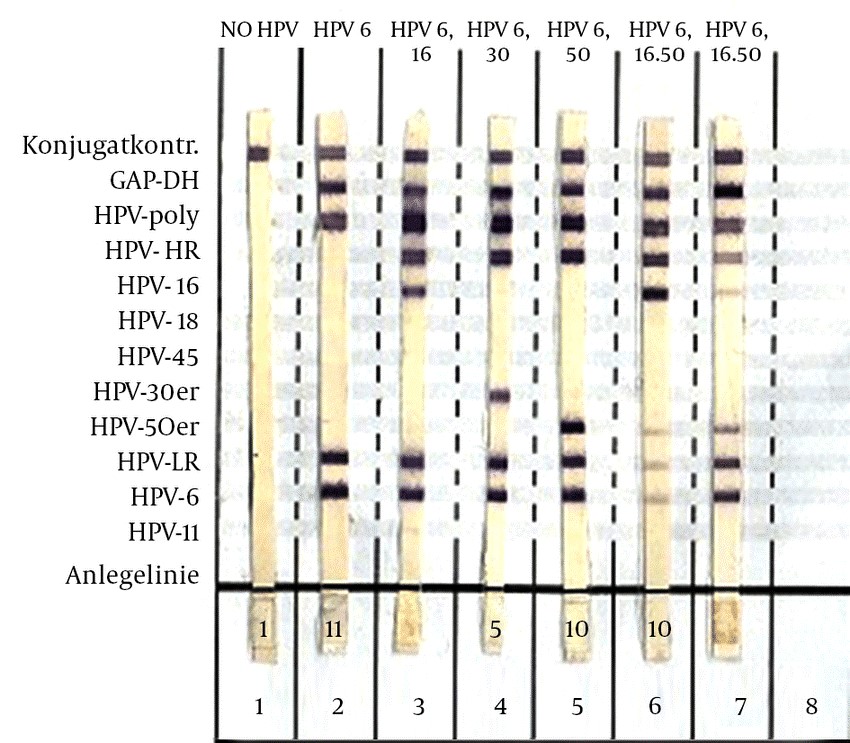 Figure 1. Examples of HPV Results Obtained Using the Linear Array HPV Genotyping Test, HPV Easy-Typing Kit.(Somayeh Jalilian, et al.; 2017)
According to the relationship between HPV and cervical cancer and precancerous lesions, it can be divided into high-risk and low-risk types. Low-risk HPV types include HPV types 6, 11, 42, 43, and 44. Low-risk HPV infection can cause benign or low-grade cervical cell changes, genital warts, and recurrent respiratory multiple papillomatosis. High-risk types include HPV16, 18, 31, 33, 35, 39, 45, 51, 52, 56, 58, 59, 68, 69, 73, 82, etc., which can cause low-grade cervical cell abnormalities and high-grade cervical cell abnormalities (Precursors of cancer) and cancers (such as cervical cancer, rectal cancer, oral cancer, tonsil cancer, vulva cancer, penis cancer, anal cancer, prostate cancer, bladder cancer, etc.).
At present, cervical cancer is the only cancer among all human cancers that has a clear cause, the only one that can be prevented and treated early, and the only one that can be completely eradicated. The 5-year survival rate of early treatment is close to 100%, and the 5-year survival rate of late treatment is 20-50%. Since the occurrence of cervical cancer is more than 99% related to persistent infection with high-risk HPV, HPV testing and timely and effective intervention for HPV-infected patients play a key role in preventing the occurrence of cervical cancer.
HPV typing testing can determine the type of HPV infection, thereby predicting the risk of the subject's disease and determining the best treatment period and plan. Different HPV types cause different diseases, and different high-risk HPV types also have different pathogenic abilities. Although high-risk HPV infection is a necessary condition for the occurrence of cervical cancer, the risk of progression to cervical lesions and invasive cancer after infection with different types of high-risk HPV, as well as the prognosis of related invasive cancer, are different. Studies have found that nearly 70% of cervical cancers in the world are caused by HPV16 and 18 subtypes. HPV16, 18, 58, and 59 are common types of squamous cell carcinoma, and HPV18 is common types of adenocarcinoma, adenosquamous carcinoma, and small cell carcinoma. Among the common types, HPV16 also accounts for a larger proportion in adenocarcinoma. HPV typing testing can predict the risk of the subject's disease and determine the best treatment period and plan.
HPV typing differentiates between single and multiple infections. The presence of multiple HPV genotypes may increase the length of persistent HPV infection and the risk of cancer. It is crucial to determine whether the infection is a single infection or multiple infections through HPV typing testing. HPV typing can distinguish persistent (repeat) infections from transient infections, thereby increasing the specificity of routine screening or follow-up tests. After being infected with HPV, more than 90% of the human body's immune system can clear the HPV virus within 2 years. However, multiple studies have shown that HPV16 infection is more likely to persist and has a higher risk of progression to CIN3 and invasive cancer than other high-risk HPV types. Women with normal cervical cytology who are HPV-18 positive have a higher risk of developing CIN3, especially adenocarcinoma and related precancerous lesions. The risk coefficient of persistent high-risk HPV infection is higher than that of transient infection. Screening through HPV typing testing and managing patients with persistent (repeated) infection separately from patients with transient infection are helpful in preventing cancer and improving prognosis.
Reference
| Target | Cat. No. | Product Name | Size | Species Reactivity | Application | Detection Sample | |
| HPV | DEIA-F678S | Human Papilloma Virus IgG ELISA kit | 96T | Human | Qualitative | plasma, serum | Inquiry |
| DEIASL404 | Human HPV18 IgM ELISA kit | 96T | Qualitative | Serum, plasma | Inquiry | ||
| DEIASL405 | Human HPV 16 L1-capsids IgG ELISA Kit | 96T | Qualitative | Serum, plasma | Inquiry | ||
| DEIASL406 | Human HPV 16 IgM ELISA Kit | 96T | Qualitative | Serum, plasma | Inquiry | ||
| DEIASL407 | Human Papilloma Virus IgM ELISA Kit | 96T | Qualitative | Serum, plasma | Inquiry | ||
| DEIASL408 | Human HPV 18 L1-capsids IgG ELISA Kit | 96T | Qualitative | Serum, plasma | Inquiry | ||
| DEIASL409 | Rabbit HPV 16 L1-capsids IgG ELISA Kit | 96T | Qualitative | Serum, plasma | Inquiry | ||
| DEIASL410 | Human high risk HPV L1-capsids (HR-HPVL1) IgG ELISA kit | 96T | Qualitative | Serum, plasma | Inquiry | ||
| DEIASL119 | HPV(18) Antigen ELISA Quantitation Kit | 96T | Quantitative | Serum, plasma | Inquiry | ||
| DEIASL120 | HPV(52) Antigen ELISA Quantitation Kit | 96T | Quantitative | Serum, plasma | Inquiry | ||
| DEIASL121 | HPV(58) Antigen ELISA Quantitation Kit | 96T | Quantitative | Serum, plasma | Inquiry | ||
| DEIASL171 | Human HPV 16 E7 Oncoprotein ELISA Kit | 96T | Human | Quantitative | Cell lysates, tissue lysates, cervical smears, plasma, serum | Inquiry | |
| DEIASL172 | Human HPV 18 E7 Oncoprotein ELISA Kit | 96T | Quantitative | Cell lysates, tissue lysates, or cervical smears | Inquiry | ||
| HPV16 | DEIASL118 | HPV (16) Antigen ELISA Quantitation Kit | 96T | Human | Quantitative | Serum and plasma | Inquiry |
Loading ......
