Cervical cancer is the fourth most common cancer among women worldwide, with more than half a million women currently diagnosed with cervical cancer. As high-risk groups, elderly women and pregnant women who can be transmitted through mother-to-child transmission should be given special attention. The incidence of cervical cancer is mainly related to persistent infection with human papillomavirus (HPV). Among all identified "high-risk" HPVs, HPV types 16 (HPV16) and HPV types 18 (HPV18) account for more than 70% of all cervical cancer cases, and persistent infection is the cause of the vast majority of cervical cancers worldwide. HPV is a small, non-enveloped, double-stranded DNA virus. The HPV genome can be divided into three regions: long control region (LCR), early open reading frame (EORF) and late open reading frame (LORF). The HPV viral reading frame consists of the following: three regulatory genes involved in transcription and replication (E1, E2 and E4) in EORF; oncogenes (E5, E6 and E7); two genes encoding self-assembly proteins (L1 and L2) in LORF. The proteins encoded by L1 and L2 can constitute the viral capsid. The three HPV vaccines currently on the market are all assembled into virus-like particles (VLPs) based on non-infectious recombinant specific L1 capsid proteins and purified in the form of VLPS as immunogens. Among them, the nine-valent HPV vaccine has the ability to prevent up to Potential for 90% of cervical cancer cases.
HPV L1 Protein
The L1 gene is about 1.5kb in length and has a molecular weight of about 55kDa. It contains five BC, DE, EF, FG, and HI cyclic connecting peptides (Loop region) displayed on the outer surface, accounting for 80% to 90% of the total viral shell. It is the main component of the viral capsid. L1 protein can be efficiently expressed in eukaryotic yeast expression systems, 293FT cells, and E. coli prokaryotic expression systems. The L1 protein expressed in vitro can self-assemble into VLP in a specific buffer, and its structure is highly similar to that of natural viruses. Under a transmission electron microscope, this virus-like particle displays an icosahedral structure composed of 72 shell microsomes, each of which is a pentamer composed of 5 L1 monomers.
Figure 1. L1 and L2-capdid proteins of HPV. (Mohsen MO, et al., 2022)
HPV VLPs and HPV Vaccines
Virus-like particles (VLPs) composed of the main capsid protein L1 of HPV have a similar structure to natural viruses, retain the neutralizing epitopes of natural viruses, and do not carry viral genomes. They have high safety and are good vaccine antigens. Clinical trial studies have shown that HPV vaccination can effectively prevent cervical cancer and genital lesions caused by HPV. The HPV vaccines currently on the market all use VLPs as antigens.
The conformational neutralizing epitope of HPV VLPs is the basis for inducing the body to produce protective antibodies. Therefore, HPV VLPs are particularly important for HPV vaccine development. Studies have found that under commercial production processes, the particle morphology and size of HPV18 VLPs derived from Escherichia coli are consistent with natural virus particles, and the antigenic epitopes of the virus are completely retained. Immunochemical characterization results also confirmed that the particles can induce high titers of neutralizing antibodies and have good immunogenicity.
Through the detection of post-translational modifications of HPV18 L1 protein, it was found that the modifications mainly include oxidation and deamidation. No N-glycosylation, O-glycosylation and glycation-related modifications were detected, and the secondary structure composition is consistent with the HPV L1 crystal structure results. Further studies have shown that post-translational modification is not necessary for the HPV L1 protein to maintain its normal conformation and exert immunogenicity. The C-terminal amino acids of HPV18 L1 protein are mainly inside VLPs and do not participate in the formation of antigenic determinants on the particle surface, so they do not affect the immunochemical properties of VLPs. In order to increase the expression of HPV L1 in insect cells and facilitate purification, GlaxoSmithKline's bivalent HPV vaccine truncates the C-terminal nucleic acid sequence, which does not affect the formation of the VLPs coat or reduce the known and epitopes. At the same time, the deletion of the C-terminal amino acid will reduce the binding site between L1 protein and DNA, reducing the amount of DNA residues wrapped in VLPs, and also provides new ideas for subsequent product design improvements.
Reference
Mohsen MO, et al., Virus-like particle vaccinology, from bench to bedside. Cell Mol Immunol. 2022, 19(9):993-1011.

 Loading ......
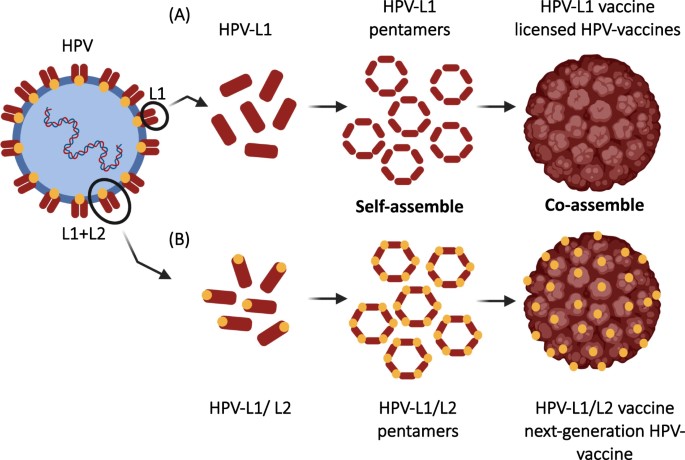 Figure 1. L1 and L2-capdid proteins of HPV. (Mohsen MO, et al., 2022)