
Inquiry Basket
 Loading ......
Human papillomavirus (HPV) is a highly prevalent sexually transmitted virus, with approximately 13 million new cases diagnosed by doctors annually. This virus is primarily transmitted through skin-to-skin contact during vaginal, anal, or oral sexual activity. While most types of HPV are low-risk and typically resolve independently without causing significant health issues, there are specific high-risk types of HPV that can lead to the development of cancer.
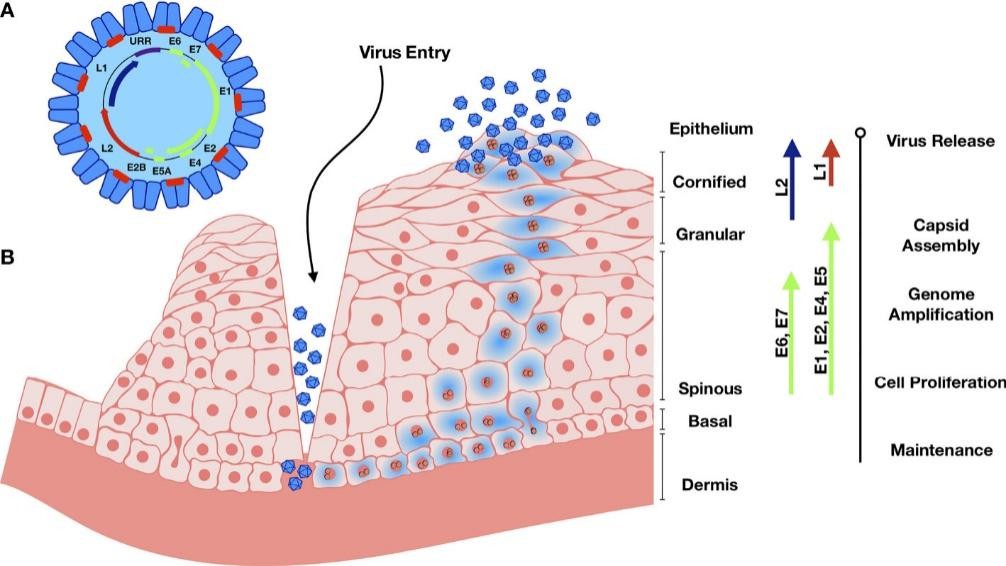 Figure 1. Genome organization and life cycle of HPV.
(Source: Zayats, R. et al., 2022)
High-risk HPV refers to specific types of human papillomavirus that have the potential to cause cancer. Among the more than 200 known types of HPV, approximately 14 are considered oncogenic or high risk. These high-risk types include HPV-16, HPV-18, HPV-31, HPV-33, HPV-35, HPV-39, HPV-45, HPV-51, HPV-52, HPV-56, HPV-58, HPV-59, HPV-66, and HPV 68. These types are associated with various cancers, such as cervical, anal, oropharyngeal, penile, vaginal, and vulval cancers.
| Anal cancer | More than 90% of anal cancers are caused by HPV. |
| Oropharyngeal cancers | This cancer forms in the oropharyngeal tissue (the middle of the throat, at the back of the mouth). About 70% of oropharyngeal cancers are caused by HPV. |
| Cervical cancer | Almost all cervical cancers are caused by HPV. Regular HPV testing helps prevent most cervical cancers by allowing healthcare providers to find and remove precancerous cells before they develop into cervical cancer. |
| Vaginal cancer | About 75% of vaginal cancers are caused by HPV. |
| Vulvar cancer | About 69% of vulvar cancers are caused by HPV. |
| Penile cancer | This is a rare cancer that usually forms above or below the foreskin. About 63% of penile cancers are caused by HPV. |
High-risk HPV infection can lead to uncontrolled replication and division of cervical cells, as well as disrupt their communication with each other. Normally, the immune system can recognize and control these infected cells. However, in some cases, the infected cells persist and continue to grow, forming an area of precancerous cells that can eventually develop into cancer if left untreated. Similar mechanisms are likely involved in HPV-caused cancers in other areas of the body.
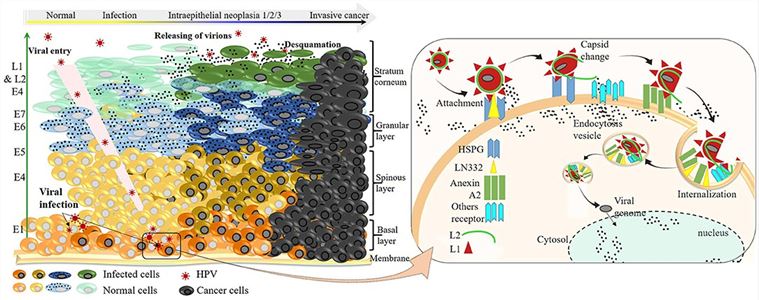 Figure 2. HR-HPV infection cycle at the molecular level and progression to invasive cancer.
(Source: Kombe Kombe, A. J. et al., 2021)
Research indicates that it can take 5 to 10 years for HPV-infected cervical cells to progress to precancerous stages and approximately 20 years to develop into cancer. When cervical cells are infected with high-risk HPV, various factors increase the likelihood of persistent HPV infection and the formation of precancerous cells in the cervix. These factors include:
Surgery is often necessary to remove precancerous cells caused by high-risk HPV to prevent their progression into cancer. One common procedure for removing these cells from the cervix is called loop electrosurgical excision. Another option is cervical cryotherapy.
When it comes to treating HPV-related cancer, the approach is typically similar to that of other cancers in the same area. The specific treatment plan depends on factors such as the location, type, and stage of the cancer. Different treatment options include chemotherapy, surgery, radiation therapy, immunotherapy, and targeted therapy. The choice of treatment is determined based on individual circumstances and the recommendations of healthcare professionals.
Prevention plays a crucial role in reducing the burden of high-risk HPV-related diseases. Key preventive measures include:
References
| Target | Cat. No. | Product Name | Expression System | Tag/Conjugate | Application | |
| HPV | PSVG-HPV16 | Pseudotyped GFP HPV16 | Useful for studying papillomavirus assembly, entry, and neutralization. | Inquiry | ||
| PSVG-HPV18 | Pseudotyped GFP HPV18 | Useful for studying papillomavirus assembly, entry, and neutralization. | Inquiry | |||
| PSVG-HPV31 | Pseudotyped GFP HPV31 | Useful for studying papillomavirus assembly, entry, and neutralization. | Inquiry | |||
| PSVG-HPV33 | Pseudotyped GFP HPV33 | Useful for studying papillomavirus assembly, entry, and neutralization. | Inquiry | |||
| PSVG-HPV35 | Pseudotyped GFP HPV35 | Useful for studying papillomavirus assembly, entry, and neutralization. | Inquiry | |||
| PSVG-HPV39 | Pseudotyped GFP HPV39 | Useful for studying papillomavirus assembly, entry, and neutralization. | Inquiry | |||
| PSVG-HPV45 | Pseudotyped GFP HPV45 | Useful for studying papillomavirus assembly, entry, and neutralization. | Inquiry | |||
| PSVG-HPV51 | Pseudotyped GFP HPV51 | Useful for studying papillomavirus assembly, entry, and neutralization. | Inquiry | |||
| PSVG-HPV52 | Pseudotyped GFP HPV52 | Useful for studying papillomavirus assembly, entry, and neutralization. | Inquiry | |||
| PSVG-HPV56 | Pseudotyped GFP HPV56 | Useful for studying papillomavirus assembly, entry, and neutralization. | Inquiry | |||
| PSVG-HPV58 | Pseudotyped GFP HPV58 | Useful for studying papillomavirus assembly, entry, and neutralization. | Inquiry | |||
| PSVG-HPV59 | Pseudotyped GFP HPV59 | Useful for studying papillomavirus assembly, entry, and neutralization. | Inquiry | |||
| PSVG-HPV68 | Pseudotyped GFP HPV68 | Useful for studying papillomavirus assembly, entry, and neutralization. | Inquiry | |||
| DAGF-231 | Recombinant Human Papilloma Virus type 31 L1 protein (VLP) | E. coli | Unconjugated | Inquiry | ||
| DAGF-233 | Recombinant Human Papilloma Virus type 45 L1 protein (VLP) | E. coli | Unconjugated | Inquiry | ||
| DAGF-234 | Recombinant Human Papilloma Virus type 52 L1 protein (VLP) | E. coli | Unconjugated | Inquiry | ||
| DAGF-235 | Recombinant Human Papilloma Virus type 58 L1 protein (VLP) | E. coli | Unconjugated | Inquiry | ||
| HPV 35 | DAGC142 | Recombinant Human Papilloma Virus type 35 L1 protein (VLP) | E. coli | Unconjugated | SDS-PAGE | Inquiry |
| HPV 39 | DAGC143 | Recombinant Human Papilloma Virus type 39 L1 protein (VLP) | E. coli | Unconjugated | SDS-PAGE | Inquiry |
| HPV 51 | DAGC144 | Recombinant Human Papilloma Virus type 51 L1 protein (VLP) | E. coli | Unconjugated | SDS-PAGE | Inquiry |
| HPV 56 | DAGC145 | Recombinant Human Papilloma Virus type 56 L1 protein (VLP) | E. coli | Unconjugated | SDS-PAGE | Inquiry |
| HPV 59 | DAGC146 | Recombinant Human Papilloma Virus type 59 L1 protein (VLP) | E. coli | Unconjugated | SDS-PAGE | Inquiry |
| HPV 68 | DAGC147 | Recombinant Human Papilloma Virus type 68 L1 protein (VLP) | E. coli | Unconjugated | SDS-PAGE | Inquiry |
| HPV16 | DAGF-094 | Recombinant HPV16 E6 protein [His] | E. coli | His | Inquiry | |
| DAGF-095 | Recombinant HPV16 E6 protein (aa 1-158) [His] | Yeast | His | Inquiry | ||
| DAGF-096 | Recombinant HPV16 E7 protein (aa 1-98) [GST] | E. coli | GST | Inquiry | ||
| DAGF-229 | Recombinant Human Papilloma Virus type 16 L1 protein (VLP) | E. coli | Unconjugated | Inquiry | ||
| DAG-P2512 | Recombinant HPV type 16 (aa 1 - 531) | E. coli | Unconjugated | SDS-PAGE | Inquiry | |
| DAG1573 | Recombinant HPV type 16 [GST] | E. coli | GST | ELISA | Inquiry | |
| HPV16 E7 | DAGC276 | Recombinant HPV16 E7 Protein [His] | E.coli | His | TBD | Inquiry |
| HPV16 L1 | DAG-WT324 | Recombinant HPV type 16 L1 Protein (E. coli) | E. coli | Unconjugated | ELISA | Inquiry |
| DAG439 | Recombinant HPV type 16 L1 Protein | Hansenula polymorpha | Unconjugated | N/A | Inquiry | |
| DAG-P2171 | Recombinant HPV Type 16 L1 Protein | Yeast | Unconjugated | Immunoassays | Inquiry | |
| HPV18 | DAGF-097 | Recombinant HPV18 E6 protein (aa 1-158) [His] | E. coli | His | Inquiry | |
| DAGF-098 | Recombinant HPV18 E7 protein (aa 1-105) [His] | Yeast | His | Inquiry | ||
| DAGF-230 | Recombinant Human Papilloma Virus type 18 L1 protein (VLP) | E. coli | Unconjugated | Inquiry | ||
| DAG1574 | Recombinant HPV type 18 [GST] | E. coli | GST | IA | Inquiry | |
| HPV18 E7 | DAG-WT755 | HPV18 E7 Protein [His] | E. coli | His | ELISA, LF | Inquiry |
| HPV18 L1 | DAG-WT1147 | Recombinant HPV type 18 L1 Protein (E. coli) | E. coli | His | ELISA | Inquiry |
| DAG-P2172 | Recombinant HPV type 18 L1 Protein (full length) | S. cerevisiae | Unconjugated | ELISA, WB, SDS-PAGE | Inquiry | |
| DAG440 | Recombinant HPV type 18 L1 Protein | Hansenula polymorpha | Unconjugated | Immunoblot | Inquiry | |
| HPV33 L1 | DAGF-232 | Recombinant Human Papilloma Virus type 33 L1 protein (VLP) | E. coli | Unconjugated | Inquiry | |
| DAG-P2173 | Recombinant HPV type 33 L1 Protein (full length) | S. cerevisiae | Unconjugated | ELISA, WB, SDS-PAGE | Inquiry |
| Target | Cat. No. | Product Name | Size | Species Reactivity | Application | Detection Sample | |
| HPV | DEIASL404 | Human HPV18 IgM ELISA kit | 96T | Qualitative | Serum, plasma | Inquiry | |
| DEIASL405 | Human HPV 16 L1-capsids IgG ELISA Kit | 96T | Qualitative | Serum, plasma | Inquiry | ||
| DEIASL406 | Human HPV 16 IgM ELISA Kit | 96T | Qualitative | Serum, plasma | Inquiry | ||
| DEIASL408 | Human HPV 18 L1-capsids IgG ELISA Kit | 96T | Qualitative | Serum, plasma | Inquiry | ||
| DEIASL409 | Rabbit HPV 16 L1-capsids IgG ELISA Kit | 96T | Qualitative | Serum, plasma | Inquiry | ||
| DEIASL410 | Human high risk HPV L1-capsids (HR-HPVL1) IgG ELISA kit | 96T | Qualitative | Serum, plasma | Inquiry | ||
| DEIASL119 | HPV(18) Antigen ELISA Quantitation Kit | 96T | Quantitative | Serum, plasma | Inquiry | ||
| DEIASL120 | HPV(52) Antigen ELISA Quantitation Kit | 96T | Quantitative | Serum, plasma | Inquiry | ||
| DEIASL121 | HPV(58) Antigen ELISA Quantitation Kit | 96T | Quantitative | Serum, plasma | Inquiry | ||
| DEIASL171 | Human HPV 16 E7 Oncoprotein ELISA Kit | 96T | Human | Quantitative | Cell lysates, tissue lysates, cervical smears, plasma, serum | Inquiry | |
| DEIASL172 | Human HPV 18 E7 Oncoprotein ELISA Kit | 96T | Quantitative | Cell lysates, tissue lysates, or cervical smears | Inquiry | ||
| HPV16 | DEIASL118 | HPV (16) Antigen ELISA Quantitation Kit | 96T | Human | Quantitative | Serum and plasma | Inquiry |
Loading ......
