
Inquiry Basket
 Loading ......
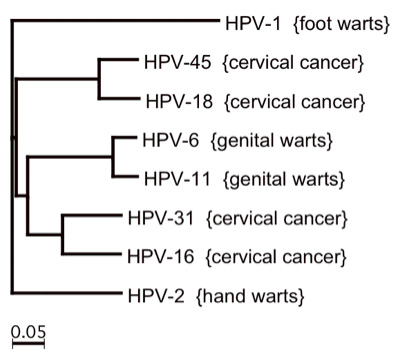 Fig. 1 Family Tree of Human Papillomavirus (Part)
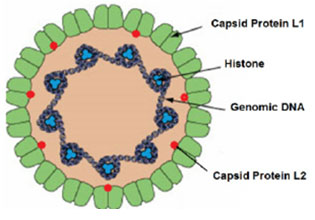 Fig. 2 The structure of HPV (Swiss Institute of Bioinformatics, Viral Zone)
Human papillomavirus, abbreviated as HPV, a big family which contains over 170 types of HPV and they are designated by numbers as they have been identified. Different subtypes can cause different symptoms: clinical or non-clinical symptom, such as the patients who infected by HPV-5 through a life time may not display a disease symptom. While in those disease strains, HPV-1, HPV-2, HPV-6 or HPV-11 will cause common or genital warts in patients. And clinical statistics shows that many HPV types are considered carcinogenic, such as HPV-16, 18, 31, 33, 35, 39, 45, 51, 52, 56, 58, 59, 68, 73, and 82. Part of the family tree of HPV illustrated as Fig. 1.
HPV is a relatively small non-enveloped virus that contains a double-stranded closed circular DNA genome, associated with histone-like proteins and protected by a capsid formed by two late proteins (L1 and L2). Each capsid is composed of 72 capsomeres, each of which is composed of five monomeric of 55kDa units that join to form a pentamer corresponding to the major protein capsid, L1. The L1 pentamers are distributed forming a network of intra- and interpentameric disulfide interactions which serve to stabilize the capsid. In addition to L1, minor capsid proteins with approximately 75kDa exist within the virion and are called the L2 protein. To assemble the viral capsid, the pentamers join to copies of L2 that occludes the center of each pentavalent capsomere. Thus, each virion contains 72 copies of the L1, the major component of the capsid, and a variable number of copies of L2, a secondary component of the viral capsid, forming a particle with icosahedra symmetry and approximately 50 to 60 nm in diameter.
HPV, a typical DNA virus, which mainly transmits between individuals through sexual contact and also can spread from a mother to her baby during pregnancy. The vaccine could be used to prevent this disease caused by HPV, however, it can work only for the kids who age from 9 to 13.
During those subtypes, nearly all cervical cancer is due to HPV with two types, HPV16 and HPV18, accounting for 70% of cases. HPV may induce cancer in patients when viral genetic substance, DNA sequence integrated into the DNA of host cells, because some genes called as “early genes” will play a role as oncogenes did, what is, promoting tumor growth and malignant transformation. The genome organization of human HPV-16 contains several “early genes”, show as E1-7 in this diagram, and L1/L2 late genes which regulates the signal pathway of capsid assembly.
Loading ......
