
Inquiry Basket
 Loading ......
Human papillomavirus (HPV) is a group of viruses consisting of approximately 200 known types. While most HPV infections do not cause any significant issues, certain high-risk types of HPV can lead to genital warts or cancer.
In approximately 90% of individuals, the body's immune system can naturally control the HPV infection. However, persistent infection with high-risk HPV types is the primary cause of cervical cancer and is also associated with the development of other types of cancers, including those affecting the mouth/throat, vulva, vagina, penis, and anus. According to statistics, there are approximately 36,000 cases of cancer caused by HPV in the United States each year.
High-risk HPV infection can lead to uncontrolled replication and division of cervical cells, as well as disrupt their communication with each other. Normally, the immune system can recognize and control these infected cells. However, in some cases, the infected cells persist and continue to grow, forming an area of precancerous cells that can eventually develop into cancer if left untreated.
Research indicates that it can take 5 to 10 years for HPV-infected cervical cells to progress to precancerous stages and approximately 20 years to develop into cancer, thus providing a desirable window period to treat this disease at an early stage. When cervical cells are infected with high-risk HPV, some additional risk factors increase the likelihood of persistent HPV infection and the formation of precancerous cells in the cervix. These factors include smoking, a history of sexually transmitted infections, use of oral contraceptives, and immunosuppression. Based on their role in the oncogenic progression of the disease, the various factors can be classified as exposure-related, host susceptibility-related, factors affecting the tumor microenvironment (TME), and somatic/epigenetic.
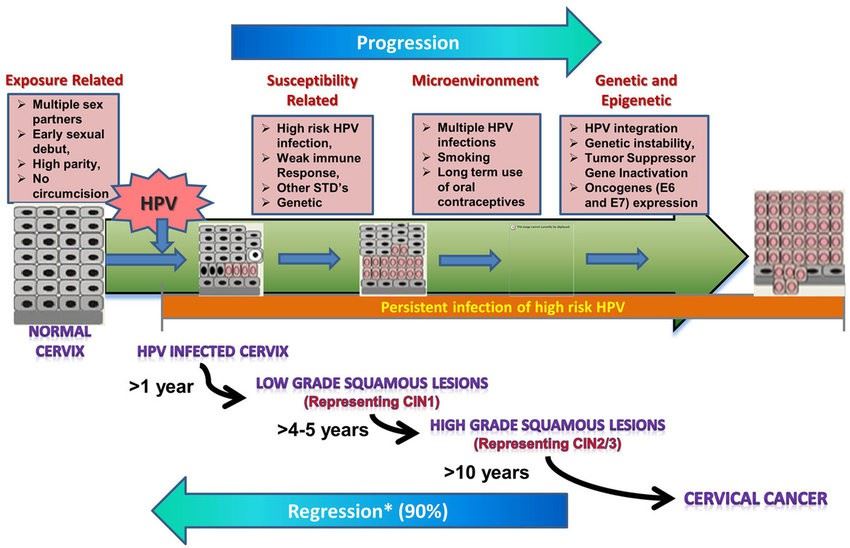 Figure 1. Natural history of HPV infection and stage-wise progression of cervical cancer.
(Source: Bharti, A. C. et al., 2018)
HPV infection poses a significant risk for the development of various malignancies, including cervical, vulvar, vaginal, penile, anal, and mouth and throat cancers. Early detection and accurate diagnosis of HPV-related cancers are crucial for optimal patient outcomes. As a pioneer in the diagnostic field, Creative Diagnostics offers advanced HPV-related antibodies, antigens, and ELISA kits that enable the identification and investigation of high-risk HPV types associated with these malignancies. By utilizing these innovative tools, healthcare professionals can enhance early detection, implement appropriate management strategies, and ultimately improve patient outcomes in the fight against HPV-related cancers.
References
| Target | Cat. No. | Product Name | Expression System | Tag/Conjugate | Application | |
| HPV | PSVG-HPV16 | Pseudotyped GFP HPV16 | Useful for studying papillomavirus assembly, entry, and neutralization. | Inquiry | ||
| PSVG-HPV18 | Pseudotyped GFP HPV18 | Useful for studying papillomavirus assembly, entry, and neutralization. | Inquiry | |||
| PSVG-HPV31 | Pseudotyped GFP HPV31 | Useful for studying papillomavirus assembly, entry, and neutralization. | Inquiry | |||
| PSVG-HPV33 | Pseudotyped GFP HPV33 | Useful for studying papillomavirus assembly, entry, and neutralization. | Inquiry | |||
| PSVG-HPV35 | Pseudotyped GFP HPV35 | Useful for studying papillomavirus assembly, entry, and neutralization. | Inquiry | |||
| PSVG-HPV39 | Pseudotyped GFP HPV39 | Useful for studying papillomavirus assembly, entry, and neutralization. | Inquiry | |||
| PSVG-HPV45 | Pseudotyped GFP HPV45 | Useful for studying papillomavirus assembly, entry, and neutralization. | Inquiry | |||
| PSVG-HPV51 | Pseudotyped GFP HPV51 | Useful for studying papillomavirus assembly, entry, and neutralization. | Inquiry | |||
| PSVG-HPV52 | Pseudotyped GFP HPV52 | Useful for studying papillomavirus assembly, entry, and neutralization. | Inquiry | |||
| PSVG-HPV56 | Pseudotyped GFP HPV56 | Useful for studying papillomavirus assembly, entry, and neutralization. | Inquiry | |||
| PSVG-HPV58 | Pseudotyped GFP HPV58 | Useful for studying papillomavirus assembly, entry, and neutralization. | Inquiry | |||
| PSVG-HPV59 | Pseudotyped GFP HPV59 | Useful for studying papillomavirus assembly, entry, and neutralization. | Inquiry | |||
| PSVG-HPV68 | Pseudotyped GFP HPV68 | Useful for studying papillomavirus assembly, entry, and neutralization. | Inquiry | |||
| DAGF-231 | Recombinant Human Papilloma Virus type 31 L1 protein (VLP) | E. coli | Unconjugated | Inquiry | ||
| DAGF-233 | Recombinant Human Papilloma Virus type 45 L1 protein (VLP) | E. coli | Unconjugated | Inquiry | ||
| DAGF-234 | Recombinant Human Papilloma Virus type 52 L1 protein (VLP) | E. coli | Unconjugated | Inquiry | ||
| DAGF-235 | Recombinant Human Papilloma Virus type 58 L1 protein (VLP) | E. coli | Unconjugated | Inquiry | ||
| HPV 35 | DAGC142 | Recombinant Human Papilloma Virus type 35 L1 protein (VLP) | E. coli | Unconjugated | SDS-PAGE | Inquiry |
| HPV 39 | DAGC143 | Recombinant Human Papilloma Virus type 39 L1 protein (VLP) | E. coli | Unconjugated | SDS-PAGE | Inquiry |
| HPV 51 | DAGC144 | Recombinant Human Papilloma Virus type 51 L1 protein (VLP) | E. coli | Unconjugated | SDS-PAGE | Inquiry |
| HPV 56 | DAGC145 | Recombinant Human Papilloma Virus type 56 L1 protein (VLP) | E. coli | Unconjugated | SDS-PAGE | Inquiry |
| HPV 59 | DAGC146 | Recombinant Human Papilloma Virus type 59 L1 protein (VLP) | E. coli | Unconjugated | SDS-PAGE | Inquiry |
| HPV 68 | DAGC147 | Recombinant Human Papilloma Virus type 68 L1 protein (VLP) | E. coli | Unconjugated | SDS-PAGE | Inquiry |
| HPV16 | DAGF-094 | Recombinant HPV16 E6 protein [His] | E. coli | His | Inquiry | |
| DAGF-095 | Recombinant HPV16 E6 protein (aa 1-158) [His] | Yeast | His | Inquiry | ||
| DAGF-096 | Recombinant HPV16 E7 protein (aa 1-98) [GST] | E. coli | GST | Inquiry | ||
| DAGF-229 | Recombinant Human Papilloma Virus type 16 L1 protein (VLP) | E. coli | Unconjugated | Inquiry | ||
| DAG-P2512 | Recombinant HPV type 16 (aa 1 - 531) | E. coli | Unconjugated | SDS-PAGE | Inquiry | |
| DAG1573 | Recombinant HPV type 16 [GST] | E. coli | GST | ELISA | Inquiry | |
| HPV16 E7 | DAGC276 | Recombinant HPV16 E7 Protein [His] | E.coli | His | TBD | Inquiry |
| HPV16 L1 | DAG-WT324 | Recombinant HPV type 16 L1 Protein (E. coli) | E. coli | Unconjugated | ELISA | Inquiry |
| DAG439 | Recombinant HPV type 16 L1 Protein | Hansenula polymorpha | Unconjugated | N/A | Inquiry | |
| DAG-P2171 | Recombinant HPV Type 16 L1 Protein | Yeast | Unconjugated | Immunoassays | Inquiry | |
| HPV18 | DAGF-097 | Recombinant HPV18 E6 protein (aa 1-158) [His] | E. coli | His | Inquiry | |
| DAGF-098 | Recombinant HPV18 E7 protein (aa 1-105) [His] | Yeast | His | Inquiry | ||
| DAGF-230 | Recombinant Human Papilloma Virus type 18 L1 protein (VLP) | E. coli | Unconjugated | Inquiry | ||
| DAG1574 | Recombinant HPV type 18 [GST] | E. coli | GST | IA | Inquiry | |
| HPV18 E7 | DAG-WT755 | HPV18 E7 Protein [His] | E. coli | His | ELISA, LF | Inquiry |
| HPV18 L1 | DAG-WT1147 | Recombinant HPV type 18 L1 Protein (E. coli) | E. coli | His | ELISA | Inquiry |
| DAG-P2172 | Recombinant HPV type 18 L1 Protein (full length) | S. cerevisiae | Unconjugated | ELISA, WB, SDS-PAGE | Inquiry | |
| DAG440 | Recombinant HPV type 18 L1 Protein | Hansenula polymorpha | Unconjugated | Immunoblot | Inquiry | |
| HPV33 L1 | DAGF-232 | Recombinant Human Papilloma Virus type 33 L1 protein (VLP) | E. coli | Unconjugated | Inquiry | |
| DAG-P2173 | Recombinant HPV type 33 L1 Protein (full length) | S. cerevisiae | Unconjugated | ELISA, WB, SDS-PAGE | Inquiry |
| Target | Cat. No. | Product Name | Size | Species Reactivity | Application | Detection Sample | |
| HPV | DEIASL404 | Human HPV18 IgM ELISA kit | 96T | Qualitative | Serum, plasma | Inquiry | |
| DEIASL405 | Human HPV 16 L1-capsids IgG ELISA Kit | 96T | Qualitative | Serum, plasma | Inquiry | ||
| DEIASL406 | Human HPV 16 IgM ELISA Kit | 96T | Qualitative | Serum, plasma | Inquiry | ||
| DEIASL408 | Human HPV 18 L1-capsids IgG ELISA Kit | 96T | Qualitative | Serum, plasma | Inquiry | ||
| DEIASL409 | Rabbit HPV 16 L1-capsids IgG ELISA Kit | 96T | Qualitative | Serum, plasma | Inquiry | ||
| DEIASL410 | Human high risk HPV L1-capsids (HR-HPVL1) IgG ELISA kit | 96T | Qualitative | Serum, plasma | Inquiry | ||
| DEIASL119 | HPV(18) Antigen ELISA Quantitation Kit | 96T | Quantitative | Serum, plasma | Inquiry | ||
| DEIASL120 | HPV(52) Antigen ELISA Quantitation Kit | 96T | Quantitative | Serum, plasma | Inquiry | ||
| DEIASL121 | HPV(58) Antigen ELISA Quantitation Kit | 96T | Quantitative | Serum, plasma | Inquiry | ||
| DEIASL171 | Human HPV 16 E7 Oncoprotein ELISA Kit | 96T | Human | Quantitative | Cell lysates, tissue lysates, cervical smears, plasma, serum | Inquiry | |
| DEIASL172 | Human HPV 18 E7 Oncoprotein ELISA Kit | 96T | Quantitative | Cell lysates, tissue lysates, or cervical smears | Inquiry | ||
| HPV16 | DEIASL118 | HPV (16) Antigen ELISA Quantitation Kit | 96T | Human | Quantitative | Serum and plasma | Inquiry |
Loading ......
