
Inquiry Basket
 Loading ......
Post-translational modifications (PTMs) refer to the chemical modifications that occur on proteins after their synthesis. These modifications can occur in various forms, including phosphorylation, acetylation, glycosylation, methylation, ubiquitination, and many others. These modifications have profound effects on protein stability, activity, localization, and interactions with other molecules. Understanding PTMs is essential for unraveling the complexity of cellular processes and their dysregulation in various diseases.
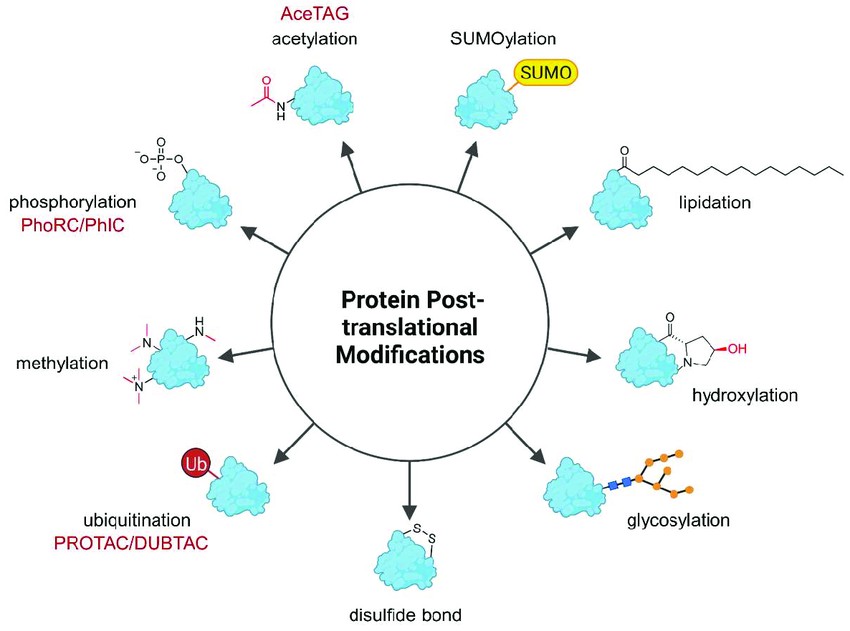 Figure 1. Overview of the most common posttranslational protein modifications (PTMs).
(Source: Heitel, P. 2023)
PTMs occur at distinct amino acid side chains or peptide linkages and are primarily mediated by enzymatic activity. Enzymes, including kinases, transferases, phosphatases, ligases, and proteases, play a significant role in adding or removing functional groups, proteins, lipids, or sugars from amino acid side chains. Autocatalytic domains within proteins can also facilitate self-modification processes.
PTMs can take place at various stages in a protein's "life cycle." Shortly after translation, proteins may undergo modifications to ensure proper folding, stability, or localization within specific cellular compartments. Other modifications occur after folding and localization, influencing the protein's catalytic activity or biological function. Additionally, proteins can be covalently linked to degradation tags, marking them for targeted degradation. Significantly, post-translational cleavage and step-wise protein maturation or activation mechanisms often combine to modify proteins.
Reversibility is a characteristic of some protein PTMs. For instance, kinases phosphorylate specific amino acid side chains to activate or deactivate proteins, while phosphatases hydrolyze the phosphate group, reversing biological activity. On the other hand, proteolytic cleavage irreversibly removes peptide sequences or regulatory domains, as it is a thermodynamically favorable reaction.
In summary, PTMs are diverse and occur through enzymatic activities at specific sites in proteins. These modifications can affect protein folding, stability, cellular localization, catalytic activity, and overall biological function. Reversible and irreversible modifications contribute to the complex regulation of protein activity and cellular processes.
PTMs have diverse functional implications in cellular processes. They regulate protein activity, localization, and interaction, influencing signal transduction, gene expression, and metabolism. Some key aspects of functional implications include:
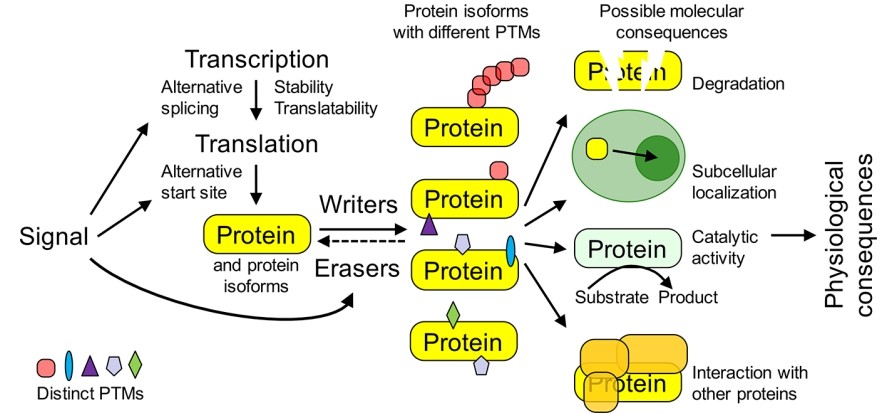 Figure 2. Posttranslational modifications (PTMs) control protein functions.
(Source:Lüscher, B. et al., 2018)
References
Loading ......
