
Inquiry Basket
 Loading ......
Palmitoylation modification is a dynamic and reversible form of post-translational modification (PTM) that widely exists in organisms. It is the covalent attachment of long-chain fatty acids to protein cysteine (S-palmitoylation) and, less commonly, serine and threonine (O-palmitoylation) residues. This modification plays a fundamental role in cellular signaling, protein localization, and protein function. The precise role of palmitoylation depends on the specific protein being studied.
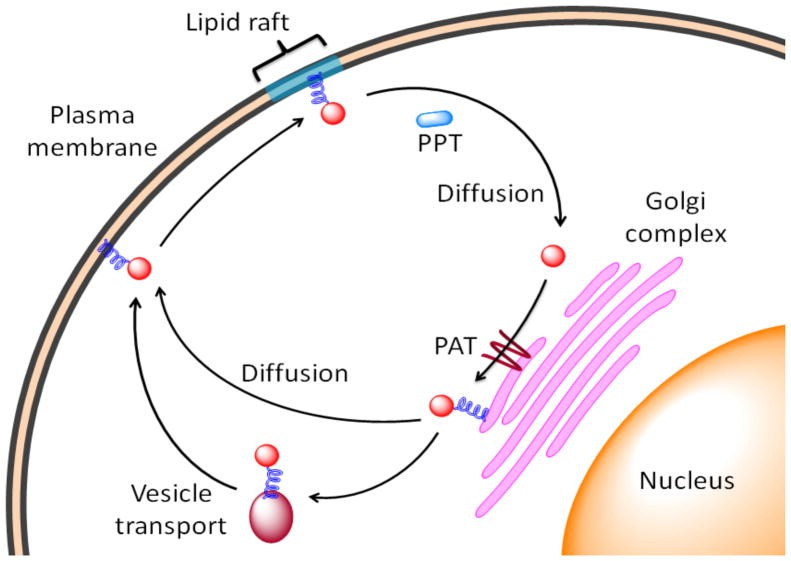 Figure 1. Inter-compartment protein shuttling through palmitoylation-depalmitoylation cycles.
(Source: Guan, X. M. et al., 2011)
Protein palmitoylation is a complex process that involves the enzymatic attachment of palmitate, a 16-carbon-long saturated fatty acid, to cysteine residues of proteins. This modification is mediated by a family of enzymes known as palmitoyl acyltransferases (PATs) or palmitoyltransferases (PMTs).
The mechanism of protein palmitoylation can be broadly divided into three steps: recognition, transfer, and regulation.
Protein palmitoylation holds significant biological importance due to its involvement in diverse cellular processes. Some key aspects highlighting the biological significance of protein palmitoylation include:
Protein Localization and Membrane Association
The attachment of palmitic acid to proteins facilitates their association with lipid rafts, specialized microdomains in the cell membrane enriched in cholesterol and sphingolipids. This lipid modification enhances protein-membrane interactions, promoting the clustering and tethering of proteins to specific cellular compartments. Palmitoylation regulates the localization of various proteins involved in signal transduction, membrane trafficking, and synaptic function.
Learn more about Lipid Metabolism Signaling Pathway
Protein-Protein Interactions
Palmitoylation can modulate protein-protein interactions by influencing the spatial organization and clustering of proteins. The addition of palmitate to specific cysteine residues promotes the assembly of protein complexes and the formation of macromolecular signaling platforms. Palmitoylation-dependent protein clustering is crucial for the organization and stability of signaling complexes at the plasma membrane, facilitating efficient signal transduction and downstream cellular responses.
Synaptic Function and Plasticity
Protein palmitoylation is highly prevalent in the nervous system, particularly at synapses. Approximately 40% of synaptic proteins have been found to undergo palmitoylation. This modification plays a fundamental role in synaptic function and plasticity by regulating the localization and activity of key molecules involved in neurotransmission. Palmitoylation contributes to the clustering and anchoring of synaptic proteins, such as receptors, ion channels, and scaffolding proteins, at the postsynaptic density. It influences synaptic transmission, plasticity, and neuronal connectivity, ultimately impacting learning and memory processes.
Cell Signaling and Disease Pathways
Palmitoylation plays a critical role in modulating various cell signaling pathways. It can regulate the activity, stability, and trafficking of signaling proteins, including G protein-coupled receptors (GPCRs), Ras superfamily GTPases, protein kinases, and phosphatases. Dysregulation of palmitoylation has been implicated in several diseases, including cancer, neurological disorders, and cardiovascular diseases. Abnormal palmitoylation of specific proteins can disrupt signaling cascades, impair cellular homeostasis, and contribute to disease pathogenesis.
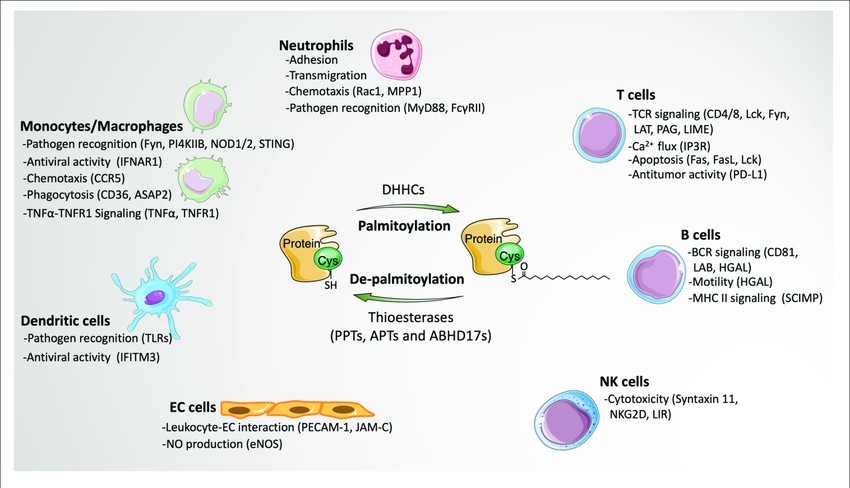 Figure 2. The impact of protein palmitoylation on leukocyte signaling and function.
(Source: Yang, X. et al., 2020)
Here are some commonly used methods:
These research methods, when used in combination, provide valuable insights into the mechanisms, dynamics, and functional consequences of protein palmitoylation. They enable the identification of palmitoylated proteins, the determination of palmitoylation sites, and the exploration of the regulatory roles of palmitoylation in cellular processes and disease pathways.
References
For research use only, not for use in diagnostic procedures.
| Target | Cat. No. | Product Name | Expression System | Tag/Conjugate | Application | |
| Cysteine | DAG3280 | L-Cysteine [G-BSA] | N/A | G-BSA | IHC, ICC | Inquiry |
| Homocysteine | DAG3334 | Homocysteine [G-BSA] | N/A | G-BSA | IHC, ICC | Inquiry |
| L Serine | DAGS076 | L-Serine standard | N/A | N/A | ELISA | Inquiry |
| D-Serine | DAG3403 | D-Serine [BSA] | N/A | BSA | ICC, IHC | Inquiry |
| Serine | DAG3404 | L-Serine [G-BSA] | N/A | G-BSA | ICC, IHC | Inquiry |
| E. coli Serine protease inhibitor | DAG-P2957 | Recombinant E. coli serine protease inhibitor | E. coli | Unconjugated | SDS-PAGE | Inquiry |
| DAG-P2309 | Recombinant E. coli Serine protease inhibitor Protein (a.a. 1-162) | E. coli | Unconjugated | HPLC, SDS-PAGE | Inquiry | |
| DAG-P2085 | Recombinant E. coli Serine protease inhibitor Protein (a.a. 21-162) [His] | E. coli | Unconjugated | SDS-PAGE | Inquiry | |
| L-Threonine | DAG3412 | L-Threonine [G-BSA] | N/A | G-BSA | N/A | Inquiry |
| Cholesterol Oxidase | DAG-WT1276 | Recombinant Streptomyces lividans Cholesterol Oxidase | E. coli | N/A | Enzymatic determination | Inquiry |
| DAG-WT1277 | Native Cholesterol Oxidase | Rhodococcus sp. | N/A | Enzymatic determination | Inquiry |
| Target | Cat. No. | Product Name | Size | Species Reactivity | Application | Detection Sample | |
| Homocysteine | DEIABL3 | Homocysteine ELISA kit | 96T | Human | Quantitative | plasma, serum | Inquiry |
| DEIA1724 | Human HCY(Homocysteine) ELISA Kit | 96T | Human | Quantitative | serum, plasma, tissue homogenates, other biological fluids | Inquiry | |
| DEIA3576 | HCY(Homocysteine) ELISA Kit | 96T | Universal | Quantitative | Serum, plasma, tissue homogenates and other biological fluids. | Inquiry | |
| DEIABL3-2 | Homocysteic acid ELISA Kit | 96T | Quantitative | Serum, plasma, tissue homogenates, urine | Inquiry | ||
| Cholesterol | IKJU-019CL | HDL and LDL/VLDL Cholesterol Assay kit (Colorimetric/Fluorometric) | quantitative | serum | Inquiry | ||
| DEIA-JY2150 | HDL and LDL/VLDL Cholesterol Assay Kit | 192T | N/A | Quantitative | Serum or plasma | Inquiry | |
| 24(S)-Hydroxycholesterol | DEIA6398 | 24(S)-Hydroxycholesterol ELISA Kit | 96T | Quantitative | tissues culture media, cerebral spinal fluid, homogenate samples | Inquiry |
Loading ......
