Protein glycosylation involves the covalent attachment of complex sugar molecules (called glycans) to proteins. It is a highly abundant and particularly complex type of protein post-translational modification (PTM). Through complex and precise glycosylation modifications of proteins, abundant protein types can be produced within cells. This PTM impacts protein structure, stability, and function, and is critical for a wide range of biological processes, including intracellular/intercellular signal transduction, immune regulation, and protein stability maintenance.
Figure 1. Specific roles of glycosylation in regulating protein functions.
(Source: Schjoldager, K. T. et al., 2020)
What is Protein Glycosylation?
Glycosylation is the reaction in which a carbohydrate (i.e., a glycosyl donor) is attached to a hydroxyl or other functional group of another molecule (a glycosyl acceptor) to form a glycoconjugate. It is a crucial function occurring in the biosynthetic-secretory pathway, specifically in the endoplasmic reticulum (ER) and Golgi apparatus. This modification is widespread, with approximately half of all proteins expressed in a cell undergoing glycosylation. It affects various types of proteins, such as soluble and membrane-bound proteins expressed in the ER, including secreted proteins, surface receptors, ligands, and organelle-resident proteins. Furthermore, glycosylation also occurs on proteins trafficked from the Golgi to the cytoplasm, and lipids and proteoglycans, significantly expanding the range of substrates for this PTM.
Glycosylation offers an unparalleled level of diversity to the proteome. The cell can generate a vast array of glycoproteins with unique properties and functions because various aspects of glycosylation can be modified, including:
Glycosidic bond—the site of glycan (oligosaccharide) binding
Glycan length—short- or long-chain oligosaccharides
Glycan composition—the types of sugars that are linked to a given protein
Glycan structure—unbranched or branched chains of sugars
This extraordinary diversity plays a critical role in numerous biological processes and contributes to the complexity of living organisms.
Mechanisms of Protein Glycosylation
There are several mechanisms by which protein glycosylation can occur, although most share several common features:
Glycosylation, a complex enzymatic process, involves the attachment of sugar molecules to proteins. It is distinct from glycation, which is a non-enzymatic process. Glycosylation is considered the most intricate PTM due to its numerous enzymatic steps.
In glycosylation, an activated nucleotide sugar often serves as the donor molecule, providing the necessary energy and chemical group for the glycosylation reaction.
The process of glycosylation is non-templated, meaning it is not guided by a template molecule such as DNA in transcription or mRNA in protein translation. Instead, the cell relies on specific enzymes localized in different compartments, such as the endoplasmic reticulum and Golgi apparatus, to carry out glycosylation at specific sites on proteins.
Types of Protein Glycosylation
Protein glycosylation encompasses various types, each with distinct characteristics and functions. Among them, N- and O-glycosylation are the most commonly detected types of glycosylation.
Figure 2. The two most common types of glycosylation.
(Source: Ma, B. et al., 2020)
N-linked glycosylation is a highly conserved process that occurs in the endoplasmic reticulum (ER) and Golgi apparatus. It involves the attachment of glycans to the amide nitrogen of asparagine residues (N) within the consensus sequence Asn-X-Ser/Thr, where X can be any amino acid except proline.
Biological functions: N-linked glycosylation is critical for protein folding, quality control, and cellular trafficking. It is mediated by a complex enzymatic pathway that requires the participation of various glycosyltransferases and glycosidases. Learn more about N-Glycan Analysis Kit
O-linked Glycosylation
O-linked glycosylation involves the attachment of glycans to the hydroxyl group of serine (S) or threonine (T) residues in proteins.
Biological functions: O-linked glycosylation has been implicated in a variety of cellular processes, including cell signaling, protein stability, and the pathogenesis of diseases such as cancer, inflammation, and autoimmune diseases.
Other Types of Glycosylation
Additional types of glycosylation include phosphoserine glycosylation, C-mannosylation, chemical glycosylation, and formation of GPI anchors (glypiation). Each of these types has unique characteristics and impacts protein structure and function in specific ways.
Phosphoserine glycosylation involves the attachment of glycans to serine residues that have been phosphorylated.
Glycosylphosphatidylinositol (GPI) anchors are specialized lipid structures that serve as glycan carriers for attaching proteins to the outer surface of cell membranes.
C-mannosylation refers to the attachment of a mannose sugar to the carbon atom of a tryptophan residue in a protein.
Chemical glycosylation is a synthetic approach to introducing glycans onto proteins through chemical reactions.
Applications of Protein Glycosylation Research
An in-depth study of protein glycosylation types, sites, and content changes in cells is of great significance in many fields such as biomedicine, biotechnology, and drug development. Some key applications include:
Biomarker discovery Altered glycosylation patterns on proteins have shown promise as diagnostic and prognostic biomarkers for various diseases. By analyzing glycoprotein profiles, researchers can identify glycoprotein markers that indicate disease progression or therapeutic response. Currently, more than ten glycoprotein serological markers have been discovered for the clinical diagnosis of cancer.
Disease research Aberrant protein glycosylation has been linked to various diseases, including cancer, autoimmune disorders, and congenital disorders of glycosylation (CDGs). Changes in glycan structures on tumor-associated antigens can contribute to immune evasion by cancer cells. Monitoring glycosylation patterns can aid in disease diagnosis, prognosis, and therapeutic interventions.
Targeted therapeutics In cancer immunotherapy, glycoproteins and glycopeptides are involved and play important roles in anti-tumor-specific sugar chain vaccines, antibody suppression immunotherapy, ADC drug targeted therapy, CAR-T cell therapy, and DC cell targeted therapy. Understanding the impact of glycosylation on drug function can lead to the design of more effective and targeted treatments.
Glycoengineering Glycoengineering involves modifying glycan structures on proteins to enhance their stability, functionality, or immunogenicity. This approach has applications in the development of improved biopharmaceuticals, enzymes, and industrial enzymes.
Conclusion
Protein glycosylation is a fascinating area of research with profound implications in biology and medicine. The attachment of glycans to proteins influences their structure, function, and cellular interactions. Understanding the mechanisms and types of protein glycosylation is crucial for deciphering its role in health and disease. With the support of cutting-edge products and services provided by Creative Diagnostics, researchers can advance their understanding of protein glycosylation and harness its potential for therapeutic interventions and diagnostic applications.
References
Schjoldager K T, et al. Global view of human protein glycosylation pathways and functions. Nature Reviews Molecular Cell Biology. 2020, 21(12): 729-749.
Ma B, et al. Protein glycoengineering: An approach for improving protein properties. Frontiers in Chemistry. 2020, 8: 622.
Pinho S S, Reis C A. Glycosylation in cancer: mechanisms and clinical implications. Nature Reviews Cancer. 2015, 15(9): 540-555.
Reagent Solutions
For research use only, not for use in diagnostic procedures.

 Loading ......
 Figure 1. Specific roles of glycosylation in regulating protein functions.
 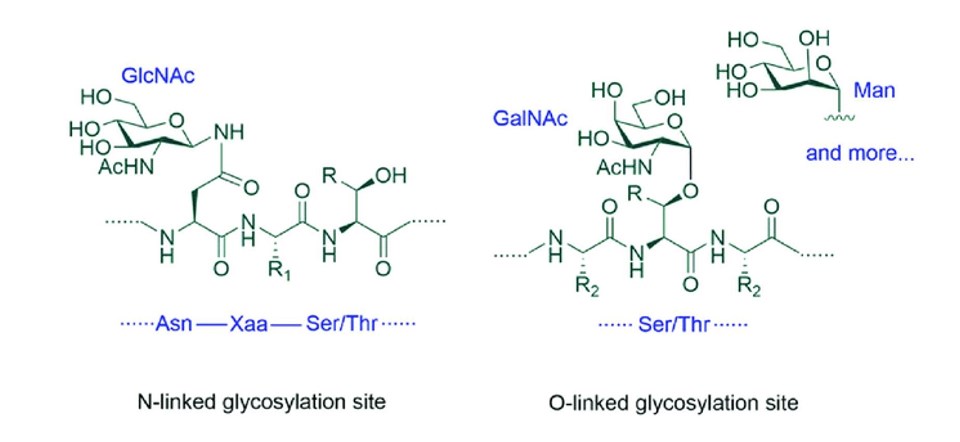 Figure 2. The two most common types of glycosylation.