
Inquiry Basket
 Loading ......
Protein post-translational modification (PTM) is a key link in protein expression. Among them, acetylation modification is associated with diseases such as tumors, aging, bacterial infections, and nephropathy, and is involved in biological processes such as DNA damage repair, protein folding, mitochondrial function, metabolism, and drug resistance. Protein acetylation modification involves the process of transferring and adding an acetyl group to a protein lysine residue or protein N-terminus, catalyzed by an acetyltransferase (or non-enzymatic enzyme). This modification can affect protein structure, function, and intracellular interactions. Its dynamic nature and regulatory interplay with deacetylation contribute to intricate cellular mechanisms and overall biological function.
Learn more about Histone Acetyltransferase Pathway
Acetylation modifications are mainly divided into two categories: acetylation modification at the N-terminus of the protein and acetylation modification on the protein lysine.
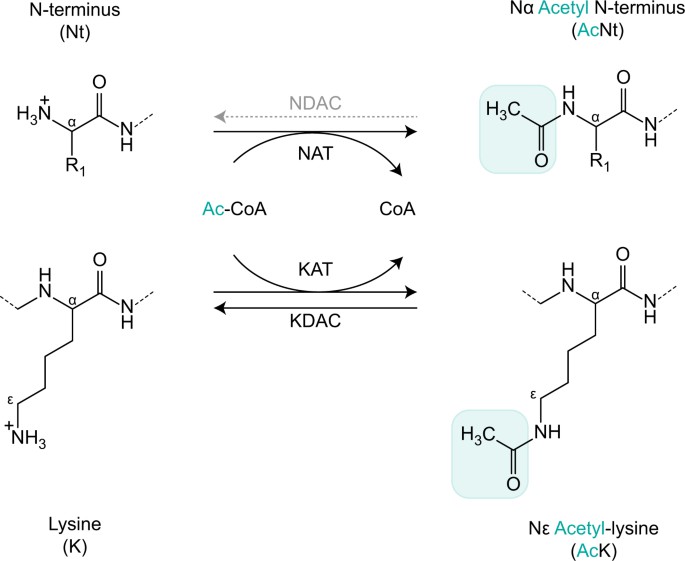 Figure 1. Schematic outline of N-terminal and lysine protein acetylation.
(Source: Ree, R. et al., 2018)
N-terminal acetylation involves the attachment of an acetyl group to the α-amino group at the N-terminus of proteins. This modification occurs co-translationally, meaning it takes place while the protein is being synthesized on the ribosome. The enzymatic machinery responsible for N-terminal acetylation is a group of enzymes known as N-terminal acetyltransferases (NATs).
NATs catalyze the transfer of the acetyl group from acetyl-coenzyme A (acetyl-CoA) to the N-terminus of nascent polypeptide chains. This process occurs shortly after the initiator methionine residue is cleaved by methionine aminopeptidases. NATs recognize specific sequence motifs or structural features at the N-terminus of proteins, allowing them to selectively acetylate certain proteins.
Lysine acetylation involves the addition of an acetyl group to the ε-amino group of lysine residues within proteins. This modification can occur co-translationally or post-translationally, meaning it can take place during or after protein synthesis. Lysine acetylation is dynamically regulated by two main classes of enzymes: lysine acetyltransferases (KATs) and lysine deacetylases (KDACs), also known as histone deacetylases (HDACs).
KATs catalyze the transfer of the acetyl group from acetyl-CoA to the lysine residue within the protein. They recognize specific target lysine residues based on sequence motifs or structural features in the protein. KATs exhibit substrate specificity and can acetylate multiple lysine residues within a protein or different proteins altogether.
Conversely, KDACs or HDACs are responsible for the removal of acetyl groups from lysine residues, thereby mediating deacetylation. HDACs can reverse the acetylation process by hydrolyzing the acetyl group from the lysine residue, leading to the restoration of the unmodified state of the protein. The deacetylation activity of HDACs plays a crucial role in regulating the dynamic balance of lysine acetylation in cells.
The acetylation of proteins can have profound effects on cellular processes and signaling pathways. Some functional consequences of protein acetylation include:
 Figure 2. Detection of lysine acetylation in sugarcane histone H3 by MS/MS spectrum.
(Source: Moraes, I. et al., 2015)
References
For research use only, not for use in diagnostic procedures.
| Target | Cat. No. | Product Name | Host | Isotype | Application | |
| Acetyl lysine | DPATB-H81027 | Anti-Acetyl-Lysine polyclonal antibody | Rabbit | IgG | IP, ChIP, ICC, IF, WB, ELISA | Inquiry |
| Acetylated-Lysine | DPAB-JX2361601 | Rabbit Anti-Acetylated-Lysine Polyclonal Antibody | Rabbit | IgG | WB, IP | Inquiry |
| Methionine | DPAB-DC4582 | Anti-NO-L.Methionine polyclonal antibody | Rat | IHC | Inquiry | |
| DPAB-DC4182 | Anti-D-Methionine polyclonal antibody | Rabbit | IgG | IHC, ICC, ELISA | Inquiry | |
| DPATB-H83062 | Anti-Methionine polyclonal antibody | Rabbit | IgG | ELISA, ICC, WB | Inquiry | |
| DPATB-H83076 | Anti-Nitromethionine polyclonal antibody | Rat | IgG | ELISA, ICC, WB | Inquiry | |
| DPATB-H83117 | Anti-Methionine polyclonal antibody | Rabbit | IgG | ELISA, IHC-P | Inquiry | |
| DPAB4021 | Anti-NO-L-Methionine polyclonal antibody | Rat | ELISA, IHC, ICC, WB | Inquiry |
Loading ......
