





Inquiry Basket
 Loading ......
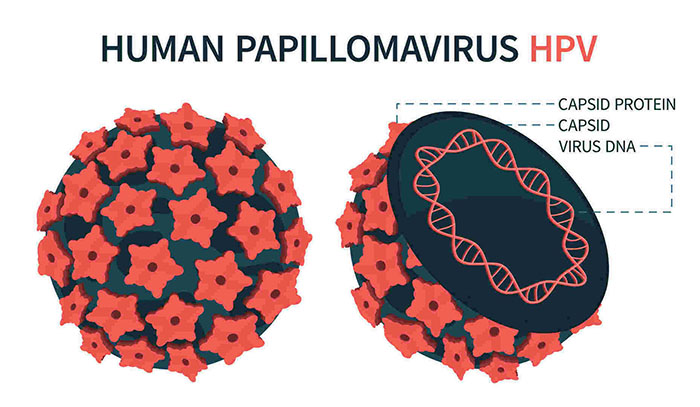
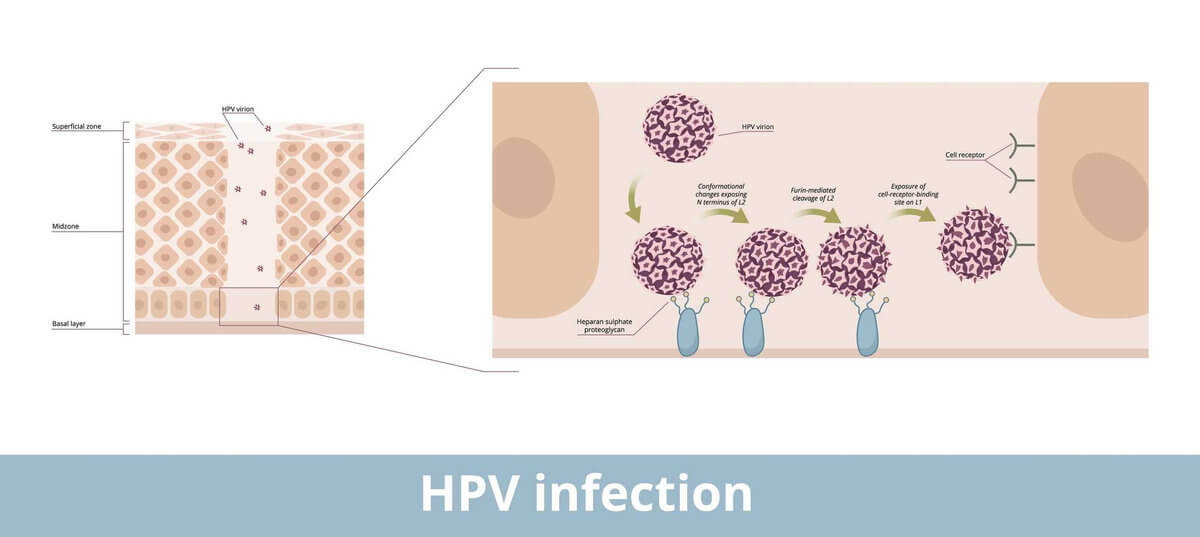
HPV contains double-stranded circular DNA and lacks an envelope. The viral particles have a size range of 45-55 nm and feature an icosahedral structure containing 72 pentamer capsomers. The genome contains approximately 8000 base pairs which encode both early (E) and late (L) proteins. The HPV targets epithelial cells in skin and mucous membranes because of its strong host and tissue specificity. It enters basal cells through micro-abrasions and remains latent within them.
High-risk HPV
Low-risk HPV

We offer comprehensive HPV L1 antibody products which include polyclonal and monoclonal forms as well as monoclonal antibody screening sets designed for applications in ELISA, Western Blot, neutralization assays and in vitro vaccine efficacy testing.
Our monoclonal antibody collection targets the E6/E7 proteins of both HPV 16 and HPV 18 strains.
| Target | Cat. No. | Product Name | Source | Application |
| HPV 16 | DMAB-CS23033 | Anti-HPV16 E6 Monoclonal antibody, clone OC1 | Mouse | ELISA, Neut, WB |
| CABT-WN1068 | Anti-HPV16 E7 monoclonal antibody, clone 827-392 | Mouse | ELISA(Det), WB | |
| CABT-WN1069 | Anti-HPV16 E7 monoclonal antibody, clone 827-436 | Mouse | ELISA(Det), WB | |
| CABT-WN1070 | Anti-HPV16 E7 monoclonal antibody, clone C827N | Mouse | ELISA(Cap), WB | |
| HPV 18 | CABT-WN1074 | Anti-HPV18 E7 monoclonal antibody, clone 829-26 | Mouse | ELISA, WB |
| CABT-WN1075 | Anti-HPV18 E7 monoclonal antibody, clone 829-78 | Mouse | ELISA, WB | |
| HPV 16, 18 | DCABH-9054 | Anti-HPV type 16, 18 E6 Monoclonal antibody | Mouse | IHC-P |
| CABT-NS1171 | Anti-HPV16 E6 and HPV18 E6 Monoclonal Antibody | Rabbit | IP, WB, IHC |
Among more than 200 identified HPV types about 14 are recognized as oncogenic high-risk strains.
E6:
E7:
Timeline Summary of Cervical Cancer Development
| Stage | Time Span | Key Biological Events | Clinical Manifestations |
| Initial Infection | 0-6 months | Virus enters basal cells, free genome replication | Asymptomatic |
| Persistent Infection | 6-24 months | Low expression of E6/E7, local immune evasion | HPV positive (no lesions) |
| Precancerous Lesions (CIN I) | 2-5 years | Viral integration initiated, partial disruption of p53/pRb pathways | Mild cellular atypia |
| High-Grade Lesions (CIN II/III) | 5-10 years | Accumulation of genomic instability, clonal expansion | Moderate to severe atypical hyperplasia |
| Invasive Cancer | Over 10 years | EMT, angiogenesis, acquisition of distant metastasis ability | Visible tumor lesions |
The HPV vaccines employ VLP technology through recombinant DNA to produce the HPV capsid protein L1. The self-assembling protein creates empty shells that lack genetic material which resembles natural viruses to activate the immune system.
HPV
Vaccine
Types
Bivalent Vaccine
Quadrivalent Vaccine
Nonavalent Vaccine
Future developments in HPV vaccines:

Scientists have detected over 200 different HPV types with approximately 40 associated with genital infections. Medical professionals divide HPV types into two primary categories which include high-risk and low-risk classifications. Fourteen high-risk HPV types exist which demonstrate connections to multiple forms of cancer. The immune system generally eliminates HPV infections yet persistent cases may cause severe health complications.
Our HPV antibody production contains both monoclonal and polyclonal antibodies. Our HPV Antibodies product information is available for your review. Our product offerings also include ELISA kits specifically designed to detect HPV antigens. Select products based on which ones meet your specific experimental requirements.
HPV antibodies require careful handling with proper storage conditions and expiration dates and must match your experimental needs. Every product includes a manual which offers instructions for setting up experimental designs.
Selecting an HPV antibody requires evaluating its specificity and sensitivity and reactivity to ensure alignment with research objectives. Our inventory includes various HPV antibody clones designed to bind distinct HPV proteins or virus types.
At this time the HPV antibodies we produce serve research functions without being appropriate for clinical diagnostic use. Our research tools enable scientists to identify specific HPV proteins and antigens which helps them investigate the development and progression of HPV infection into disease. We utilize HPV antibodies to evaluate how successful HPV vaccines perform.
Creative Diagnostics is a "One stop" antibody solutions provider serving the pharmaceutical, biotech, diagnostic and university research organizations around the world.
Tell us how we can support your project
Loading ......
