
Inquiry Basket
 Loading ......
Sexually transmitted infections (STIs) continue to be a significant global health concern. Among the most common STIs are Human Papillomavirus (HPV) and herpes. They can cause genital lesions, but they can also be asymptomatic. However, HPV is much more prevalent than herpes. Almost every sexually active person will encounter HPV at least once, and may even be infected with both viruses simultaneously.
Human Papillomavirus (HPV) is a highly prevalent STI, affecting millions of people worldwide. It is primarily transmitted through sexual contact, including vaginal, anal, and oral sex. HPV infection often goes unnoticed, as it can be asymptomatic, leading to its classification as a "silent" infection.
Symptoms of HPV: There are over 100 different strains of HPV, with some causing genital warts and others posing a higher risk of cancer. The most common high-risk types include HPV-16 and HPV-18, responsible for the majority of cervical cancer cases.
Low-risk types, such as HPV-6 and HPV-11, are associated with genital warts. Genital warts can develop on the penis, scrotum, anus, vagina, vulva, and cervix. These genital warts can occur as:
Learn more about Human Papillomvirus Antigens
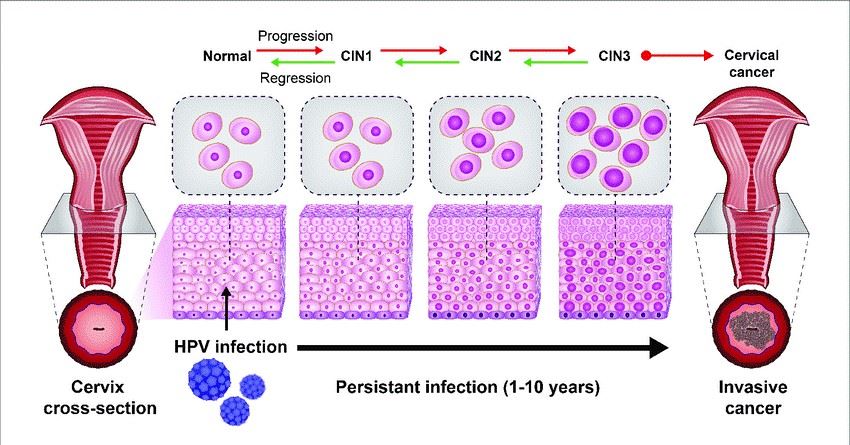 Figure 1. The natural HPV infection can lead to cervical cancer.
(Source: Yousefi, Z. et al., 2022)
Herpes is another common STI caused by the herpes simplex virus (HSV). It exists in two forms: HSV-1 and HSV-2. While HSV-1 is typically associated with oral herpes (cold sores), HSV-2 is primarily responsible for genital herpes. Herpes infection is lifelong, with periods of active outbreaks and asymptomatic periods.
Learn more about Herpes Simplex Virus Antigens
Symptoms of Herpes: Herpes is transmitted through direct contact with infected skin or mucous membranes. During active outbreaks, characterized by painful blisters or sores, the virus is highly contagious. However, even during asymptomatic periods, the virus can still be transmitted, making prevention challenging.
Herpes blisters may appear around the vagina, vulva, inside of the thighs, anus, and penis. Symptoms associated with genital herpes usually include:
| HPV | Herpes | |
| Transmission Channels | Skin-to-skin contact with an infected person, including vaginal, anal, or oral sex. | Skin or saliva contact with an infected person, including vaginal, anal, or oral sex. |
| Key Symptoms | Warts are the most common symptom. However, HPV infection is usually clinically asymptomatic. | Herpes may also be asymptomatic but usually manifests as oozing sores or blisters, or itching or pain shortly after infection. |
| Rarity | ~75-80% of population has HPV | ~90% of population has HSV1 ~16% has HSV-2 |
| Diagnostic tools | HPV testing exists and is sometimes used in Pap tests. Otherwise, visual inspection of warts can diagnose some cases. | If lesions are present, a physical examination is often performed. A swab is usually used to collect a sample, and viral cultures are used for diagnosis. |
| Treatment | The virus itself can't be cured, but medications for treating genital warts can be used to remove warts and diseases can be prevented through health checks for high-risk HPV. | Although the virus itself can't be cured, antiviral drugs can treat symptoms or reduce outbreaks. |
| Prevention | Practicing safe sex and getting routine screenings, especially for cancer cervical cancer, can greatly reduce the risk. | Practicing safe sex, not only vaginal or anal sex but also oral sex, can greatly prevent herpes. |
HPV cannot be cured but can be treated. HPV vaccines like Gardasil protect against future HPV infections, especially when administered during early adolescence. In the case of HPV infection, the most noticeable effect is the development of genital warts, which may resolve on their own. However, prescription medications are available to treat persistent warts if necessary.
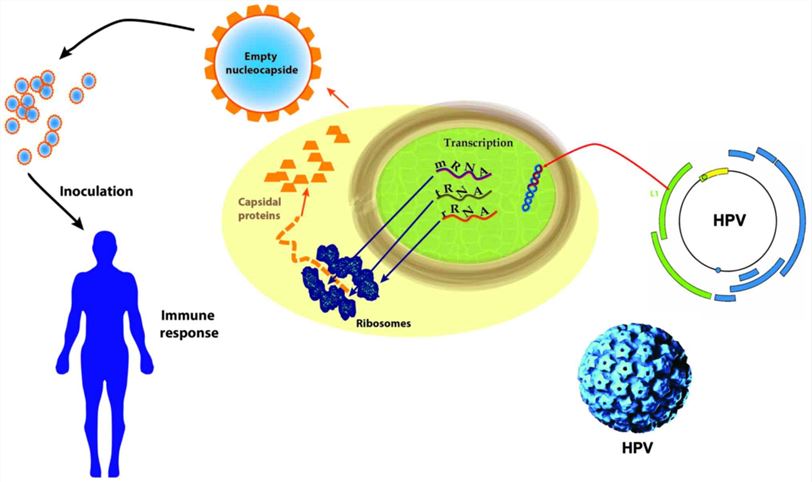 Figure 2. The mechanisms of action of HPV vaccines.
(Source: Boda, D. et al., 2018)
Moreover, abnormal cell changes caused by HPV can be treated to prevent the progression of cancer. However, this treatment is typically effective only if the individual is aware of their HPV infection. Early detection through testing plays a crucial role in identifying and managing HPV-related cancers, ensuring timely intervention to prevent further development.
Herpes, similar to HPV, cannot be cured but the symptoms can be treated. In the case of visible symptoms such as cold sores or genital herpes, treatment options are available. For cold sores, which typically resolve within seven to 10 days, treatment can help alleviate symptoms and expedite healing. This may involve the use of antiviral tablets, antiviral creams, cold sore patches, or non-antiviral medications. Genital herpes symptoms will also clear up on their own, but treatment can help shorten outbreaks, prevent symptom aggravation, and provide relief. Antiviral medications are commonly prescribed for genital herpes, and creams may be used to alleviate pain and discomfort.
By seeking appropriate treatment, individuals can manage the symptoms of herpes, reduce the duration and severity of outbreaks, and alleviate discomfort associated with the infection.
Reducing the risk of contracting sexually transmitted infections (STIs) involves several important strategies.
By following these preventive measures, individuals can take control of their sexual health and minimize the risk of contracting STIs, including HPV and herpes.
References
| Target | Cat. No. | Product Name | Expression System | Tag/Conjugate | Application | |
| HPV | PSVG-HPV16 | Pseudotyped GFP HPV16 | Useful for studying papillomavirus assembly, entry, and neutralization. | Inquiry | ||
| PSVG-HPV18 | Pseudotyped GFP HPV18 | Useful for studying papillomavirus assembly, entry, and neutralization. | Inquiry | |||
| PSVG-HPV31 | Pseudotyped GFP HPV31 | Useful for studying papillomavirus assembly, entry, and neutralization. | Inquiry | |||
| PSVG-HPV33 | Pseudotyped GFP HPV33 | Useful for studying papillomavirus assembly, entry, and neutralization. | Inquiry | |||
| PSVG-HPV39 | Pseudotyped GFP HPV39 | Useful for studying papillomavirus assembly, entry, and neutralization. | Inquiry | |||
| PSVG-HPV45 | Pseudotyped GFP HPV45 | Useful for studying papillomavirus assembly, entry, and neutralization. | Inquiry | |||
| HPV 11 | DAGF-228 | Recombinant Human Papilloma Virus type 11 L1 protein (VLP) | E. coli | Unconjugated | Inquiry | |
| DAG1576 | Recombinant HPV type 11 [GST] | E. coli | GST | N/A | Inquiry | |
| HPV 35 | DAGC142 | Recombinant Human Papilloma Virus type 35 L1 protein (VLP) | E. coli | Unconjugated | SDS-PAGE | Inquiry |
| HPV 39 | DAGC143 | Recombinant Human Papilloma Virus type 39 L1 protein (VLP) | E. coli | Unconjugated | SDS-PAGE | Inquiry |
| HPV16 | DAGF-094 | Recombinant HPV16 E6 protein [His] | E. coli | His | Inquiry | |
| DAGF-095 | Recombinant HPV16 E6 protein (aa 1-158) [His] | Yeast | His | Inquiry | ||
| DAGF-096 | Recombinant HPV16 E7 protein (aa 1-98) [GST] | E. coli | GST | Inquiry | ||
| DAGF-229 | Recombinant Human Papilloma Virus type 16 L1 protein (VLP) | E. coli | Unconjugated | Inquiry | ||
| DAG-P2512 | Recombinant HPV type 16 (aa 1 - 531) | E. coli | Unconjugated | SDS-PAGE | Inquiry |
| Target | Cat. No. | Product Name | Size | Species Reactivity | Application | Detection Sample | |
| HSV | DEIA344 | Herpes 1 IgG ELISA Kit | 96T | Human | Quantitative | serum, plasma | Inquiry |
| DEIA345 | Human Herpes Simplex Virus1 IgA (HSV-1 IgA) ELISA Test kit | 96T | Human | Qualitative | Serum | Inquiry | |
| DEIA346 | Herpes 1 IgM ELISA Kit | 96T | Human | Quantitative | serum, plasma | Inquiry | |
| DEIA347 | Herpes 2 IgG ELISA Kit | 96T | Human | Quantitative | serum, plasma | Inquiry | |
| DEIA348 | Herpes 2 IgA ELISA Kit | 96T | Human | Quantitative | serum, plasma | Inquiry | |
| DEIA349 | Herpes simplex Virus 2 (HSV 2) IgM ELISA | 96T | Human | Qualitative | Serum or plasma (citrate, heparin) | Inquiry | |
| DEIA351 | Human Herpes 1/2 IgA ELISA kit | 96T | Human | Quantitative | serum, plasma or cerebrospinal fluid | Inquiry | |
| DEIA547 | HSV IgM ELISA Kit | 96T | Human | Qualitative | serum, plasma | Inquiry | |
| DEIA05535 | HSV Type 1 rec. gG1 IgG-ELISA Kit | 96T | Human | Qualitative | serum, citrate plasma | Inquiry | |
| DEIA05537 | HSV Type 2 rec. gG2 IgG-ELISA Kit | 96T | Human | Qualitative | serum, citrate plasma | Inquiry | |
| DEIA3555 | Mouse/Rat HSV-1 IgG ELISA Kit | 96T | Mouse, Rat | Qualitative | serum, plasma | Inquiry | |
| DEIA1715 | HSV-1 and HSV-2 IgM ELISA Kit | 96T | Human | qualitative | serum | Inquiry | |
| HSV-1/2 | DEIA350 | Herpes 1/2 IgG ELISA kit | 96T | Human | Quantitative | Serum, plasma, cerebrospinal fluid | Inquiry |
| DEIA352 | Herpes 1/2 IgM ELISA kit | 96T | Human | Quantitative | Serum, plasma, cerebrospinal fluid | Inquiry |
Loading ......
