
Inquiry Basket
 Loading ......
Human papillomavirus (HPV) is a widespread viral infection that poses a significant health risk, particularly concerning cervical cancer. Therefore, early detection and accurate diagnosis of HPV infections are crucial for effective disease management and prevention. Enzyme-linked immunosorbent assay (ELISA), a biochemical technique used in immunology, provides a safe and easily reproducible tool for screening for viruses including HPV.
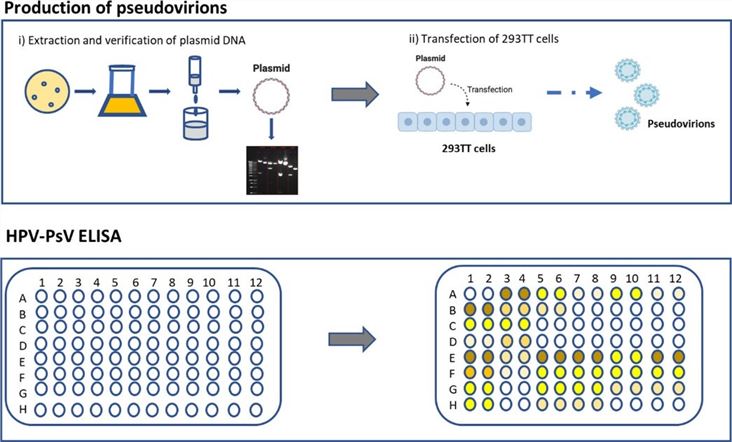 Figure 1. Measurement of HPV-specific antibodies using a pseudovirion-based ELISA method.
(Source: Bogusiak, K. et al., 2014)
HPV types are categorized as either "non-oncogenic" or "oncogenic" based on their potential to cause cancer. The International Agency for Research on Cancer has identified 13 HPV types that can cause cervical cancer, as well as other cancers such as those of the vulva, vagina, penis, anus, and certain head and neck cancers. These high-risk HPV types include HPV-16, HPV-18, HPV-31, HPV-33, HPV-35, HPV-39, HPV-45, HPV-51, HPV-52, HPV-56, HPV-58, HPV-59, HPV-66, and HPV-68.
Many individuals who are infected with HPV are unaware of their infection, as the body's immune system usually clears the infection within two years. When the immune system fails to get rid of an oncogenic HPV infection, the virus can persist and lead to the development of abnormal cells, which may progress to cancer. Approximately 10% of women with HPV infection on their cervix will develop long-lasting infections that increase their risk of cervical cancer. Similarly, when high-risk HPV lingers and infects the cells of the vulva, penis, vagina, or anus, it can cause precancerous cell changes that may eventually lead to cancer if not detected and treated on time. It's important to note that the occurrence of these cancers is less common than cervical cancer.
Screening for cervical cancer and HPV in women has been in practice since the 1960s, coupled with vaccination practices, leading to a significant decrease in mortality rates. Regular Pap smear screenings are an essential step in identifying potentially harmful HPV strains. However, ELISA testing offers a more comprehensive and accurate approach to detecting and managing the virus, ultimately improving patient outcomes in the battle against cervical cancer.
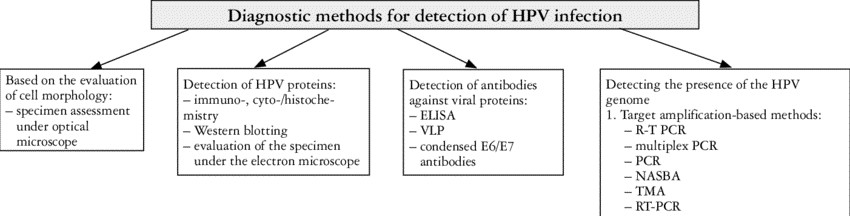 Figure 2. Diagnostic methods for detection of HPV infection.
(Source: Bogusiak, K. et al., 2014)
As a kind of immunological test, enzyme-linked immunosorbent assay (ELISA) is characterized by high specificity, high sensitivity, rapidity and simplicity, and stable results. ELISA is an immunoassay based on an enzyme-labeled antibody capable of detecting an antigen immobilized to a solid surface, 96-well or 384-well polystyrene plates. A substrate is added to produce either a color change or light signal correlating to the amount of the antigen present in the original sample. This highly sensitive and specific assay has proven to be a valuable tool in both research and clinical settings for screening, diagnosis, and epidemiological studies related to HPV.
In the past decade, researchers have made significant progress in developing serological assays for HPV detection using virus-like particles. These assays have been thoroughly tested and validated through experimentation. One of the most reliable indicators of viral infection is the detection of virus-specific antibodies. Studies conducted by the American Society for Microbiology have demonstrated that ELISA, when employed for viral antibody detection, offers greater precision compared to other standard methods for measuring immunoglobulins.
Ongoing studies aim to refine and expand the capabilities of ELISA, with one notable advancement being the development of a whole-cell ELISA specifically designed to detect cervical precancers and cancer. These advancements hold promise for enhancing HPV screening and improving global healthcare outcomes.
Elisa Assays for HPV have a wide range of clinical applications, contributing to the comprehensive management of HPV-related diseases. Some key applications include:
Creative Diagnostics has developed a series of monoclonal antibodies that specifically recognize high-risk HPV types with high sensitivity and specificity. Based on this sequence of specific antibodies, our research team has completed the development of high-risk HPV-specific antibodies and assembled them into kits. These Elisa tests designed for HPV detection minimize the risk of false negative or false positive results. Accurate HPV testing is essential for appropriate patient management, including monitoring disease progression, assessing response to therapy, and implementing preventive measures.
Creative Diagnostics's Elisa assay for HPV is a cutting-edge solution for the detection and diagnosis of HPV infections, with the following obvious advantages:
References
| Target | Cat. No. | Product Name | Size | Species Reactivity | Application | Detection Sample | |
| HPV | DEIA-F678S | Human Papilloma Virus IgG ELISA kit | 96T | Human | Qualitative | plasma, serum | Inquiry |
| DEIASL404 | Human HPV18 IgM ELISA kit | 96T | Qualitative | Serum, plasma | Inquiry | ||
| DEIASL405 | Human HPV 16 L1-capsids IgG ELISA Kit | 96T | Qualitative | Serum, plasma | Inquiry | ||
| DEIASL406 | Human HPV 16 IgM ELISA Kit | 96T | Qualitative | Serum, plasma | Inquiry | ||
| DEIASL407 | Human Papilloma Virus IgM ELISA Kit | 96T | Qualitative | Serum, plasma | Inquiry | ||
| DEIASL408 | Human HPV 18 L1-capsids IgG ELISA Kit | 96T | Qualitative | Serum, plasma | Inquiry | ||
| DEIASL409 | Rabbit HPV 16 L1-capsids IgG ELISA Kit | 96T | Qualitative | Serum, plasma | Inquiry | ||
| DEIASL410 | Human high risk HPV L1-capsids (HR-HPVL1) IgG ELISA kit | 96T | Qualitative | Serum, plasma | Inquiry | ||
| DEIASL119 | HPV(18) Antigen ELISA Quantitation Kit | 96T | Quantitative | Serum, plasma | Inquiry | ||
| DEIASL120 | HPV(52) Antigen ELISA Quantitation Kit | 96T | Quantitative | Serum, plasma | Inquiry | ||
| DEIASL121 | HPV(58) Antigen ELISA Quantitation Kit | 96T | Quantitative | Serum, plasma | Inquiry | ||
| DEIASL171 | Human HPV 16 E7 Oncoprotein ELISA Kit | 96T | Human | Quantitative | Cell lysates, tissue lysates, cervical smears, plasma, serum | Inquiry | |
| DEIASL172 | Human HPV 18 E7 Oncoprotein ELISA Kit | 96T | Quantitative | Cell lysates, tissue lysates, or cervical smears | Inquiry | ||
| HPV16 | DEIASL118 | HPV (16) Antigen ELISA Quantitation Kit | 96T | Human | Quantitative | Serum and plasma | Inquiry |
Loading ......
