
Inquiry Basket
 Loading ......
Human papillomavirus (HPV) is a prevalent sexually transmitted infection that can lead to the development of various cancers including cervical, vulva, anal, penile, and oropharyngeal cancers. Traditionally, HPV detection relied on cervical samples obtained through invasive procedures such as Pap smears or cervical swabs. While these methods have proven effective, they are limited by their dependence on sampling from the site of infection. Blood-based biomarkers offer a non-invasive and systemic approach to HPV detection and diagnosis. By identifying specific biomarkers in the blood, healthcare professionals can gain insights into HPV infection status, disease progression, and response to treatment. Blood-based biomarkers have the potential to revolutionize HPV screening programs, risk assessment, and patient management.
Circulating tumor DNA (ctDNA) is a fraction of cell-free DNA released from tumor cells into the bloodstream and is widely used to monitor various tumor types. Somatic mutations can serve as ctDNA markers and are typically detected using various techniques such as digital PCR or NGS. In patients with HPV-related tumors, circulating HPV DNA (HPV ctDNA) can also be detected in the blood. HPV ctDNA can exist in an episomal form or be integrated into tumor DNA. Moreover, the same HPV type was found in both primary and metastatic tumors, indicating that HPV appears to be a stable tumor marker over time.
The clinical value of HPV ctDNA has been investigated in patients with HPV-related tumors. It has been used to monitor the effectiveness of immunotherapy or chemotherapy in metastatic anal cancer. Additionally, HPV ctDNA is increasingly being recognized as a predictive and prognostic biomarker in anal and head and neck cancers, as well as in small cohorts of cervical cancer, including metastatic cases.
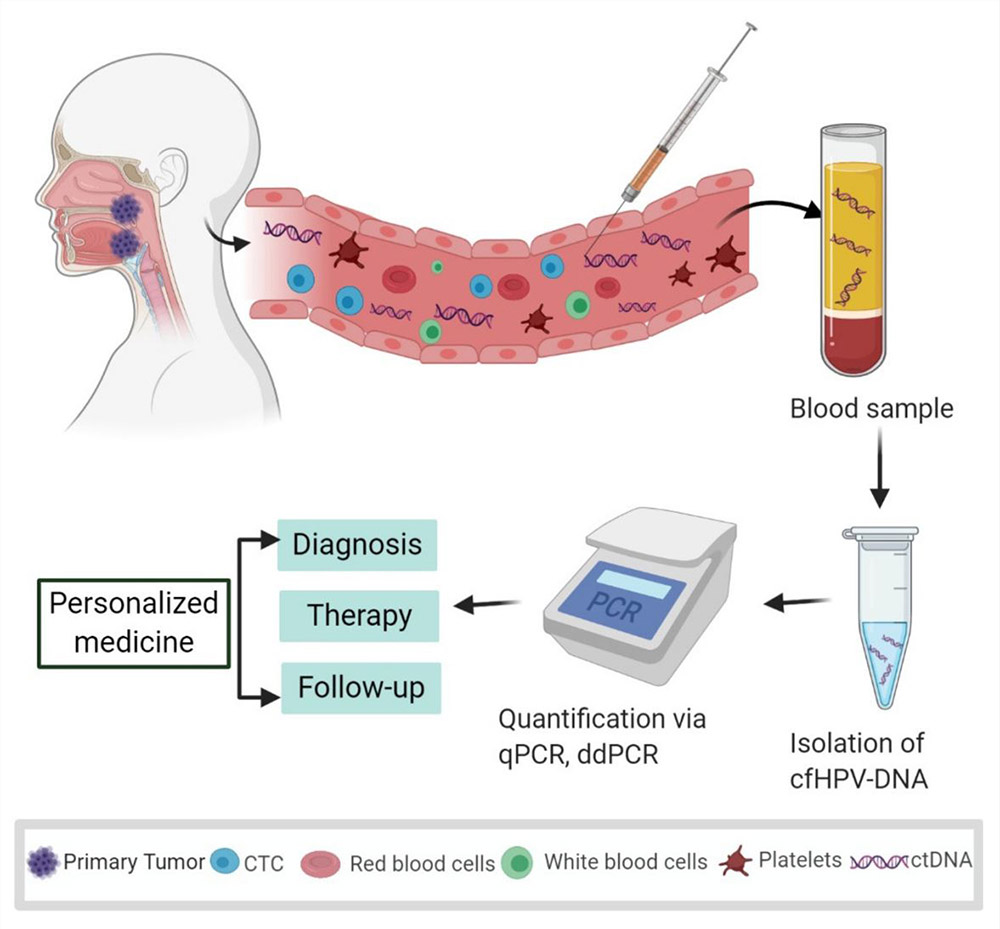 Figure 1. The process and potential usage of liquid biopsies as a biomarker in oropharyngeal squamous cell carcinoma (OPSCC).
(Source: Wuerdemann, N. et al., 2020)
HPV E6 and E7 oncoproteins are viral proteins produced by high-risk types of human papillomavirus (HPV). These oncoproteins play a significant role in HPV-related carcinogenesis, contributing to the development of cervical cancer, as well as other HPV-associated cancers.
Here are some key characteristics and functions of HPV E6 and E7 oncoproteins:
 Figure 2. Model for the cooperation of the HPV E6 and E7 oncoproteins during malignant cell transformation.
(Source: Hoppe-Seyler, K. et al., 2018)
In clinical practice, HPV-related cancers are usually diagnosed at a late stage because disease progression is asymptomatic, but antibody levels may precede obvious cancer manifestations by years. Therefore, HPV E6 and E7 oncoproteins in clinical samples, including cervical swabs or blood, have the potential to serve as potential biomarkers for HPV-associated cancers. Detection of these oncoproteins may provide valuable information about the persistence of high-risk HPV infections and the increased risk of developing HPV-associated malignancies.
MicroRNAs (miRNAs) are small RNA molecules involved in the regulation of gene expression, and alterations in the expression of specific miRNAs have been associated with HPV infection and HPV-related diseases. Of the 2500 microRNA sequences identified, some microRNA signatures are associated with cervical and other cancers as well as with cancer-specific, prognostic, microRNA-based risk classifiers. These microRNA signatures may serve as biomarkers for HPV detection and disease prognosis. However, the large number of microRNAs and the lack of specificity for HPV+ cancers impede the determination of effective expression profiles for HPV-associated cancers. More intensive and effective sample collection, processing, and sample analysis techniques are needed to enhance the utility of miRNAs as biomarkers.
HPV-16 E6 antibody and HPV ctDNA are currently the most reliable and promising blood biomarkers analyzed for HPV-related cancers. Furthermore, several other blood-based biomarkers, including vitamins and cofactors, cytokine levels, and various genetic polymorphisms, have also been explored. However, relevant studies have demonstrated the overall poor validity of these candidate biomarkers, most likely primarily due to the lack of HPV-associated cancer specificity (unlike HPV ctDNA and HPV E antibodies).
HPV Infection Detection: Blood-based biomarkers can facilitate the detection of HPV infection, even in the absence of visible lesions. Circulating HPV DNA, miRNA signatures, and protein biomarkers offer non-invasive approaches to identify individuals at risk of HPV-associated diseases.
Disease Progression Monitoring: Blood-based biomarkers can provide insights into the progression of HPV-related diseases. Changes in the levels of circulating HPV DNA or protein biomarkers can indicate disease advancement or response to treatment. Regular monitoring of these biomarkers can help healthcare professionals make informed decisions regarding patient management and follow-up.
Screening and Risk Assessment: HPV blood-based biomarkers have the potential to enhance existing screening programs and risk assessment strategies. By combining traditional cytology-based methods with blood-based biomarker analysis, healthcare professionals can improve the accuracy and effectiveness of HPV screening, allowing for early detection and intervention.
References
| Target | Cat. No. | Product Name | Expression System | Tag/Conjugate | Application | |
| HPV | PSVG-HPV16 | Pseudotyped GFP HPV16 | Useful for studying papillomavirus assembly, entry, and neutralization. | Inquiry | ||
| PSVG-HPV18 | Pseudotyped GFP HPV18 | Useful for studying papillomavirus assembly, entry, and neutralization. | Inquiry | |||
| PSVG-HPV31 | Pseudotyped GFP HPV31 | Useful for studying papillomavirus assembly, entry, and neutralization. | Inquiry | |||
| PSVG-HPV33 | Pseudotyped GFP HPV33 | Useful for studying papillomavirus assembly, entry, and neutralization. | Inquiry | |||
| PSVG-HPV39 | Pseudotyped GFP HPV39 | Useful for studying papillomavirus assembly, entry, and neutralization. | Inquiry | |||
| PSVG-HPV45 | Pseudotyped GFP HPV45 | Useful for studying papillomavirus assembly, entry, and neutralization. | Inquiry | |||
| HPV 11 | DAGF-228 | Recombinant Human Papilloma Virus type 11 L1 protein (VLP) | E. coli | Unconjugated | Inquiry | |
| DAG1576 | Recombinant HPV type 11 [GST] | E. coli | GST | N/A | Inquiry | |
| HPV 35 | DAGC142 | Recombinant Human Papilloma Virus type 35 L1 protein (VLP) | E. coli | Unconjugated | SDS-PAGE | Inquiry |
| HPV 39 | DAGC143 | Recombinant Human Papilloma Virus type 39 L1 protein (VLP) | E. coli | Unconjugated | SDS-PAGE | Inquiry |
| HPV16 | DAGF-094 | Recombinant HPV16 E6 protein [His] | E. coli | His | Inquiry | |
| DAGF-095 | Recombinant HPV16 E6 protein (aa 1-158) [His] | Yeast | His | Inquiry | ||
| DAGF-096 | Recombinant HPV16 E7 protein (aa 1-98) [GST] | E. coli | GST | Inquiry | ||
| DAGF-229 | Recombinant Human Papilloma Virus type 16 L1 protein (VLP) | E. coli | Unconjugated | Inquiry | ||
| DAG-P2512 | Recombinant HPV type 16 (aa 1 - 531) | E. coli | Unconjugated | SDS-PAGE | Inquiry |
| Target | Cat. No. | Product Name | Size | Species Reactivity | Application | Detection Sample | |
| HPV | DEIA-F678S | Human Papilloma Virus IgG ELISA kit | 96T | Human | Qualitative | plasma, serum | Inquiry |
| DEIASL404 | Human HPV18 IgM ELISA kit | 96T | Qualitative | Serum, plasma | Inquiry | ||
| DEIASL405 | Human HPV 16 L1-capsids IgG ELISA Kit | 96T | Qualitative | Serum, plasma | Inquiry | ||
| DEIASL406 | Human HPV 16 IgM ELISA Kit | 96T | Qualitative | Serum, plasma | Inquiry | ||
| DEIASL407 | Human Papilloma Virus IgM ELISA Kit | 96T | Qualitative | Serum, plasma | Inquiry | ||
| DEIASL408 | Human HPV 18 L1-capsids IgG ELISA Kit | 96T | Qualitative | Serum, plasma | Inquiry | ||
| DEIASL409 | Rabbit HPV 16 L1-capsids IgG ELISA Kit | 96T | Qualitative | Serum, plasma | Inquiry | ||
| DEIASL410 | Human high risk HPV L1-capsids (HR-HPVL1) IgG ELISA kit | 96T | Qualitative | Serum, plasma | Inquiry | ||
| DEIASL119 | HPV(18) Antigen ELISA Quantitation Kit | 96T | Quantitative | Serum, plasma | Inquiry | ||
| DEIASL120 | HPV(52) Antigen ELISA Quantitation Kit | 96T | Quantitative | Serum, plasma | Inquiry | ||
| DEIASL121 | HPV(58) Antigen ELISA Quantitation Kit | 96T | Quantitative | Serum, plasma | Inquiry | ||
| DEIASL171 | Human HPV 16 E7 Oncoprotein ELISA Kit | 96T | Human | Quantitative | Cell lysates, tissue lysates, cervical smears, plasma, serum | Inquiry | |
| DEIASL172 | Human HPV 18 E7 Oncoprotein ELISA Kit | 96T | Quantitative | Cell lysates, tissue lysates, or cervical smears | Inquiry | ||
| HPV16 | DEIASL118 | HPV (16) Antigen ELISA Quantitation Kit | 96T | Human | Quantitative | Serum and plasma | Inquiry |
Loading ......
