
Inquiry Basket
 Loading ......
Human papillomavirus (HPV) is a highly prevalent sexually transmitted infection, affecting millions of individuals in the United States. It is primarily transmitted through skin-to-skin sexual contact. While many people with HPV may not experience symptoms, the virus can lead to complications such as genital warts. These warts can vary in size, appearance, and location, often appearing on the vulva in women and the penis in men. Additionally, some HPV infections can persist in the body and increase the risk of developing certain types of cancer.
HPV is responsible for:
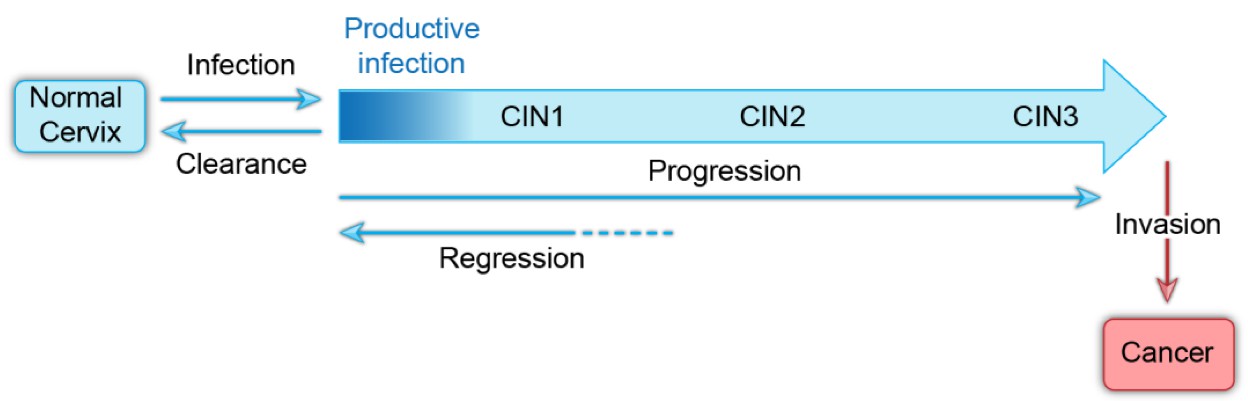 Figure 1. Natural history of oncogenic HPV infection.
(Source: Della Fera, A. N. et al., 2021)
Over 200 types of HPV have been described. These types are classified into high-risk and low-risk categories based on their association with cancer development. High-risk HPV types, such as HPV-16 and HPV-18, are responsible for the majority of HPV-related cancers, including cervical, anal, vaginal, vulvar, penile, and oropharyngeal cancers. These cancers all involve sexually transmitted HPV infection into the stratified epithelial tissue. Low-risk HPV types, such as HPV-6 and HPV-11, are primarily associated with benign conditions like genital warts.
Common symptoms of HPV infection include:
| Disease | Related HPV type |
| Common warts | HPV 2, HPV 7, HPV 22 |
| Plantar warts | HPV 1, HPV 2, HPV 4, HPV 63 |
| Flat warts | HPV 3, HPV 10, HPV 28 |
| Anogenital warts | HPV 6, HPV 11, HPV 42, HPV 44 and others |
| Epidermodysplasia verruciformis (EV) | HPV 2, HPV 3, HPV 5, HPV 8, HPV 9, HPV 10, and others |
| Conjunctival papillomas | HPV 6, HPV 11 |
| Focal epithelial hyperplasia (mouth) | HPV 13, HPV 32 |
| Laryngeal papillomatosis | HPV 6, HPV 11 |
| Mouth papillomas | HPV 6, HPV 7, HPV 11, HPV-16, HPV 32 |
| Verrucous cyst | HPV 60 |
| Oropharyngeal cancer | HPV-16 |
| Condylomata acuminata | HPV 6, HPV 11, HPV 30, HPV 42, HPV 43, and others |
| Genital cancers | Highest risk: HPV-16, HPV-18, HPV-31, HPV-45 Other high-risk: HPV-33, HPV 35, HPV 39, HPV 51, HPV-52, HPV 56, HPV-58, HPV 59, HPV 66, HPV 68 Probably high-risk: HPV 26, HPV 53, HPV 73, HPV 82 |
Low-risk HPV types are primarily associated with the development of benign conditions, such as genital warts, which can appear on various areas of the body such as the vulva, penis, cervix, vagina, scrotum, anus, mouth, and throat. Genital warts are primarily caused by two HPV strains, types 6 and 11, which account for approximately 90% of cases. Only a small percentage (~1%) of sexually active individuals in the United States experience noticeable genital warts. It is important to treat these warts to prevent their spread to other genital areas and sexual partners. In addition, some strains can cause mild cervical dysplasia, which refers to abnormal changes in the surface cells of the cervix.
Although low-risk types do not typically lead to cancer, they can still cause physical discomfort and psychological distress. Proper diagnosis and management of low-risk HPV infections are crucial to alleviate symptoms and prevent transmission.
Certain types of HPV are classified as "high-risk" because they have the potential to cause cancer. These high-risk HPV types are of particular concern to doctors due to their association with cell changes and pre-cancers that have a higher likelihood of progressing into cancer over time. Out of the at least 12 high-risk strains, HPV types 16 and 18 are responsible for the majority of HPV-related cancers, including those affecting the cervix, vagina, vulva, penis, and anus. Additionally, high-risk HPV strains can also result in oropharyngeal cancer, which affects the throat, tongue, and tonsils.
Learn more about Recombinant HPV 16 and 18 Antigens
Researchers believe that oral sexual contact with an individual who has an active high-risk HPV infection may lead to HPV infections of the mouth and throat. However, it's important to note that for most people, the immune system eliminates HPV infections within two years. While high-risk HPV strains have the potential to cause cancer, most individuals infected with these strains do not develop cancer.
HPV typing is a crucial component of HPV-related disease management, prevention, and research. The identification and classification of HPV types enable targeted interventions, such as vaccination and screening programs, to reduce the burden of HPV-related cancers and other conditions. Creative Diagnostics, a trusted company in the field, offers advanced HPV typing solutions that empower healthcare professionals in their efforts to combat HPV. By leveraging our innovative assays and products, clinicians and researchers can make informed decisions, improve patient outcomes, and contribute to the global fight against HPV-related diseases.
References
| Target | Cat. No. | Product Name | Expression System | Tag/Conjugate | Application | |
| HPV | PSVG-HPV16 | Pseudotyped GFP HPV16 | Useful for studying papillomavirus assembly, entry, and neutralization. | Inquiry | ||
| PSVG-HPV18 | Pseudotyped GFP HPV18 | Useful for studying papillomavirus assembly, entry, and neutralization. | Inquiry | |||
| PSVG-HPV31 | Pseudotyped GFP HPV31 | Useful for studying papillomavirus assembly, entry, and neutralization. | Inquiry | |||
| PSVG-HPV33 | Pseudotyped GFP HPV33 | Useful for studying papillomavirus assembly, entry, and neutralization. | Inquiry | |||
| PSVG-HPV39 | Pseudotyped GFP HPV39 | Useful for studying papillomavirus assembly, entry, and neutralization. | Inquiry | |||
| PSVG-HPV45 | Pseudotyped GFP HPV45 | Useful for studying papillomavirus assembly, entry, and neutralization. | Inquiry | |||
| HPV 11 | DAGF-228 | Recombinant Human Papilloma Virus type 11 L1 protein (VLP) | E. coli | Unconjugated | Inquiry | |
| DAG1576 | Recombinant HPV type 11 [GST] | E. coli | GST | N/A | Inquiry | |
| HPV 35 | DAGC142 | Recombinant Human Papilloma Virus type 35 L1 protein (VLP) | E. coli | Unconjugated | SDS-PAGE | Inquiry |
| HPV 39 | DAGC143 | Recombinant Human Papilloma Virus type 39 L1 protein (VLP) | E. coli | Unconjugated | SDS-PAGE | Inquiry |
| HPV16 | DAGF-094 | Recombinant HPV16 E6 protein [His] | E. coli | His | Inquiry | |
| DAGF-095 | Recombinant HPV16 E6 protein (aa 1-158) [His] | Yeast | His | Inquiry | ||
| DAGF-096 | Recombinant HPV16 E7 protein (aa 1-98) [GST] | E. coli | GST | Inquiry | ||
| DAGF-229 | Recombinant Human Papilloma Virus type 16 L1 protein (VLP) | E. coli | Unconjugated | Inquiry | ||
| DAG-P2512 | Recombinant HPV type 16 (aa 1 - 531) | E. coli | Unconjugated | SDS-PAGE | Inquiry |
| Target | Cat. No. | Product Name | Size | Species Reactivity | Application | Detection Sample | |
| HPV | DEIA-F678S | Human Papilloma Virus IgG ELISA kit | 96T | Human | Qualitative | plasma, serum | Inquiry |
| DEIASL404 | Human HPV18 IgM ELISA kit | 96T | Qualitative | Serum, plasma | Inquiry | ||
| DEIASL405 | Human HPV 16 L1-capsids IgG ELISA Kit | 96T | Qualitative | Serum, plasma | Inquiry | ||
| DEIASL406 | Human HPV 16 IgM ELISA Kit | 96T | Qualitative | Serum, plasma | Inquiry | ||
| DEIASL407 | Human Papilloma Virus IgM ELISA Kit | 96T | Qualitative | Serum, plasma | Inquiry | ||
| DEIASL408 | Human HPV 18 L1-capsids IgG ELISA Kit | 96T | Qualitative | Serum, plasma | Inquiry | ||
| DEIASL409 | Rabbit HPV 16 L1-capsids IgG ELISA Kit | 96T | Qualitative | Serum, plasma | Inquiry | ||
| DEIASL410 | Human high risk HPV L1-capsids (HR-HPVL1) IgG ELISA kit | 96T | Qualitative | Serum, plasma | Inquiry | ||
| DEIASL119 | HPV(18) Antigen ELISA Quantitation Kit | 96T | Quantitative | Serum, plasma | Inquiry | ||
| DEIASL120 | HPV(52) Antigen ELISA Quantitation Kit | 96T | Quantitative | Serum, plasma | Inquiry | ||
| DEIASL121 | HPV(58) Antigen ELISA Quantitation Kit | 96T | Quantitative | Serum, plasma | Inquiry | ||
| DEIASL171 | Human HPV 16 E7 Oncoprotein ELISA Kit | 96T | Human | Quantitative | Cell lysates, tissue lysates, cervical smears, plasma, serum | Inquiry | |
| DEIASL172 | Human HPV 18 E7 Oncoprotein ELISA Kit | 96T | Quantitative | Cell lysates, tissue lysates, or cervical smears | Inquiry | ||
| HPV16 | DEIASL118 | HPV (16) Antigen ELISA Quantitation Kit | 96T | Human | Quantitative | Serum and plasma | Inquiry |
Loading ......
