
Inquiry Basket
 Loading ......
Herpes simplex virus (HSV) can be divided into two serotypes: HSV-1 and HSV-2. HSV-1 mainly causes inflammation and herpes in the mucosa of the lips, conjunctival membranes of the eyes, and throat. HSV-2 is mainly transmitted through sexual intercourse and causes inflammation of the reproductive organs and herpes. It is reported that genital herpes caused by HSV-1 accounts for 13 to 40%, but genital herpes caused by HSV-2 infection still dominates. HSV infection can have different clinical manifestations depending on the site of infection, initial onset or recurrence, and the body's immune status. Only some patients develop typical clinical symptoms after the initial infection; most patients show latent infection. After HSV infection, it can exist in the infected ganglia of the body in an inactivated state, causing latent infection. Because HSV-2 infection has the pathogenic characteristics of latent infection and recurrent infection and the body has a strong function of evading immune surveillance, which makes the herpes virus persist in the human body for life, HSV infection has become a serious medical problem. It is very important to explore the pathogenesis and immune evasion mechanism of herpes virus infection.
Herpes simplex virus is widely distributed worldwide and humans are the only reservoir. The infection mainly occurs through close sexual contact between people and susceptible persons, and there is no seasonal difference. HSV-1 most commonly infects the mouth and lips but can invade any organ. The body can produce antibodies after being infected with the virus. Antibodies cannot clear the virus, but they can be used as indicators to understand the epidemiology of HSV infection. Research has found that geographic location, socioeconomic status and age can affect HSV infection rates. In developed and more developed regions, viral infection can be delayed until adolescence and even adulthood. Therefore, the positivity rate for HSV antibodies is lower in childhood, adolescence, and even adulthood. In underdeveloped countries, primary infection with HSV often occurs in childhood or even infancy, and the number of HSV antibody-positive people in the population is also high, reaching more than 95% in adults (20 to 40 years old). Patients with recurrent herpes are the greatest source of HSV-1 infection. It is generally believed that HSV-2 is mainly transmitted through sexual intercourse, so HSV-2 antibody positivity often occurs later than in people infected with HSV-1. The positive rate of HSV-2 antibodies in normal female populations also varies depending on socioeconomic status, marriage and race, ranging from 10% to 70%. It can increase with age, and can reach more than 95% of people with chaotic sexual life.
HSV can enter the body through the skin, mucous membranes, etc. Whether HSV can cause disease after infecting the body depends on the virulence of HSV, that is, the ability of HSV to proliferate and spread within target cells. Balloon-like changes, nuclear condensation, giant cell formation, cell destruction, and inflammatory reactions in surrounding tissues (fluid exudation, inflammatory cell infiltration) in infected cells can cause pathological changes in the infected area and lead to pathological changes in the body. The neurotoxicity and latency of HSV can affect the course of HSV infection, which is also an important feature of HSV infection.
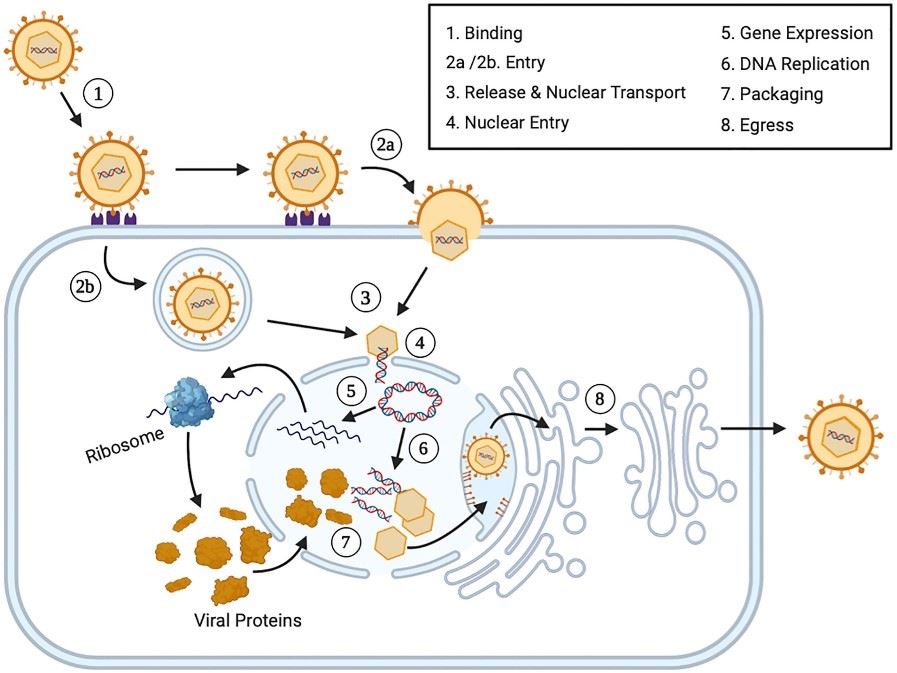 Figure 1. The Lytic Human Herpesvirus Life Cycle. (Verzosa AL, et al.; 2021)
Latent infection means that after HSV infection, it can exist in an inactivated state in the infection focus of the body. The time can be long or short, and it can be activated again after the action of appropriate factors. Animal experimental studies have found that latent infection with HSV can be divided into several stages. First, HSV multiplies in or near the infected tissue to form a primary infection focus. Then, the virus is transmitted from the infected nerve to the sensory ganglion, where it replicates for a period of time and then exists in the form of nucleocapsid, becoming a latent infection. This usually takes 2 to 4 weeks. When stimulated by external factors (such as physical or emotional stress, menstrual cramps, peripheral tissue damage, or taking certain hormones), virus reproduction can be reactivated. The virus can return to peripheral tissues through axons, often appearing near the primary infection focus, causing recurrent infections.
As a biological phenomenon, HSV latent infection has been described as early as the beginning of this century, but its mechanism has not been fully elucidated. Finding viral genes or proteins that establish or maintain latent infection is an important part of studying the molecular mechanisms of latent infection. A few years ago, it was proposed that a polymorphic mRNA complementary to the α gene is related to the formation of latent infection with HSV, called latency-associated transcript (LAT). Further experiments found that LAT is not necessary for establishing or maintaining latent infection. Recently, some people believe that a protein encoded by an open reading frame complementary to the r134∙5 gene may be related to latent infection, because it was found in mouse models that virus strains with r134∙5 gene mutations have a reduced chance of latent infection.
The second hot spot in the study of the mechanism of HSV latent infection is why viral gene transcription (especially the α gene) that occurs in many cells does not occur in sensory focus segments. It is known that the transcription of the α gene is affected by a series of host and viral proteins. Therefore, it is conceivable that the expression of α gene in infected ganglia outside the quiescent state may have: (1) lack of virus-derived trans-inducing factors, such as αTIF. (2) Lack of host factors that assist αTNF in its action, such as Oct-1. (3) The promoter of α gene is directly inhibited.
Another aspect of the research is the study of the presence of viral genes and genome copy number in latent infection. During the latent period, the HSV genome exists in the form of circular episomes. It has been observed that each neuron latently infected with HSV contains more than one viral genome. This may be because 9 viral genes enter the same neuron during the formation of latent infection, or in the latent state, the genome of the virus is controlled by intracellular mechanisms and amplified.
DNA and RNA viruses of different species may evade the surveillance of the immune system and remain parasitic in the host body for a long time. Successful immune evasion of the virus is one of the main causes of chronic herpes virus infection.
Restricted Expression of Viral Genes
Almost all viruses use this method to varying degrees to evade surveillance by the host immune system, and herpes viruses and some retroviruses are particularly prominent. For example, once the herpes simplex virus lurks in a neuron, all but one of the genes in the viral genome stop being transcribed, leaving almost no trace of the virus in the infected neuron. Of course, there is no completely hidden incubation period, because even in During the incubation period, viral DNA still needs to replicate.
Exploiting Immune-Privileged Parts of the Host
A few tissues and organs of the human body are areas where immune cells are not allowed to intervene and enjoy the "privilege" of immune exemption. Therefore, viruses that enter immune-privileged areas can temporarily avoid the surveillance of the immune system without causing local inflammatory reactions. The blood-brain barrier of the central nervous system (CNS) restricts lymphocytes from entering the CNS, making them difficult to be recognized by T lymphocytes. Therefore, the CNS is an organ where several viruses are chronically infected and latent for a long time.
Variations in Viral Antigens
The genes of RNA viruses and retroviruses mutate more frequently, and the antigens encoded by viral genes are also constantly mutating. Variations in surface antigens may allow virus mutants to temporarily avoid the neutralizing or opsonizing effects of existing antibodies and gain a certain survival advantage. CTL and TH cells play a very important role in completely clearing and controlling chronic viral infection. They recognize T lymphocyte epitopes in viral protein molecules presented by MHC molecules. If the genetic mutation of the virus during its reproduction in the body happens to change the original T lymphocyte epitope, so that the new peptide segment can no longer bind to the host's DMHC molecule, or cannot be recognized by T lymphocytes after binding, The virus mutant strain can temporarily avoid the effects of CTL and TH cells, gaining a reproductive advantage that the parent strain does not have. This phenomenon has been confirmed in HSV, HIV, hepatitis B virus and Epstein-Barr virus. Live attenuated vaccines of wild strains of herpes viruses have been used to treat patients with recurrent genital herpes.
Interfere with Host Cell Antigen Presentation
Herpes simplex virus has a protein molecule that interferes with the function of intracellular transpeptidin protein (TAP), thereby indirectly inhibiting the expression of MHC-I molecules. The early protein E3 of adenovirus affects its glycosylation and reduces expression by directly binding to MHC molecules. Adenovirus E1 protein affects the expression of MHC molecules by organizing the transport of mRNA. Both human and mouse cytomegalovirus have the ability to interfere with the expression of class I MHC molecules.
Interfere with Cytokine Function
Some viral proteins can affect immune effects by interfering with the function of cytokines. For example, the E3 and E1B proteins of adenovirus can antagonize the lysis of infected cells by TNF. T12 of poxvirus is a soluble protein that is highly homologous to the TNF receptor. The T12D protein released by cells infected by adenovirus binds to TNF and blocks its biological effects. BCRF1, a product of Epstein-Barr virus, has 84% homology with human IL-10 and has the function of inhibiting the synthesis of IL-2 and IFN-λ. A soluble protein encoded by myxoma virus can directly bind to IFN-λ and affect its function.
Effects that Interfere with Immune Responses
Herpesvirus type I encodes a molecule that binds to C3, which accelerates degradation by the alternative pathway C3bBb converting enzyme. Some viruses use complement receptors to infect cells, Epstein-Barr virus uses CR2 receptors, and flaviviruses use CR3 receptors after binding to iC3b. Vaccinia virus produces a protein that binds to C4b, thereby inhibiting complement-mediated inflammatory responses and viral killing. Type II parainfluenza virus can downregulate the expression of CTL serine protease, thereby partially inhibiting the killing function of CTLF. HIV infects CD4+T lymphocytes, significantly reducing their number and seriously affecting the function of the immune system.
References
| Target | Cat. No. | Product Name | Size | Species Reactivity | Application | Detection Sample | |
| HSV | DEIA344 | Herpes 1 IgG ELISA Kit | 96T | Human | Quantitative | serum, plasma | Inquiry |
| DEIA345 | Human Herpes Simplex Virus1 IgA (HSV-1 IgA) ELISA Test kit | 96T | Human | Qualitative | Serum | Inquiry | |
| DEIA346 | Herpes 1 IgM ELISA Kit | 96T | Human | Quantitative | serum, plasma | Inquiry | |
| DEIA347 | Herpes 2 IgG ELISA Kit | 96T | Human | Quantitative | serum, plasma | Inquiry | |
| DEIA348 | Herpes 2 IgA ELISA Kit | 96T | Human | Quantitative | serum, plasma | Inquiry | |
| DEIA349 | Herpes simplex Virus 2 (HSV 2) IgM ELISA | 96T | Human | Qualitative | Serum or plasma (citrate, heparin) | Inquiry | |
| DEIA351 | Human Herpes 1/2 IgA ELISA kit | 96T | Human | Quantitative | serum, plasma or cerebrospinal fluid | Inquiry | |
| DEIA547 | HSV IgM ELISA Kit | 96T | Human | Qualitative | serum, plasma | Inquiry | |
| DEIA05535 | HSV Type 1 rec. gG1 IgG-ELISA Kit | 96T | Human | Qualitative | serum, citrate plasma | Inquiry | |
| DEIA05537 | HSV Type 2 rec. gG2 IgG-ELISA Kit | 96T | Human | Qualitative | serum, citrate plasma | Inquiry | |
| DEIA3555 | Mouse/Rat HSV-1 IgG ELISA Kit | 96T | Mouse, Rat | Qualitative | serum, plasma | Inquiry | |
| DEIA1715 | HSV-1 and HSV-2 IgM ELISA Kit | 96T | Human | qualitative | serum | Inquiry | |
| HSV1 | DEIAFY104 | Herpes Simplex Virus Type 1 (HSV-1) Antigen ELISA Kit | 2 plates | Quantitative | complex sample matrices | Inquiry | |
| HSV-1/2 | DEIA350 | Herpes 1/2 IgG ELISA kit | 96T | Human | Quantitative | Serum, plasma, cerebrospinal fluid | Inquiry |
| DEIA352 | Herpes 1/2 IgM ELISA kit | 96T | Human | Quantitative | Serum, plasma, cerebrospinal fluid | Inquiry |
Loading ......
