

Inquiry Basket
 Loading ......
The field of modern medicine has been transformed by the development of small molecule targeted drugs. Targeted drugs work by interacting with specific molecular targets within disease pathways to provide treatment solutions that outperform conventional therapies both in accuracy and effectiveness. This article explores the defining properties and operating principles of small molecule targeted drugs while contrasting them with macromolecular drugs and examining common examples together with current obstacles and prospective advancements.
Low Molecular Weight and Cell Permeability
Small molecule drugs generally possess molecular weights below 500 to 1000 daltons according to multiple scientific sources although some variations exist. These drugs can penetrate cell membranes due to their low molecular weight which allows them to engage cellular targets including kinases and nuclear receptors. Gefitinib prevents tumor cells from growing by disabling EGFR's tyrosine kinase activity within the cells.
Chemical Tunability and Selectivity
Chemical synthesis enables precise adjustments to small molecule drugs which improves their binding affinity and selectivity toward their biological targets. Imatinib targets the ATP-binding site on the BCR-ABL fusion protein to selectively block the irregular signal transduction process in chronic myeloid leukemia.
Oral Bioavailability and Distribution Advantages
Most small molecule drugs are orally active and can be widely distributed in the body, including crossing the blood - brain barrier. For example, the ALK inhibitor Crizotinib can be used to treat brain - metastatic tumors.
Classification Based on Targeting Levels
Tumor tissues' enhanced permeability and retention (EPR) effect enables drugs to accumulate at tumor sites without active transport. Sorafenib obstructs tumor growth by blocking the vascular endothelial growth factor receptor which controls angiogenesis.
Classification Based on Targeting Strategies
It relies on physiological structural differences (such as the leakiness of tumor blood vessels) to achieve drug enrichment without active modification.
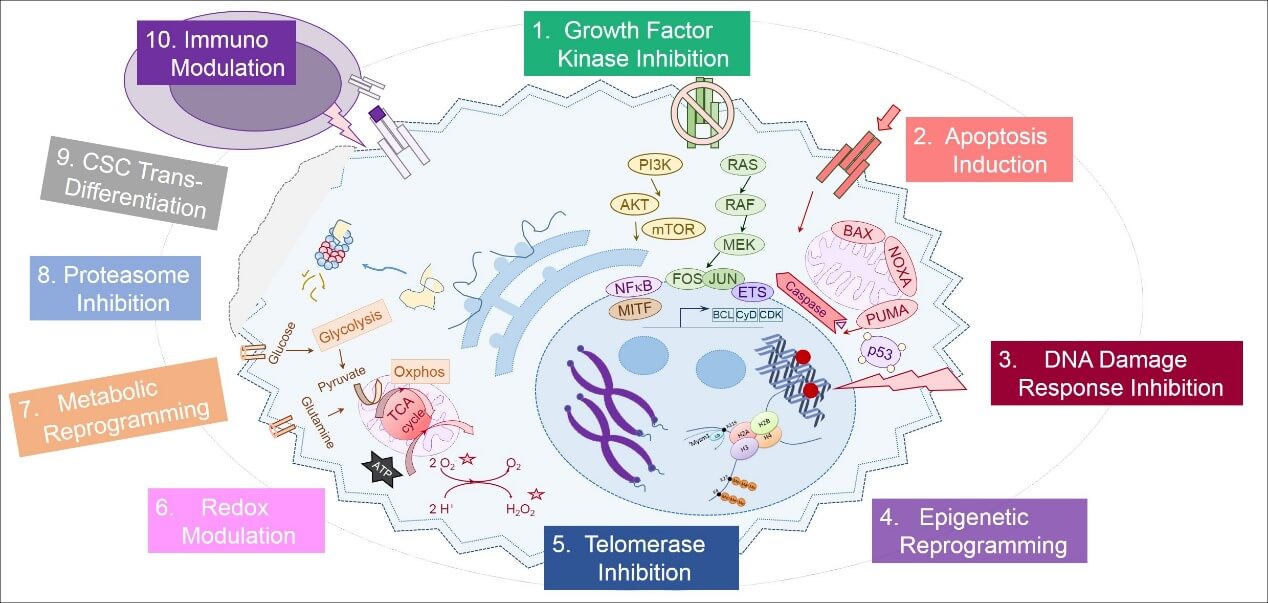 Figure 1. The principles of targeted cancer therapy. (Sources: Gatzka MV. 2018)
External stimuli such as light, heat, or magnetic fields are used to control drug release. For example, light - responsive nanocarriers can deliver small molecule drugs to tumor sites.
| Characteristics | Small Molecule Drugs | Macromolecular Drugs (e.g., Monoclonal Antibodies) |
| Target Range | Can target intracellular, membrane - surface, and nuclear targets | Mainly target extracellular or membrane - surface antigens |
| Selectivity | May have off - target effects, but specificity can be improved through structural optimization | High specificity but cannot access intracellular targets |
| Administration Route | Mostly oral | Require injection |
| Half - Life | Short, requiring frequent dosing | Long, with less frequent dosing |
| R & D Cost and Difficulty | Mature chemical synthesis, lower cost | Complex production processes, high cost |
Imatinib
The first tyrosine kinase inhibitor targeting the BCR - ABL fusion protein, which has significantly increased the 5 - year survival rate of chronic myeloid leukemia patients to 90%.
Osimertinib
A third - generation EGFR inhibitor that selectively inhibits the T790M resistance mutation and can cross the blood - brain barrier to treat lung cancer brain metastases.
Venetoclax
A BCL-2 inhibitor that treats chronic lymphocytic leukemia by targeting the mitochondrial apoptosis pathway.
PROTACs (Protein Degradation Targeting Chimeras)
Such as ARV - 471 (targeting the estrogen receptor) and ARV - 110 (targeting the androgen receptor), which degrade oncogenic proteins through the ubiquitin - proteasome system.
Resistance Problem
Tumor cells can escape the action of drugs through target mutations or bypass activation. Therefore, combination therapies or a new generation of allosteric inhibitors need to be developed.
New Targeting Technologies
RNA Targeting: Drugs like Evrysdi (for treating spinal muscular atrophy) increase the expression of functional proteins by binding to SMN2 mRNA.
Multi - target Co - regulation: Technologies like "molecular glues" act on multiple targets simultaneously.
AI - Assisted Design
Deep learning is used to optimize the chemical structure of drugs, predict target - binding patterns, and off - target risks.
The targeting of small molecule drugs is achieved through structural design, target selection, and delivery strategies to precisely regulate disease - related molecules. Although drug resistance and off-target effects present challenges for these compounds their chemical tunability alongside intracellular action capability and oral delivery convenience ensures they remain vital in treating oncology and immune diseases. Small molecule drug targeting will reach new levels of progress through integration with emerging technologies like PROTACs and RNA targeting which will advance personalized medicine.
Small molecule targeted drugs include compounds that weigh less than 500-1000 Daltons and can precisely interact with disease-related molecular targets such as kinases, receptors, or mutant proteins while treating diseases by obstructing faulty signaling pathways or triggering target protein breakdown. This drug offers several benefits when compared to traditional chemotherapy medications.
Its targeting mechanism is divided into three major strategies:
| Characteristics | Small Molecule Drugs | Large Molecule Antibody Drugs |
| Target range | Intracellular, membrane surface, nuclear targets | Extracellular or membrane surface antigens only |
| Administration method | Oral convenient | Injection required, low patient compliance |
| Drug resistance | Prone to target mutation resistance | Lower risk of drug resistance but unable to enter cells |
Resistance mainly comes from:
Solution:
PROTACs represent innovative small molecule drugs which destroy pathogenic proteins like estrogen receptors through ARV-471 by manipulating the cellular ubiquitin-proteasome system. Its advantages include:
References
| Target | Cat. No. | Product Name | Expression System | Tag/Conjugate | Application | |
| ASCL1 | DAG-P1753 | Human ASCL1 peptide | N/A | Unconjugated | ELISA | Inquiry |
| CNR2 | CDBP0670 | Human CNR2 blocking peptide | N/A | Unconjugated | Apuri, BL, ELISA | Inquiry |
| DAG-P0043 | CNR2 peptide | N/A | Unconjugated | WB | Inquiry | |
| COL1A1 | DAG-WT1916 | Recombinant alpha-1 type I collagen [His] | E. coli | His | WB, ELISA | Inquiry |
| CRYAB | CDBP0888 | Human CRYAB blocking peptide | N/A | Unconjugated | Apuri, BL, ELISA | Inquiry |
| KRT19 | DAG362 | Human Keratin 19 | E. coli | Unconjugated | IA, SDS-PAGE | Inquiry |
| DAGC027 | Recombinant Human Keratin-19 (K19) | Insect cells | His, Myc | Immunoassays | Inquiry | |
| PKD2 | CDBP2344 | Human PKD2 blocking peptide | N/A | Unconjugated | Apuri, BL, ELISA | Inquiry |
| SPARC | DAG-WT1917 | Recombinant Human SPARC Protein [His] (HEK293 cells) | HEK293 cells | His | WB, ELISA | Inquiry |
| DAG-WT1918 | Recombinant Human SPARC Protein [His] (E. coli) | E. coli | His | WB, ELISA | Inquiry | |
| VZV ORF9 | DAG521 | Recombinant VZV ORF9 [GST] | E. coli | GST | ELISA, WB | Inquiry |
| DAG1492 | Recombinant VZV | E. coli | Unconjugated | ELISA, WB | Inquiry | |
| HAV VP3 | DAG540 | Recombinant HAV VP3 [GST] | E. coli | GST | ELISA, WB | Inquiry |
| DAG2417 | Recombinant HAV VP3 (a.a. 248-491) [His] | E. coli | His | WB, ELISA | Inquiry | |
| DAG-P2789 | HAV Active VP3 (aa 304 - 415) | E. coli | Unconjugated | WB, ELISA, SDS-PAGE | Inquiry | |
| DAG-P2631 | Recombinant HAV VP3 (aa 304-415) [His, GST] | E. coli | His, GST | ELISA, WB | Inquiry | |
| HAV P2C | DAG548 | Recombinant HAV P2C [GST] | E. coli | GST | ELISA, WB | Inquiry |
| DAG2384 | Recombinant HAV P2C Protein (a.a. 1121-1234) | E. coli | Unconjugated | WB, ELISA | Inquiry | |
| FIV Core Antigen | DAG552 | Recombinant FIV Core Antigen | E. coli | Unconjugated | ELISA | Inquiry |
Loading ......
