
Inquiry Basket
 Loading ......
Respiratory syncytial virus (RSV) is a leading cause of lower respiratory tract disease in young children and elderly people. RSV is a filamentous enveloped, negative-sense, single-stranded RNA virus that belongs to the Ortho-pneumovirus genus of the pneumoviridae family in the order mononegavirales, which is usually transmitted through close contact After a short period of replication in the epithelial lining of the nasopharynx and upper respiratory tract, an RSV infection may spread to the small bronchioles or alveoli of the lower respiratory tract. Host immune responses to RSV infection increase mucus production and inflammation, leading to a narrowing of the airway that results in bronchiolitis in young children and acute respiratory illness in older adults or those with underlying chronic conditions. Currently, the only licensed intervention for RSV is passive immunoprophylaxis of high-risk infants with a humanized monoclonal antibody.
Explore Respiratory Syncytial Virus Antigens
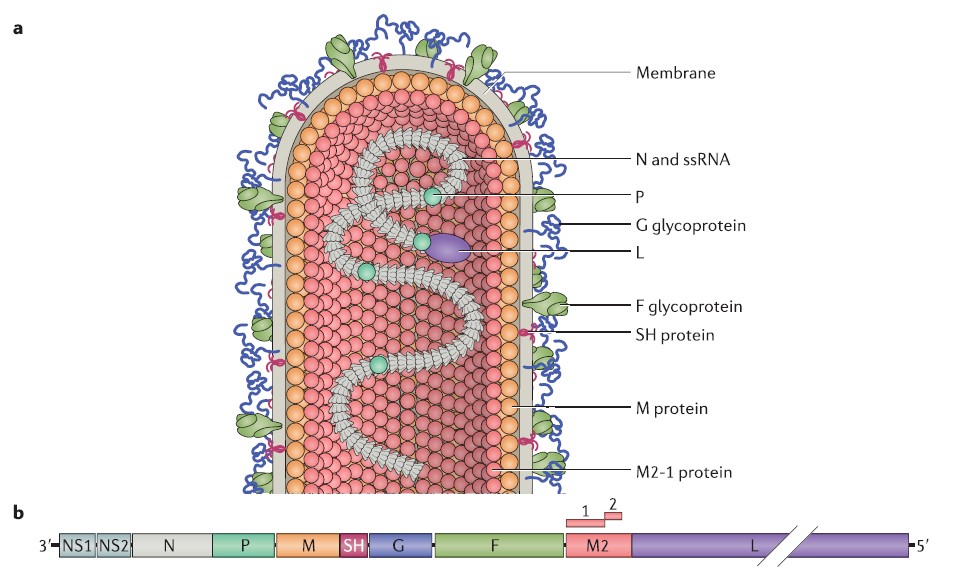 Fig 1. Respiratory syncytial virus virion.
(Source: Microbiology, February 2019.)
The entry process consists of two main steps: attachment of the virion to the host cell and fusion of the viral and host cell membranes. Host cell factors may be involved in either one or both steps. Here, we define attachment factors as host cell molecules that function only to bind components of the virion, and we define functional receptors as host cell molecules that stimulate, or trigger, the refolding of F.
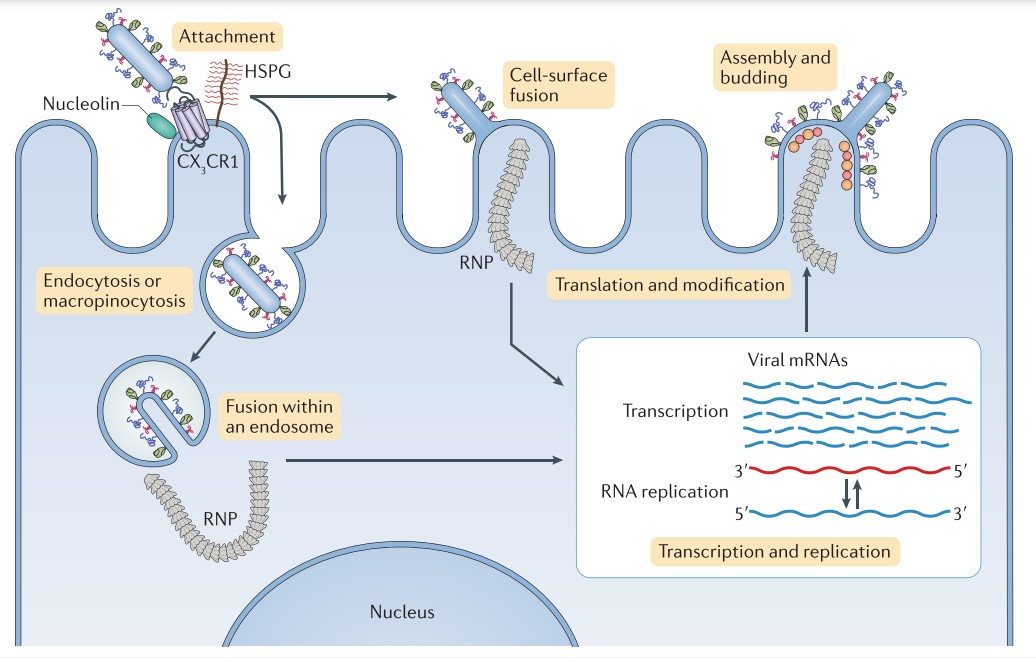 Fig 2. The life cycle of respiratory syncytial virus
(Source: Microbiology, February 2019.)
The primary role of the G protein is to attach virions to cell surfaces through interaction with host cell attachment factors. This interaction is primarily mediated by a stretch of positively charged amino acids located between the two mucin-like domains of G, referred to as the heparin-binding domain. Another host cell attachment factor thought to interact with G is the fractalkine receptor CX3C-chemokine receptor 1 (CX3CR1), but the precise role of CX3CR1 in RSV entry needs to be further investigated. In addition, F protein also play a role in attachment. Like G, the F protein has been demonstrated to interact with immobilized heparin or cellular heparan sulfate, promoting attachment to and infection of immortalized cells. F also interacts with one or more non-GAG attachment factors.
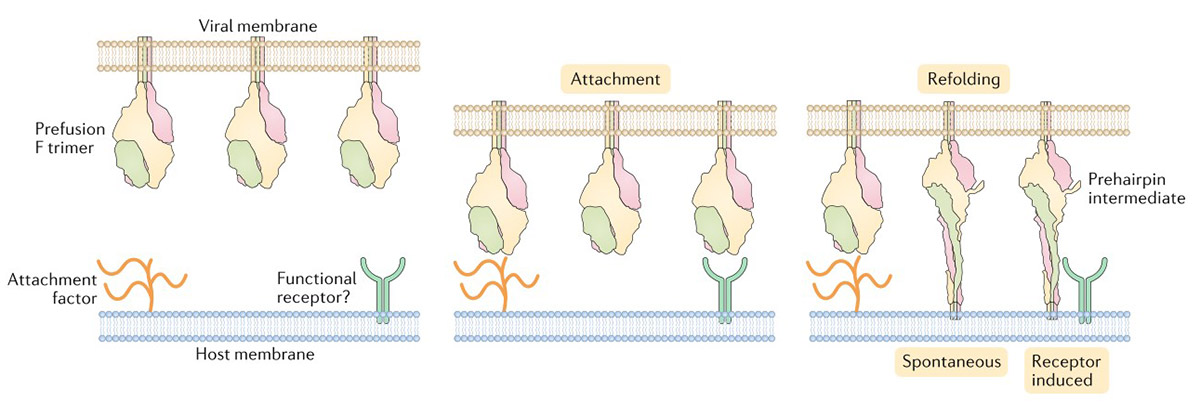 Fig 3. Attachment and fusion.
(Source: Microbiology, February 2019.)
Membrane fusion and regulation. After attachment, fusion of the viral and host cell membranes must occur for the RNP to enter the cytoplasm. RSV fusion was thought to occur at the plasma membrane, because fusion is pH-independent and insensitive to lysosome acidification and that RSV-infected cells can fuse with neighbouring cell membranes to generate multinucleated cells called syncytia. A more recent report indicated that the initial steps of RSV fusion occur at cholesterol-rich microdomains in the plasma membrane, with completion of membrane fusion possibly requiring a dynamin-independent endocytic event. A subsequent study demonstrated that RSV utilizes macropinocytosis as an initial entry mechanism followed by fusion in endosomes. Thus, the evidence now suggests either a two-step fusion event or fusion in endo-somes after macropinocytosis. However, it may be the case that RSV can fuse at both the plasma membrane and in endocytic vesicles, with different efficiencies depending on environmental conditions and target cells.
Preclinical and clinical development of RSV interventions primarily falls into three categories: monoclonal antibodies, small molecules and vaccines.
RSV Monoclonal Antibodies. High levels of RSV-neutralizing-antibody titres correlate with protection in children and adults, including elderly individuals. In the late 1990s and early 2000s, an RSV intravenous immune globulin infusion preparation, RespiGam, was used prophylactically to prevent severe RSV associated lower respiratory tract disease in young children with bronchopulmonary dysplasia or premature birth. In 2003, palivizumab (Synagis), a humanized murine monoclonal antibody that binds the F glycoprotein was used. During the past 10 years, hundreds of human-derived antibodies directed against the RSV F and RSV G proteins have been isolated and characterized, and cocktails of antibodies against F and G, or against two different antigenic sites on F, are also being considered.
Small-molecule fusion inhibitors. On the basis of crosslinking studies with RSV virions138 and biochemical and structural studies with peptides comprising the heptad repeats of the RSV F1 subunit, it was thought that the small molecules bound to a fusion intermediate of F and prevented the postfusion conformation from completely forming.
Vaccines. Attributed to the study of the structure and function of the viral proteins, the morphology and architecture of the virion, the immune responses to natural infection and the causes of vaccine-enhanced disease. These advances have created a complex vaccine landscape with over 30 candidates in clinical or preclinical development. Vaccine development of candidates containing the F protein has focused on structure-based engineering approaches to stabilize F in the prefusion conformation. For particle-based and subunit-based vaccines intended for elderly individuals or maternal immunization, the challenge will be to induce an antibody response of sufficient titer and duration to protect elderly people and newborns from severe disease during the RSV season. Live-attenuated and chimeric virus vaccines are primarily intended for the paediatric population, vaccines based on viral vectors and DNA or RNA are also thought to be safe for infants.
Reference
| Target | Cat. No. | Product Name | Size | Species Reactivity | Application | Detection Sample | |
| RSV | DEIA373 | Respiratory Syncytial Virus IgG ELISA Kit | 96T | Human | Quantitative | Serum or plasma | Inquiry |
| DEIA374 | Human Respiratory Syncytial Virus IgA ELISA Kit | 96T | Human | Quantitative | serum, plasma | Inquiry | |
| DEIA375 | Human Respiratory Syncytial Virus IgM ELISA Kit | 96T | Human | Quantitative | serum, plasma | Inquiry | |
| DEIA1788 | Respiratory Syncytial Virus IgA ELISA Kit | 96T | Qualitative | serum | Inquiry | ||
| DEIA1789 | Respiratory Syncytial Virus IgG ELISA Kit | 96T | Human | Semi-quantitative | Human sera | Inquiry | |
| DEIA1790 | Respiratory Syncytial Virus IgM ELISA Kit | 96T | Qualitative | serum | Inquiry | ||
| DEIA1602 | Respiratory Syncytial Virus (RSV) IgM Human ELISA Kit | 96T | Human | Qualitative | serum, citrate plasma | Inquiry | |
| DEIAPV249 | Rice Stripe Virus (RSV) ELISA Kit | 500T/1000T/5000T | Qualitative | host plants | Inquiry |
Loading ......
