
Inquiry Basket
 Loading ......
Clostridium perfringens is an anaerobic bacterium that is positive for Gram staining. It was originally obtained by American pathologist Welchii from a highly decomposed cadaver vascular tissue. The bacteria are naturally distributed in soil, feces, sewage, raw meat and animal gastrointestinal tract. The bacterium is 3 μm-9 μm in length and 0.6 μm-2.4 μm in width, with a thick rod shape. The morphology of the bacteria is not fixed, often appearing spherical at the early stage of their growth, and by the end of growth, due to the depletion of nutrient content in the medium, they appear tadpole shape, filamentous and granular.
Clostridium perfringens can be divided into seven toxin types, A, B, C, D, E, F and G, according to the main exotoxin secreted. Research shows that Clostridium perfringens can produce at least 20 toxic factors, including 12 exotoxins (α, β1, β2, γ, δ, ε, η, θ, ι, κ, λ, μ) and toxic enzymes, such as lecithin, hyaluronidase, collagenase and DNase.
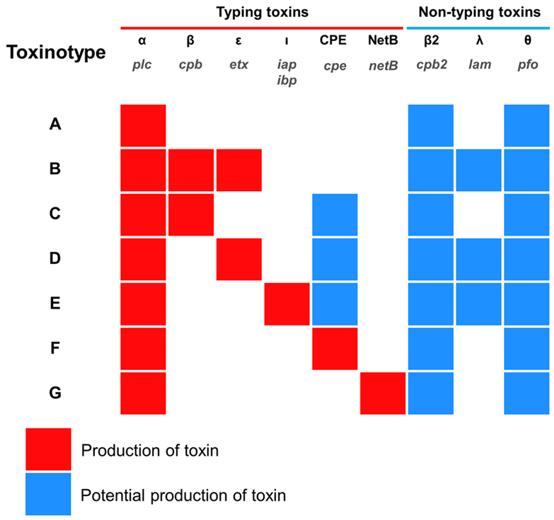 Fig.1 C. perfringens current toxinotyping system (Kiu, R.; Hall, LJ. 2018)
Clostridium perfringens causes intestinal infections in most mammals, leading to enterotoxemia. These infections are caused by the absorption of toxins produced by the bacteria in the intestines. In addition, Clostridium perfringens can also cause skin diseases, such as subcutaneous and muscle tissue lesions (gas gangrene and malignant edema). In most cases, disease is caused by one or more powerful toxins from Clostridium perfringens.
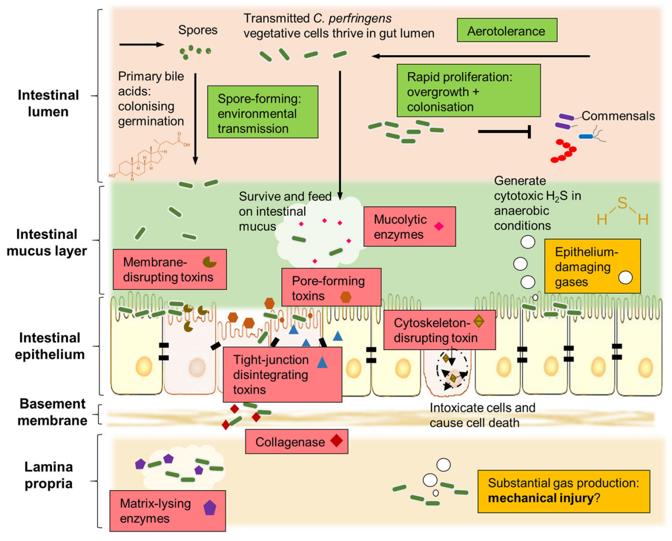 Fig.2 Graphical representation of disease-linked virulence factors of Clostridium perfringens in the context of intestinal infections (Kiu, R.; Hall, LJ. 2018)
Traditional methods of diagnosis, such as isolation and identification of disease materials, have many shortcomings, such as too long time consuming, low specificity and sensitivity. Exotoxin is an important pathogenic factor of Clostridium perfringens, and the detection of toxins (especially α-toxin) is of more practical value. At present, PCR technique is widely used in detection. In addition, immunological detection of toxins is also effective, including colloidal gold method, Western blot and ELISA.
Loading ......
