
Inquiry Basket
 Loading ......
Staphylococcus aureus belongs to the Micrococcaceae family, it is a Gram-positive bacterium, which causes bacteremia and infective endocarditis (IE) as well as osteoarticular, skin and soft tissue, pleuropulmonary, and device-related infections. S. aureus is a commensal, and studies have shown that about 20% of individuals are persistent nasal carriers of it and around 30% are intermittent carriers. The nares are generally regarded as the main S. aureus colonization site, in addition, S. aureus can also colonize many skin sites and intestine. S. aureus produces an array of virulence factors. These include a plethora of toxins and immune evasion factors, and a vast array of protein and non-protein factors that enable host colonization during infection. S. aureus has the ability to acquire resistance to most antibiotics, methicillin-resistant S. aureus (MRSA) is the most important clinically in S. aureus isolates.
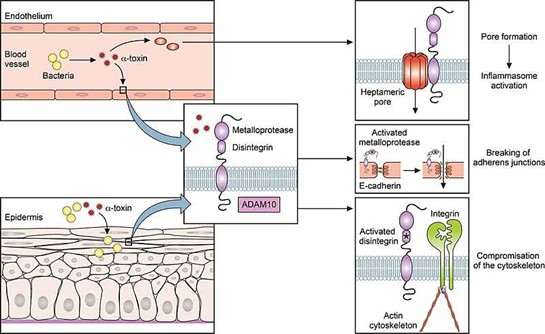 Fig.1 Role of α-toxin in S. aureus infection.
(Cheung GYC et al. Virulence. 2021)
MRSA strains are classified into lineages based on the molecular characteristics. In addition to developing resistance to antibiotics, hospital disinfectants, and other toxic compounds, a selection of surface proteins may be present in a given lineage to mediate human infection as well as a range of lytic proteins that contribute to host tissue damage. Pathogenic factors are often carried on mobile genetic elements that originate in other non-pathogenic species, which serve as a genetic reservoir for the adaptive evolution of MRSA. In addition, subtle genetic changes such as single nucleotide polymorphisms (SNPs), small insertions/deletions (InDels), and genome rearrangements can emerge under selection pressure. This genetic evolution can affect bacterial clone survival and success within a given host through its impact on metabolism and/or virulence gene expression.
 Fig. 2 MRSA lineages.
(Jiang J-H.; et al. Clin Microbiol Rev. 2023)
Many studies have shown that the best choice for vaccine design is to employ different antigens in the development of a S. aureus vaccine. All vaccine candidates in clinical phases for S. aureus are composed of several antigens, such as capsular polysaccharides (CP5 and CP8), the adhesion molecule ClfA, enterotoxins, etc. These different antigenic compounds stimulate various immune responses. To simulate various immune mechanisms, multi-epitope proteins that employ immunodominant epitopes of different proteins in the form of a recombinant protein can be utilized.
With years of protein and antigen production experience and advanced platforms, Creative Diagnostics now can provide high quality S. aureus antigens including various native and recombinant S. aureus enterotoxins. Welcome to contact us for quotation and more details.
References
Loading ......
