
Inquiry Basket
 Loading ......
Fusobacterium nucleatum are Gram-negative anaerobic bacilli with species-specific reservoirs in the human mouth, gastrointestinal tract and elsewhere, their presence in these healthy tissues suggests that they are natural constituents of the microbiota at these sites. However, as they have been frequently isolated from these same and other tissues in clinical samples during active disease, they are regarded as opportunistic pathogensa, which can promote the formation of tumor microenvironment. F. nucleatum as a mutualist, infectious agent and oncobacterium can contribute to the development, growth, spread of and treatment response to cancer.
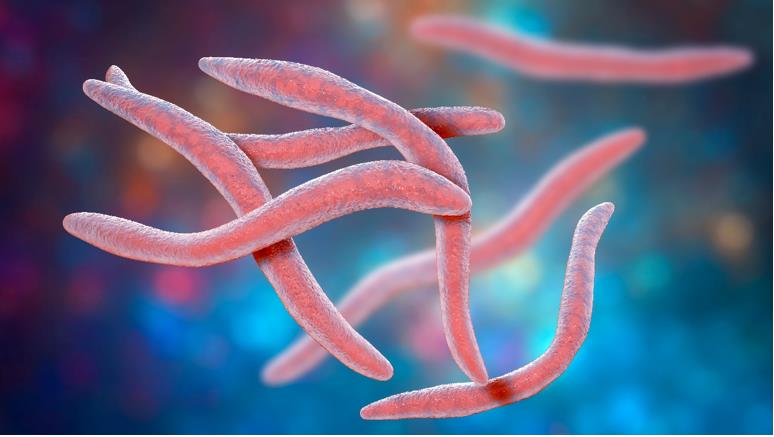 Fig 1. Fusobacterium nucleatum
F. nucleatum has evolved in close association with the oral microbiota. F. nucleatum plays integral and beneficial roles in biofilms that contribute to both periodontal health and disease. In a dental plaque biofilm, F. nucleatum serves a structurally supportive role as a bridge organism, connecting primary colonizers. F. nucleatum also mediates important biofilm- organizing behavior and interactions with host cells through the expression of numerous adhesins. Microbial cells within biofilms engage not only in physical interactions but also in cross-feeding and metabolic interactions, broader metaproteomic analyses have also suggested that metabolic pathways in F. nucleatum, including amino acid fermentation and glycolysis, may be influenced by other microorganisms in a species-specific manner.
F. nucleatum has a mutualistic relationship with the other members of the oral microbiota,and it helps coordinate are found on tooth surfaces in healthy individuals, but F. nucleatum is also important in periodontitis as it directly shapes host responses and increases the infectivity of other pathogens. For example, F. nucleatum can induce expression of the antimicrobial peptide β-defensin 2 and pro-inflammatory cytokines, including IL-6 and IL-8, in the oral epithelium. Such F. nucleatum-driven inflammation contributes to disease progression in a model of oral tumorigenesis. In addition, F. nucleatum has been isolated from clinical specimens in a variety of diseases, including appendicitis, brain abscesses, osteomyelitis, pericarditis and adverse pregnancy outcomes such as chorioamnionitis, but the role of F. nucleatum in these pathologies remains unclear.
F. nucleatum and colorectal cancer. In efforts to define the genomic and transcriptomic profiles of colorectal cancer tissues, fusobacterial DNA40 or RNA41 was detected for the first time. Further, the fusobacterial signal was specifically enriched in the tumor tissues relative to adjacent normal tissues, and deeper analysis revealed these sequences to be F. nucleatum. Subsequently, F. nucleatum nucleic acids are present in colorectal cancer tissues has since been confirmed in several different studies using varied molecular approaches. In colorectal cancer, many experiments have supported that F. nucleatum as a mechanistic role in driving tumorigenesis rather than acting as a microbial 'passenger' in this cancer type. Although experimental research into the mechanisms by which F. nucleatum influences colorectal cancer is ongoing, epidemiological studies have enabled timely advances into the connections between intratumoural F. nucleatum levels and colorectal tumorigenesis.
Mechanisms to promote cancer. Intratumoural F. nucleatum strains have an oral origin. How does F. nucleatum, which is adapted to a life in the oral cavity, mechanistically influence colorectal tumorigenesis? A study showed that F. nucleatum localized to colorectal tumors in an Fap2-dependent manner via a haematogenous route, Fap2 identifies colorectal cancer tissues overexpress a specific sugar residue, Gal-GalNAc67 and also mediates co-aggregation and haemagglutination functions. Another experiment using the genetic ApcMin/+ model, in which mice spontaneously develop intestinal tumors oral instillation of F. nucleatum was sufficient to potentiate colorectal tumor development, suggesting that an oralgastrointestinal route is another possibility. Another axis of cancer development and progression that F. nucleatum influences is the creation of a pro-inflammatory tumor milieu. Using ApcMin/+ model in which mice fed F. nucleatum developed more colorectal and small intestinal tumors than their sham-fed counterparts, researchers also observed more intratumoural myeloid cells, including macrophages, dendritic cells and myeloid-derived suppressor cells. In this model, F. nucleatum also activated the NF-κB pathway and induced expression of the genes encoding several pro-inflammatory cytokines, which mirrors human RNA-seq data from patients bearing high F. nucleatum loads in their colorectal tumors. A third mechanism by which F. nucleatum shapes the tumor microenvironment is by evading anti-cancer immune responses.
References
| Target | Cat. No. | Product Name | Host | Isotype | Application | |
| F. nucleatum | CABT-CS157 | Anti-F. nucleatum Polyclonal antibody | Rabbit | ELISA, FACS | Inquiry |
Loading ......
