
Inquiry Basket
 Loading ......
The liver is the largest solid organ in the human body, a frequent site of organ-specific and systemic diseases, and a common site of tumor metastasis. In liver biology, it is particularly important to study hepatocytes, which are composed of several cell types of different embryonic origins, including hepatocytes, biliary epithelial cells (cholangiocytes), stellate cells, Kupffer cells, and sinusoidal endothelial cells. Hepatocytes are the most common cell type in the liver, accounting for approximately 60% to 80% of the total number of liver cells. They have a variety of functions, including synthesizing, decomposing, and secreting a variety of substances, such as bile, cholesterol, fatty acids, glucose, and ammonia. It can also store and release metal ions such as iron, copper, and zinc, as well as fat-soluble vitamins such as vitamins A, D, and K. Bile duct cells are the second most abundant epithelial cell group in the liver. As cells in the bile duct lumen, they have traditional epithelial functions and bile secretion functions. Hepatic stellate cells are a special type of liver cells that are mainly distributed in the outer layer of the liver. Hepatic stellate cells have secretion and phagocytosis functions, and are involved in liver repair and extracellular matrix accumulation. Kupffer cells are the resident macrophage population of the liver. These cells recognize many pathogenic stimuli and exert pro/anti-inflammatory effects, depending on many contributing factors. Liver sinusoidal endothelial cells are a special group of endothelial cells. These cells form a porous sieve plate in the sinusoidal cavity, which plays a screening role in material exchange between plasma and liver cell types, while maintaining a certain barrier function.
Recombinant adeno-associated virus (rAAV) is a non-pathogenic viral vector that can both infect dividing cells and deliver genes to non-dividing cells. It is one of the vectors currently used to deliver genes to liver cells. Selecting the appropriate serotype, specific promoter and injection method can effectively improve the specific expression efficiency of foreign genes in liver tissue.
Different serotypes have a great influence on the infection tendency of AAV. Choosing the appropriate serotype according to your own experimental needs is an important factor in determining the experimental effect. After the first discovery, research and modification of AAV2, researchers have successively discovered multiple wild serotypes, and based on them, modified the capsid protein Cap gene to develop new serotypes to improve targeting to different tissues. Among them Types 8 and 9 both have a strong tendency towards the liver.
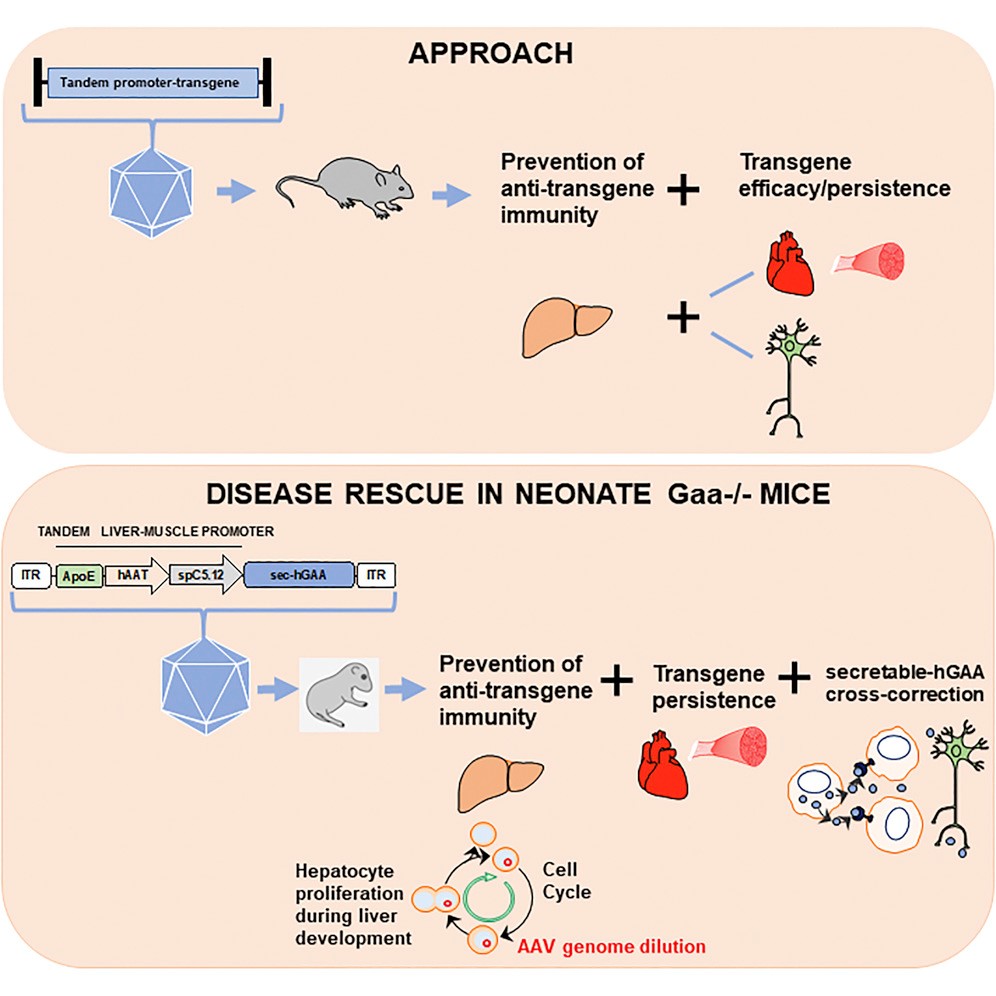 Figure 1. AAV Gene Transfer with Tandem Promoter Design Prevents Anti-transgene Immunity and Provides Persistent Efficacy in Neonate Pompe Mice. (Source: Colella P, et al.; 2018)
AAV8 was a serotype developed to improve the low transfection efficiency of existing serotypes into the liver at that time. The infection efficiency of AAV8 was much higher than that of AAV2. In animal experiments, compared with portal vein injection, which is more difficult to operate, AAV8 can also achieve similar effects through tail vein injection. Comparing the liver infection effect, AAV9 can also achieve effects similar to AAV8, and the infection effect of AAV9 is better than AAV8.
One of the key factors affecting the delivery efficiency and specificity of AAV is the serotype and the other is the promoter. The promoter is a major cis-acting element in expression vector design, which determines the specificity of target gene expression. For example, the most common broad-spectrum promoter, CAG, is constructed by fusing a viral enhancer sequence with a gene promoter sequence to construct a promoter sequence that can express efficiently, widely, and long-term in animal cells and tissues. But if we want the effect of overexpression/knockdown of the target gene to only occur in the cells or tissues we want to study, we can replace the AAV promoter with a specific promoter to reduce interference with the experimental results. It is currently used in AAV The liver-specific promoters include TBG, Alb and APOE.
TBG is a 54 kDa acidic glycoprotein specifically expressed in the liver. Its main function is to bind and carry thyroid hormones in the circulation system. The promoter structure of this gene was thoroughly studied thirty years ago, and was simplified based on this theory. The TBG promoter is widely used in AAV vectors.
As the promoter of AAV, TBG can be continuously overexpressed in liver cells for a long time. TBG specifically enables low expression of target genes or interfering sequences in other tissues, which can reduce the impact on other tissues and organs. It also reduces toxicity or immunogenicity to other organs and reduces experimental interference. Compared with commonly used broad-spectrum overexpression promoters, the overexpression efficiency of TBG in hepatocytes is equivalent to that of CMV and CAG.
Like TBG, Alb is also a gene specifically expressed in the liver. Alb is the most abundant protein in human blood. This protein plays a role in regulating plasma colloid osmotic pressure and serves as a carrier protein for a variety of endogenous molecules, including hormones, fatty acids, metabolites, and exogenous drugs. At present, there are few reports on the application of Alb promoter, and functions such as specificity and overexpression efficiency of Alb promoter need to be further clarified.
As a specific promoter, ApoE appears less frequently in the literature than TBG and is mainly used in the construction of atherosclerosis models.
There are many injection methods for AAV-infected liver. Those that require surgical participation include hepatic parenchymal injection, hepatic portal vein injection and intracapsular injection. Non-surgical injection methods include intraperitoneal injection and tail vein injection:
Reference
| Target | Cat. No. | Product Name | Size | Species Reactivity | Application | Detection Sample | |
| AAV1 | DEIASL342 | Anti-AAV1 Antibody ELISA Kit | 96T | Qualitative | serum, plasma | Inquiry | |
| AAV2 | DEIASL347 | Anti-AAV2 antibody ELISA Kit | 96T | Human | Qualitative | Serum | Inquiry |
| DEIASL347M | Mouse Anti-AAV2 antibody ELISA Kit | 96T | Mouse | Qualitative | Serum | Inquiry | |
| AAV5 | DEIASL343 | Anti-AAV5 Antibody ELISA Kit | 96T | Qualitative | serum, plasma | Inquiry | |
| AAV6 | DEIAAV6 | AAV6 Titration ELISA Kit | 96T | N/A | Quantitative | cell culture supernatants, purified virus preparations | Inquiry |
| DEIASL344 | Anti-AAV6 ELISA Kit | 96T | Human | Qualitative | Serum | Inquiry | |
| DEIASL344M | Mouse Anti-AAV6 antibody ELISA Kit | 96T | Mouse | Qualitative | Serum | Inquiry | |
| AAV8 | DEIASL345MQ | Mouse Anti-AAV8 ELISA Kit(Quantitative) | 96T | Mouse | Quantitative | Serum | Inquiry |
| DEIAAV8 | AAV8 Titration ELISA Kit | 96T | N/A | Quantitative | cell culture supernatants, purified virus preparations | Inquiry | |
| DEIASL345 | Anti-AAV8 antibody ELISA Kit | 96T | Human | Qualitative | Serum | Inquiry | |
| DEIASL345M | Mouse Anti-AAV8 antibody ELISA Kit | 96T | Mouse | Qualitative | Serum | Inquiry | |
| AAV9 | DEIAAV9 | AAV9 Titration ELISA Kit | 96T | N/A | Quantitative | cell culture supernatants, purified virus preparations | Inquiry |
| DEIASL348 | Anti-AAV9 antibody ELISA Kit | 96T | Human | Qualitative | Serum | Inquiry | |
| DEIASL348M | Mouse Anti-AAV9 antibody ELISA Kit | 96T | Mouse | Qualitative | Serum | Inquiry |
Loading ......
