
Inquiry Basket
 Loading ......
Bacteriophages (phages) are the most abundant viruses on the planet. The majority of free-living bacterial species are thought to be infected by phages. It was estimated that phages evolved shortly after the emergence of bacteria billions of years ago, and hence the arms race between bacteria and phages is considered almost as old as bacteria themselves. Facing the abundance and diversity of phages, bacteria have developed multiple lines of defence that can collectively be referred to as the 'prokaryotic immune system'. Individual bacterial species can encode multiple different defence systems, and it was shown that such systems can be horizontally acquired and lost on short evolutionary time scales. In this article, we discuss the immune system perspective of prokaryotes from an evolutionary and ecological perspective, review the main types of known antiviral systems, and the evasion strategies employed by bacteriophages. The need to code several lines of defense is further discussed, and the rapid acquisition and loss of such systems in the microbial genome due to the burden of antiviral defense systems.
Anti-phage defence systems can roughly be divided into those that target viral nucleic acids (for example, R-M and CRISPR–Cas), Abi systems that lead the host to commit suicide once infected and other types of systems. Of these, the most abundant and elaborate systems are those that target nucleic acids, presumably because nucleic acid is usually the first viral component to penetrate the cell upon infection. Although some of the mechanisms by which phage DNA targets in these systems remain unknown. All of these defense systems form part of the bacteria's innate immunity. Another common strategy of defence against phages is Abi. Abi systems allow the bacterial cell, once infected, to kill itself or to arrest its metabolism before the phage reproductive cycle is completed, thus preventing the phage from spreading and killing the surrounding bacterial community. Abi systems have been detected in a wide variety of microorganisms but, given their high diversity, it is challenging to assess their abundance in nature. Recent research has revealed the existence of many other families of antiviral defense systems in bacteria and archaea named after the protectors of world mythology, but their molecular mechanisms have yet to be deciphered.
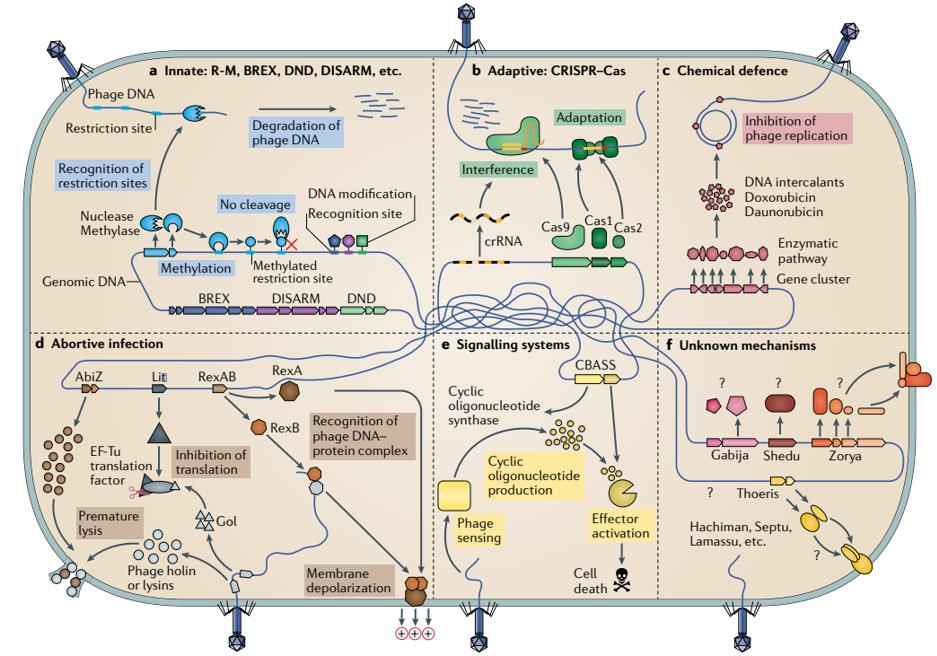 Fig1. Antiviral defence systems in bacteria.
(Source: Nature Review Microbiology, 2020)
Analysis of sequenced prokaryotic genomes demonstrates that they can concomitantly harbour multiple different defence systems. One obvious answer is that some defence systems can protect only from a specific type of virus. Therefore, for a microorganism to be protected against a wide variety of viruses, it should encode a broad defence arsenal that can overcome the multiple types of viruses that can infect it. Faced by viruses that encode counter-defence mechanisms, bacteria and archaea cannot rely on a single defence system and thus need to present several lines of defence as a bet-hedging strategy of survival.
Owing to the selective advantage that defence systems provide, they are frequently gained by bacteria and archaea through horizontal gene transfer (HGT). A major drawback of defence systems is autoimmunity: CRISPR–Cas, for example, can make mistakes in the process of spacer acquisition and acquire spacers from the chromosome instead of from the invading element. In addition to autoimmunity, defence systems can impose an energy burden on the cell. As a result of these fitness costs, there is a selective pressure for bacteria to get rid of defence systems under conditions when there is no selection pressure exerted by phages. The frequent gain and loss of defence systems over short time scales leads to a highly variable pattern of presence and absence of systems in microbial genomes. Even in closely related strains with otherwise similar genomes, the composition of defence systems can drastically vary.
It is well documented that individual phages have well-defined host ranges, such that they can infect some, but rarely all, strains of the same species. This is often attributed to the diversity of surface molecules among the infected microbial strains, as these are used by phages as specific receptors. However, given the diversity of defence systems observed in different strains of the same species, it is clear that the host range of any given phage would depend on its ability to overcome multiple defence systems. This predicts that phages need to encode many different counter-defence mechanisms in order to have a broad host range.
Apart from exploring the existence of numerous anti-defence genes in viruses, the pan-immune system model raises several interesting research avenues. Both positive and negative epistasis (dependency and incompatibility) has been demonstrated to occur between DNA repair pathways and CRISPR–Cas systems, underlying the potential requirements of a specific genetic background to allow compatibility of a CRISPR–Cas subtype in a given species. Within CRISPR–Cas systems, other forms of epistasis have been observed. One example of such epistasis is functional redundancy through using the same spacers with different interference modules to limit emergence of phage escape mutants. Given the newly revealed diversity of defence systems, the study of interactions between defence systems promises to unravel a novel understanding of the complexity of prokaryotic immune defence.
References
Loading ......
