
Inquiry Basket
 Loading ......
The pharmaceutical industry includes small molecule drugs and large molecule drugs which function as separate but supportive models. Understanding the differences between these drug types helps to advance drug development processes and improve clinical application outcomes alongside informed healthcare decisions.
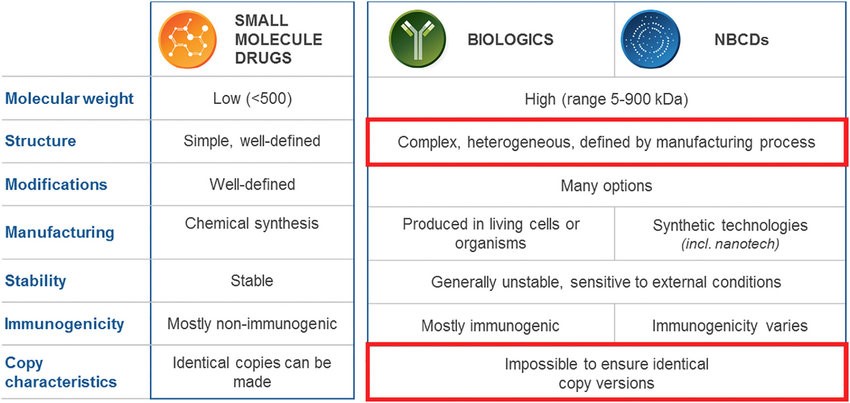 Figure 1. Comparison of key characteristics of small-molecule drugs, biologics and non-biological complex drugs (NBCDs). (Sources: Flühmann B, et al.; 2019)
Small molecule drugs generally have molecular weights below 1000 Daltons though some references set the cutoff at less than 900 Daltons. These compounds contain carbon, hydrogen, oxygen, nitrogen along with other elements yet they maintain simple organic compound structures. The small molecular size and strong hydrophobic characteristics allow these molecules to penetrate cell membranes without restriction and reach intracellular enzymes and receptors. Environmental elements like light and heat lead to the degradation of these drugs which otherwise maintain stable chemical structures.
The classification of large molecule drugs includes those that present molecular weights greater than 5000 Daltons. Antibody drugs may have molecular weights that extend up to 150,000 Daltons. Multi-tiered protein structures combined with nucleic acids and antibodies create intricate organizational arrangements in these molecules through amino acid sequences and both α - helices and β - sheets. Their considerable size combined with strong hydrophilic properties prevents cell membrane penetration thus focusing their activity on cell-surface receptors and secreted molecules such as cytokines. They readily break down when exposed to proteases and need to be stored under strict conditions of low temperature and sterility.
Small molecule drugs originate from chemical synthesis processes including organic reactions and solid-phase synthesis or from natural product extraction. The production process follows rigorous standardized procedures. Their precise molecular structures facilitate efficient purification and analysis through methods such as mass spectrometry and nuclear magnetic resonance. Because production costs remain low they enable industrial mass production in tablet and capsule formats.
Creating large molecule drugs requires biotechnological methods that encompass both genetic engineering and processes involving cell culture and fermentation engineering. To express the target protein scientists require transgenic cells or microorganisms. Analysis of these complex structures faces major difficulties because of glycosylation modifications and conformational diversity. Maintaining strict sterile conditions along with purification techniques including chromatography and ultrafiltration is essential. The production process takes a significant amount of time and requires expensive equipment such as bioreactors. Controlling consistency between batches is also difficult.
Because small molecules pass through passive diffusion or active transport mechanisms they achieve high oral bioavailability which allows entry into the bloodstream. These drugs can reach all body tissues because they cross the blood-brain barrier and show a large apparent volume of distribution (Vd). The liver metabolizes these drugs primarily through CYP450 enzymes followed by kidney excretion and they possess a short half-life of hours to days.
The administration of large molecule drugs requires injection methods such as intravenous, subcutaneous, or intramuscular routes because oral delivery is ineffective. These drugs depend on lymphatic system absorption which causes them to enter the bloodstream at a slow rate. The restricted volume of distribution between 0.04 and 0.2 L/kg prevents these drugs from exiting the bloodstream or extracellular fluid and they struggle to penetrate the blood-brain barrier. The drugs are removed from the body through protease hydrolysis and target-mediated clearance processes together with antibody formation against the drug which extends their half-lives to several weeks or months.
Small molecule drugs act as primary treatment solutions for chronic conditions such as hypertension and diabetes by using antibiotics to combat bacterial infections and SSRIs to manage depression within neurological disorders. Aspirin functions as an anti-inflammatory drug and oseltamivir targets influenza while imatinib specifically attacks BCR-ABL in leukemia treatment. These drugs provide medical benefits since they are easy to swallow and inexpensive while they treat multiple health conditions at once.
Cancer treatments (monoclonal antibodies), autoimmune disease management (TNF-α inhibitors), and genetic disorder therapies (enzyme replacement therapy) represent the primary applications of therapeutic large molecule drugs. Trastuzumab treats HER2-positive breast cancer while adalimumab manages rheumatoid arthritis and mRNA vaccines protect against COVID-19. These types of drugs provide accurate targeting which minimizes unintended effects and demonstrate effective treatment through direct pathogenic factor neutralization.
Clinical medications consist of approximately 90% small molecule drugs which remain dominant in the market. The market size for large molecule drugs will reach $70 billion by 2030 as they continue to grow at a quicker pace.
Researchers developing small molecule drugs are increasingly leveraging large-molecule-targeting technologies like PROTAC to eliminate disease-causing proteins. Research on large molecule drugs prioritizes delivery system optimization through liposomes and ADC drugs while reducing immunogenicity. Antibody-drug conjugates (ADC) such as Enhertu represent fusion therapies which merge the benefits of small molecule drugs with large molecule drugs.
The approval pathway for generic small molecule drugs follows established procedures which mandate demonstration of bioequivalence.
Developing biosimilar large molecule drugs demands extensive structural and functional comparisons which create significant research and development obstacles.
| Dimension | Small Molecule Drugs | Large Molecule Drugs |
| Molecular Weight | <1000 Da | >5000 Da (e.g., antibody 150,000 Da) |
| Production Method | Chemical synthesis or natural extraction | Biotechnology (cell culture, genetic engineering) |
| Administration Route | Mainly oral | Injection (intravenous, subcutaneous) |
| Target Location | Intracellular or cell - surface | Cell - surface or secreted proteins |
| Half - life | Short (hours to days) | Long (weeks to months) |
| Production Cost | Low | High |
| Representative Disease Areas | Chronic diseases, infectious diseases | Cancer, autoimmune diseases, rare diseases |
Small molecule drugs and large molecule drugs present distinct differences in their structural makeup as well as production methods and clinical uses along with their pharmacokinetics and market trends. The pharmaceutical field continues to advance by creating new medications that integrate benefits from both drug types to optimize therapeutic results.
References
Loading ......
