
Inquiry Basket
 Loading ......
Escherichia coli (E. coli) exists as a large collection of non-spore-forming gram-negative bacteria which are motile through peritrichous flagella and mostly exist without causing harm to humans. The bacterium exists as a non-sporulated Gram-negative bacillus which reaches dimensions of 1 μm in length and 0.35 μm in width but its size changes based on strain type and environmental conditionsylum and belongs to the Enterobacteriaceae family. The human gut contains E. coli bacteria aerobic and anaerobic conditions. The bacterium E. coli exists within the Proteobacteria ph. The bacterium exists as an oxidase-negative facultative anaerobe which thrives under both which make up only 0.1 to 5% of its total microbial population. The gastrointestinal tracts of humans and animals normally host E. coli strains which exist as harmless members of their normal microbial communities. Certain E. coli strains developed pathogenic characteristics through the acquisition of virulence factors from plasmids and transposons and bacteriophages and pathogenicity elements. The pathogenic E. coli strains receive their classification through serogroup analysis and pathogenicity mechanisms and clinical symptoms and virulence factor identification. DEC represent the leading bacterial pathogens worldwide which cause significant illness and death in developing nations. The five main phylogenetic groups of E. coli consist of A (blue), B1 (green), B2 (brown), D (pink) and E (red). The specific pathotype Shigella/EIEC has additional phylogroups which are shown in black. The hybrid EAEC and STEC strains show representation through both open square and open circle symbols. The unmarked strains consist of commensal bacteria and ExPEC.
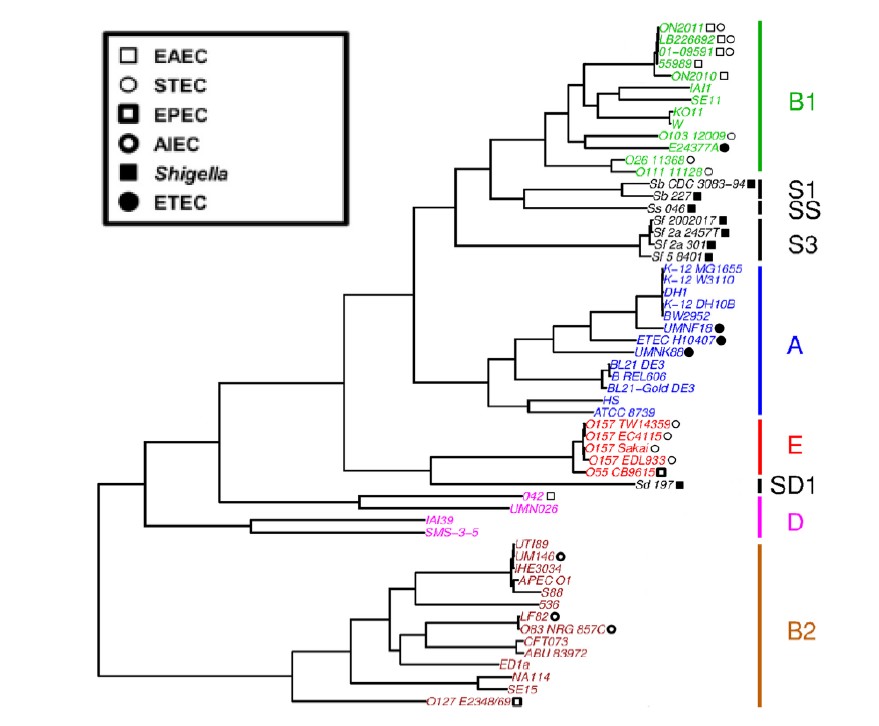 Figure 1. Phylogenetic tree of enteric/diarrheagenic E. coli (DEC). (Roussel, 2019)
The pathogenic E. coli contains at least ten recognized pathovars which scientists divide into two groups based on their human disease mechanisms and virulence factor profiles. The enteric/diarrheagenic E. coli (DEC) group of intestinal pathogens includes EPEC and ETEC and EHEC and AIEC and EAEC and EIEC and DAEC and VTEC/STEC/STEAC. The ExPEC group contains three pathotypes: UPEC which causes urinary tract infections and NMEC which causes neonatal meningitis and SEPEC which causes sepsis.
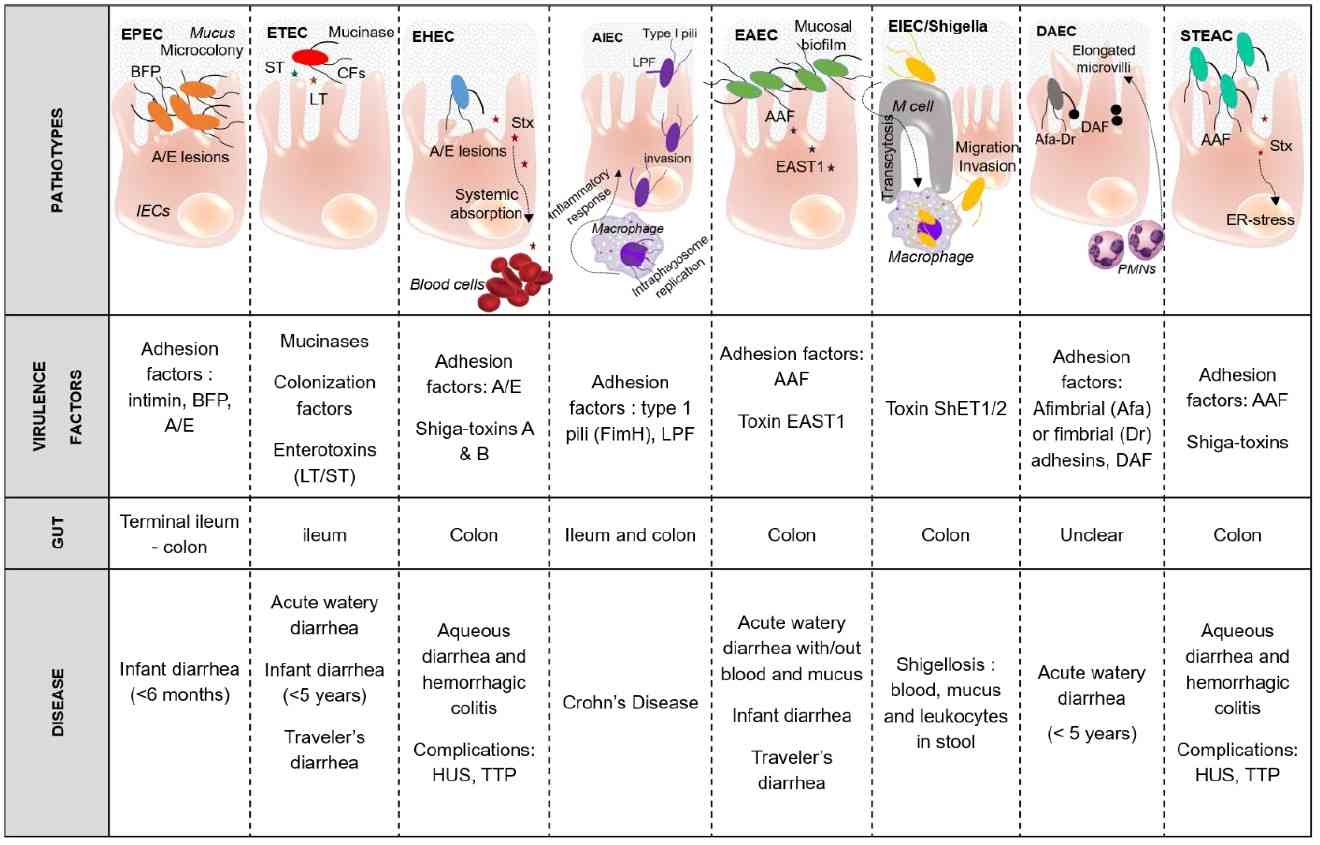 Figure 2. Summary of DEC pathotypes. (Roussel, 2019)
ExPEC represents pathogenic E. coli strains that produce infections outside the gastrointestinal system. The three main ExPEC representatives include Uropathogenic E. coli (UPEC) which causes most urinary tract infections (UTIs) and Neonatal meningitis-associated E. coli (NMEC) that causes neonatal meningitis and Sepsis-associated E. coli (SEPEC) that results in bloodstream infections and sepsis. The pathogen Avian pathogenic E. coli (APEC) mainly affects birds but uses comparable virulence factors to ExPEC and researchers sometimes link it to animal-to-human disease transmission.
The virulence factors of E. coli exist on mobile genetic elements and plasmids and pathogenicity islands which produce endotoxins and exotoxins and adhesion and invasion and iron acquisition factors. The virulence factors of IPEC include verocytotoxin1, verocytotoxin 2, intimin, heat-stable enterotoxin, human variant, porcine variant, heat labile enterotoxin, and invasive plasmid antigen. The pathogenicity of Escherichia coli depends on multiple virulence factors which help the bacteria establish colonization and produce toxins and invade host cells.
Table 1. Gene target, primer sequence, and amplicon size for common intestinal pathogenic E. coli virulence factors
| Virulence factor | Gene target | Primer sequence (5'-) | Amplicon size (bp) |
| verocytotoxin1 | vtx1 | GTTTGCAGTTGATGTCAGAGGGA CAACGAATGGCGATTTATCTGC | 260 |
| Verocytotoxin 2 | vtx2 | GCCTGTCGCCAGTTATCTGACA GGAATGCAAATCAGTCGTCACTC | 420 |
| Intimin | Eae | GGYCAGCGTTTTTTCCTTCCTG TCGTCACCARAGGAATCGGAG | 377 |
| Heat-stable enterotoxin-human | estA-human | TTTCGCTCAGGATGCTAAACCAG CAGGATTACAACACAATTCACAGCAGTA | 151 |
| Heat-stable enterotoxin-porcine | estA-porcine | CTTTCCCCTCTTTTAGTCAGTCAACTG CAGGATTACAACAAAGTTCACAGCAG | 160 |
| Heat-labile enterotoxin | eltA | AAACCGGCTTTGTCAGATATGATGA TGTGCTCAGATTCTGGGTCTCCT | 479 |
| Invasive plasmid antigen | ipaH | TTGACCGCCTTTCCGATACC ATCCGCATCACCGCTCAGAC | 647 |
Traditional culturing method is also a slow and laborious process requiring a series of steps and may require the use of adjunct methods (e.g. biochemical, serological, nucleic acid-based methods for conclusive identification) and can take up to a week for bacteria. The culture-based approaches coupled with other methods such as PCR, immunoassays, bacteriophages, NGS, Biosensors, and MS are increasingly being used for the detection and identification of food borne pathogens. Nucleic acid-based methods such as Real-Time PCR and qPCR combined with sequencing approaches are more widely used than immunoassay and NGS-based approaches for pathogen detection. Nanobiotechnology is the latest approach for the detection of pathogens.
References
| Target | Cat. No. | Product Name | Host | |
| E. coli Heat Labile Enterotoxin | DAG3923 | Recombinant E. coli Heat-Labile Enterotoxin B subunit | Pichia pastoris | Inquiry |
| E. coli Verotoxin | DAGB116 | Recombinant E. coli Verotoxin II | E. coli | Inquiry |
| DAGB118 | E. coli Shiga Toxin 2 | E. coli | Inquiry | |
| DAGA-985 | Recombinant E.Coli O157:H7 Shiga Like Toxin-2 Subunit B [His] | E. coli | Inquiry | |
| DAGB117 | E. coli Shiga Toxin 1 | E. coli | Inquiry | |
| DAGA-984 | Recombinant shiga toxin-1 subunit B [His] | E. coli | Inquiry | |
| DAGA-878 | Recombinant shiga toxin 2 subunit b (aa 89,>98%) [His] | E. coli | Inquiry | |
| DAGA-877 | Recombinant shiga toxin 1 subunit b (≥95%) [His] | E. coli | Inquiry |
Loading ......
