
Inquiry Basket
 Loading ......
Escherichia coli is a gram-negative, rod-shaped bacterium commonly found in the human colon. While most E. coli strains are harmless and part of the normal gut flora, some strains, particularly those causing gastrointestinal diseases, fall into the category of diarrheagenic E. coli. These include Shiga toxin-producing E. coli (STEC) and enterohemorrhagic E. coli (EHEC). Among these, E. coli O157:H7 is the most prominent EHEC strain, known for its extremely low infectious dose, estimated at only 10 to 100 cells. EHEC strains produce Shiga toxin, which can cause severe gastrointestinal symptoms and are linked to life-threatening conditions such as hemolytic uremic syndrome (HUS), a condition characterized by kidney failure, anemia, and low platelet counts.
The main virulence factor which makes HUS-inducing EHEC strains different from others is their ability to produce Shiga toxin. The two Shiga toxin variants exist as Stx1 and Stx2 where Stx2a and Stx2c subtypes show the strongest connection to HUS development. The AB5 toxin family includes Shiga toxins which bind to human cell glycosphingolipids such as globotriaosylceramide (Gb3) that exist on endothelial cells of glomeruli and brain tissue. The toxins block protein translation in host cells which results in cell death. The blood vessel damage and blood clot formation during HUS development occur because of these factors.
The consumption of EHEC-contaminated food items including undercooked meat and vegetables and fruits leads to bacterial colonization of the gut by the bacteria which then produces Shiga toxins. The bacterial genome of EHEC contains a prophage which functions as a viral DNA sequence integrated into its genetic material. The prophage exists in a dormant state during the lysogenic phase but becomes active when the bacterium faces environmental stressors such as antibiotic exposure which triggers the lytic cycle and Shiga toxin production. The toxins enter host cells through endocytosis after which they cause severe gastrointestinal symptoms including abdominal pain and bloody diarrhea.
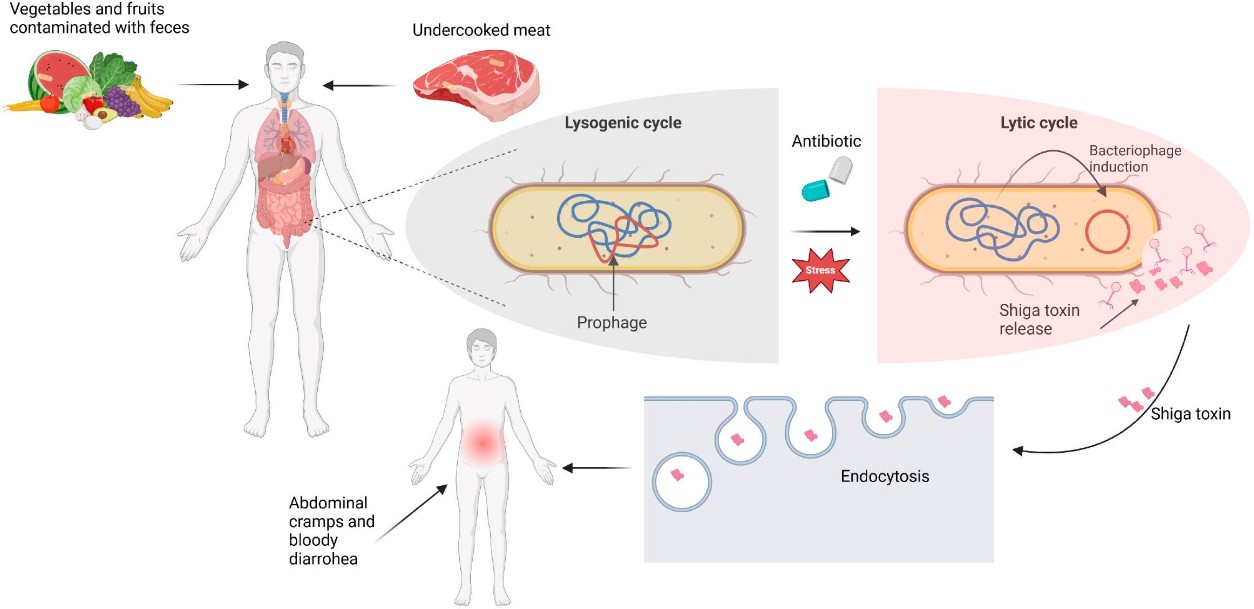 Figure 1. Mechanism of enterohemorrhagic Escherichia coli (EHEC) infection and Shiga toxin production. (Strzelecki, 2025)
The pathogenic process of EHEC involves complex interactions between the bacteria and the microbial community of the host. Studies using gnotobiotic animals demonstrate that the intestinal microbiota functions as a protective mechanism which stops harmful pathogens from colonizing the gut. EHEC has developed particular signals which it uses to control its virulence factors through the help of specific gut bacterial signals. The activation of the Shiga-toxin encoding phage occurs when certain commensal bacteria are present in the gut. Research shows that the microbiome plays a role in controlling Shiga-toxin-related diseases including HUS. The ratio between beneficial microbiota and pathogenic EHEC determines the severity of infection because microbial imbalances (dysbiosis) create conditions for pathogen colonization and toxin production.
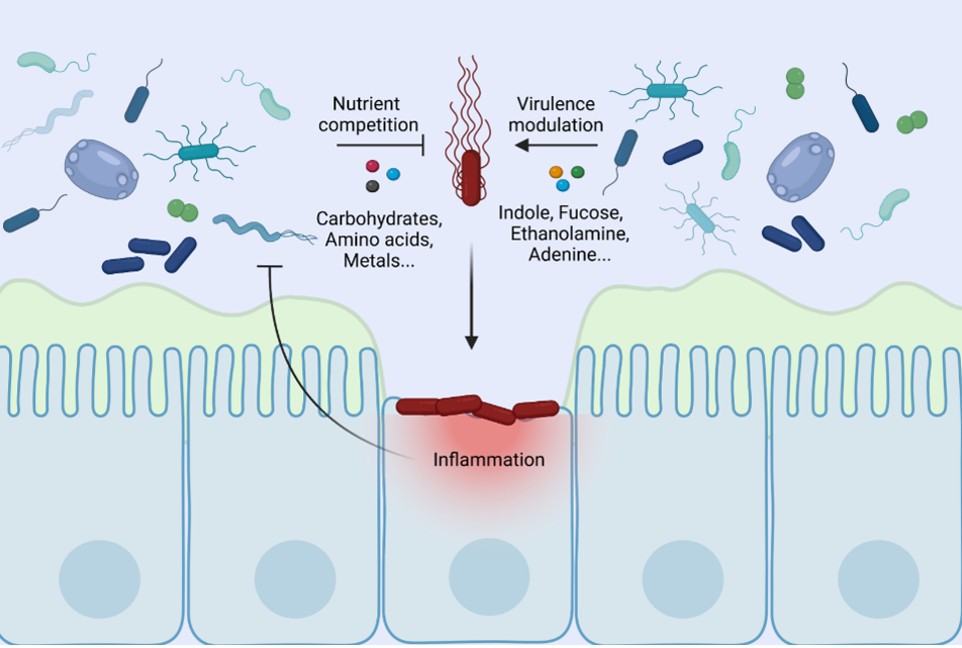 Figure 2. Native species of the gut microbiome interact with EHEC by outcompeting the pathogen for crucial nutrients. (Perraud, 2025)
Cultural Techniques
Immunoassays
EHEC continues to be a dangerous pathogen which causes severe health problems including bloody diarrhea and HUS. The management and prevention of EHEC infections require prompt detection through molecular and cultural and immunological testing methods. The development of CRISPR-Cas12/13 and microfluidic chip technologies will lead to faster and more accurate EHEC diagnostic methods that enhance medical results and public health reaction capabilities.
Pathogenic E. coli: Types, Toxins, and Detection Methods
Enteropathogenic E. coli (EPEC)
Enterotoxigenic E. coli (ETEC)
Enterohemorrhagic E. coli (EHEC)
Adherent invasive E. coli (AIEC)
Enteroaggregative E. coli (EAEC)
Diffusely-adhering E. coli (DAEC)
Verocytotoxigenic / Shiga toxin-producing E. coli (VTEC / STEC)
References
| Target | Cat. No. | Product Name | Host | |
| E. coli | DAG-ZL0479 | Inactivated Escherichia coli EHEC O157:H7 Culture Fluid | N/A | Inquiry |
| Target | Cat. No. | Product Name | Host | |
| E. coli Verotoxin | DAGB116 | Recombinant E. coli Verotoxin II | E. coli | Inquiry |
| DAGB118 | E. coli Shiga Toxin 2 | E. coli | Inquiry | |
| DAGA-985 | Recombinant E.Coli O157:H7 Shiga Like Toxin-2 Subunit B [His] | E. coli | Inquiry | |
| DAGB117 | E. coli Shiga Toxin 1 | E. coli | Inquiry | |
| DAGA-984 | Recombinant shiga toxin-1 subunit B [His] | E. coli | Inquiry | |
| DAGA-878 | Recombinant shiga toxin 2 subunit b (aa 89,>98%) [His] | E. coli | Inquiry | |
| DAGA-877 | Recombinant shiga toxin 1 subunit b (≥95%) [His] | E. coli | Inquiry |
| Target | Cat. No. | Product Name | Size | Species | Application | Detection Sample | |
| E. coli Verotoxin | DEIA2348 | E. Coli Verotoxin (Fecal) ELISA Kit | 96T | Human | Qualitative | Stool supernatant | Inquiry |
| DEIA1966 | E. Coli Verotoxin 1+2 Ag ELISA Kit | 96T | Qualitative | Stool specimens, broth cultures | Inquiry | ||
| DEIASL162 | Shiga toxins ELISA Kit | 96T | Human | Qualitative | Fecal | Inquiry |
Loading ......
