

Inquiry Basket
 Loading ......
Non-alcoholic steatohepatitis (NASH), which develops from non-alcoholic fatty liver disease (NAFLD), manifests through hepatic fat storage alongside inflammation and liver cell damage which frequently leads to fibrosis. Non-alcoholic steatohepatitis (NASH) impacts millions worldwide while showing strong connections with metabolic disorders like obesity and type 2 diabetes which lead to dyslipidemia. Untreated non-alcoholic steatohepatitis can advance into cirrhosis or liver failure and lead to hepatocellular carcinoma. Therapeutic options persist as limited despite the disease becoming increasingly common. Lifestyle interventions including low-calorie diets and exercise represent the fundamental approach to NASH management but patients frequently struggle to maintain these regimens. New small-molecule drug discoveries create promising opportunities for treatment methods. The research evaluates established and experimental small-molecule treatments for NASH and examines how they work alongside their clinical results and future possibilities.
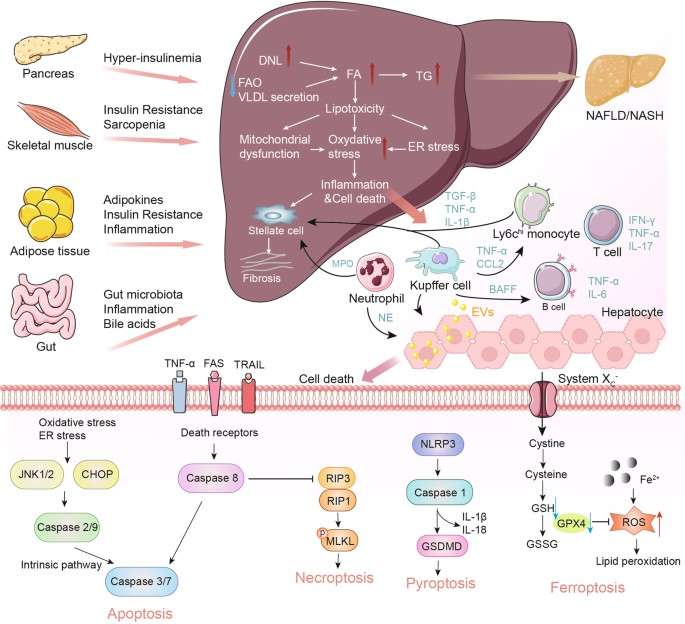 Figure 1. Schematic summary of the pathogenesis and interorgan crosstalk of NAFL/NASH. (Sources: Xu X, et al. 2022)
Regulatory authorities have approved only two small-molecule drugs for NASH treatment which represents a significant advancement in how the disease is managed.
Mechanism: As a thyroid hormone receptor-beta (THR-β) agonist Resmetirom targets liver receptors to improve lipid metabolism while reducing liver fat deposits and inflammatory and fibrotic responses.
Approval: The FDA gave accelerated approval to Resmetirom in March 2024 for treating adults with NASH and moderate-to-severe liver fibrosis as the first medication specifically approved for this condition.
Clinical Efficacy: The MAESTRO-NASH Phase III trial demonstrated that Resmetirom reached its main goals since 26% of patients who took 80 mg achieved NASH resolution without fibrosis worsening and 30% of patients on 100 mg attained similar results while 24% and 26% of patients exhibited ≥1 stage improvement in fibrosis. The medication achieved substantial liver fat reduction between 30–40% as well as improved non-invasive biomarkers such as LDL cholesterol.
Limitations: The high yearly price together with gastrointestinal side effects such as nausea and diarrhea may obstruct patient access and treatment compliance.
Mechanism: Lanifibranor functions as a pan-PPAR agonist to regulate lipid metabolism while simultaneously reducing inflammation and impeding fibrogenesis through the activation of PPAR-α, -δ, and -γ isoforms.
Approval Status: Lanifibranor currently lacks FDA approval but has received Breakthrough Therapy designation while being tested in Phase III trials.
Clinical Efficacy: The Phase IIb NATIVE trial showed that Lanifibranor had better anti-fibrotic and anti-inflammatory outcomes than Resmetirom and obeticholic acid. More than half of patients experienced ≥2-point decreases in the SAF-A score together with substantial improvements in liver enzyme levels and insulin sensitivity.
Challenges: The oral administration of this treatment presents practical benefits which outweigh its side effects of weight increase and itching.
There are more than 50 investigational agents in development for NASH that target multiple biological pathways. Key candidates include:
1. THR-β Agonists
CS060304 (Cascade Pharmaceuticals): A THR-β agonist targeting liver tissues has shown preclinical success in decreasing hepatic steatosis and fibrosis.
HEC169584 (HEC Pharma): The compound HEC169584 demonstrates a strong preference for THR-β while also showing anti-fibrotic effects in animal studies.
2. FXR Agonists
Obeticholic Acid (OCA): The farnesoid X receptor agonist Obeticholic Acid acts to decrease bile acid production while also diminishing inflammation in the liver. Even though Phase III results were mixed it continues to be considered for combination therapy approaches.
BD-053 (Gannex Pharma): BD-053 from Gannex Pharma represents an oral FXR modulator currently undergoing Phase II trials with a focus on reducing side effects such as pruritus.
3. PPAR Modulators
ZSP1601 (Sinovent): Researchers are testing an innovative pan-PDE inhibitor with dual anti-inflammatory and anti-fibrotic effects in Phase II trials across China.
4. Novel Targets
IMA-1 (Wuhan University): This compound blocks the ALOX12-ACC1 interaction which stops lipid synthesis and inflammation development while avoiding hyperlipidemia.
MN-001 (Medicinova): Early trials demonstrate potential for MN-001 which acts as a multi-target agent to block leukotriene pathways and reduce collagen buildup.
5. Combination Therapies
Tropifexor + Cenicriviroc (Novartis): This treatment approach uses an FXR agonist together with a CCR2/5 inhibitor to simultaneously target metabolic dysregulation and fibrosis.
RNAi-Small Molecule Hybrids: New approaches combine RNA interference targeting specific proteins like PNPLA3 or HSD17B13 with small molecules to boost therapeutic effectiveness.
Recent approvals mark progress yet substantial challenges remain unresolved.
Heterogeneity of NASH: Personalized treatment depends on classifying patients through their genetic markers and details of their metabolic and fibrotic conditions.
Safety Concerns: Rigorous post-marketing surveillance must monitor long-term risks like weight gain along with cardiovascular effects and drug interactions.
Cost and Accessibility: The expensive cost of new medical treatments increases healthcare inequality among patients which makes pricing policy changes and biosimilar creation essential.
The next major progress in treatment development will probably depend on therapies that target multiple pathways along with trials guided by specific biomarkers. Utilizing THR-β agonists in conjunction with FXR modulators presents a synergistic treatment option for both steatosis and fibrosis. The introduction of non-invasive biomarkers such as MRI-PDFF and ELF tests is transforming the ways clinical trials are designed and how patients are monitored.
PAH development emerges from intricate interactions between genetic mutations and disruptions in molecular and metabolic functions. Existing therapies treat symptoms utilizing NO, ET-1, and prostacyclin pathways yet emerging pharmaceuticals which target TGF-β, PDGF, and ferroptosis pathways show potential to change disease progression. The transformation of PAH into a treatable chronic condition depends on closing translational research gaps and using novel delivery methods.
Resmetirom becomes the first FDA-approved treatment for NASH by targeting essential disease mechanisms and represents a paradigm shift in therapeutic approaches. By selectively activating thyroid hormone receptor-beta (THR-β) Resmetirom boosts hepatic lipid metabolism which leads to diminished fat storage and inflammation reduction. The MAESTRO-NASH clinical study achieved 30% resolution rates for NASH at the maximum dose while 26% of patients experienced fibrosis improvement representing significant progress since earlier trials struggled to reach dual endpoint success.
However, limitations persist:
Cost: The High cost makes affordability a major obstacle for patients who need long-term treatment.
Side Effects: Two out of ten patients experience diarrhea which together with nausea lowers treatment adherence.
Fibrosis Impact: The treatment showed only a moderate impact on fibrosis improvement while delivering strong anti-steatotic and anti-inflammatory effects.
Future Outlook: The research team is exploring the combination of Resmetirom with FXR agonists such as OCA to enhance fibrosis reversal and improve treatment outcomes for advanced scarring.
Lanifibranor functions as a pan-PPAR agonist by simultaneously targeting PPAR isoforms α, δ, and γ to regulate lipid metabolism and insulin sensitivity while activating anti-inflammatory processes. While Resmetirom targets THR-β in the liver Lanifibranor addresses systemic metabolic dysfunction which drives NASH through a comprehensive mechanism.
Clinical Edge:
The Phase IIb trials demonstrated that Lanifibranor produced ≥2-point SAF-A score reductions in 54% of patients whereas Resmetirom showed a reduction in 33% of patients.
The study demonstrated a 25% reduction in insulin resistance through HOMA-IR measurements and achieved better outcomes in anti-fibrotic effects when compared directly with other treatments.
Drawbacks: Obese patients may find the medication less suitable because of its average weight gain of 5–7% and a 15% incidence rate of pruritus. The availability of oral administration and metabolic synergy with GLP-1 agonists such as semaglutide establishes it as a flexible option for combination therapies.
The farnesoid X receptor agonist OCA failed in Phase III because it showed only 23% fibrosis improvement compared to placebo while inducing pruritus at a 28% incidence rate. However, it remains pivotal for two reasons:
Mechanistic Uniqueness: Activation of FXR maintains bile acid balance while reducing liver inflammation and augments the effects of THR-β and PPAR pathways.
Combination Potential: Researchers are studying OCA's effectiveness when combined with either Resmetirom (THR-β) or semaglutide (GLP-1) to increase treatment efficacy. Research indicates that liver fat decreases by 45–50% when treatments include THR-β agonists.
Future: The new generation of FXR agonists like EDP-305 and BD-053 work to decrease pruritus by enhancing receptor specificity and distribution in tissues.
Innovative targets are addressing NASH's multifactorial nature:
ALOX12-ACC1 Inhibitors (e.g., IMA-1): Disrupting the ALOX12-ACC1 protein interaction will block both lipid synthesis and inflammatory responses. Animal research demonstrates a 50% reduction in liver triglyceride levels while maintaining normal lipid profiles.
Leukotriene Pathway Modulators (e.g., MN-001): The inhibition of collagen buildup and inflammation driven by leukotrienes produces a 30% decrease in fibrosis according to animal model results.
PDE Inhibitors (e.g., ZSP1601): Decreasing cyclic AMP degradation enhances mitochondrial function while also reducing steatosis. The Phase II study demonstrated that liver fat decreased by 35% during a 12-week period.
Significance: The development of these agents represents a potential solution for patients who show resistance to standard metabolic or fibrotic treatment options.
NASH's complexity demands multi-target approaches. Key strategies include:
Metabolic + Anti-Fibrotic Combos: The combined use of Resmetirom (THR-β) and Lanifibranor (PPAR) treatment targets both body fat reduction and fibrosis reduction in patients. Initial research demonstrates that dual-therapy treatment achieves NASH resolution in 60% of patients.
RNAi-Small Molecule Hybrids: Researchers utilize siRNA like ARO-HSD to target HSD17B13 in combination with FXR agonists to both mute pro-NASH genes and adjust bile acid pathways.
GLP-1 Agonist Backbones: The weight-loss advantages of Semaglutide demonstrated by the STEP trials show a 15% reduction in body weight which helps improve PPAR and FXR agonists' tolerability.
Challenges: The complexity of trial designs and drug-drug interactions along with cost considerations require resolution. The current pipeline for 2025–2030 focuses on these combination therapies which include 12 ongoing Phase III trials worldwide.
References
Loading ......
