
Inquiry Basket
 Loading ......
Due to global warming and population growth, plants need to rescue themselves, especially in unfavorable environments, to fulfill food requirements because they are sessile organisms. Stress signal sensing is a crucial step that determines the appropriate response which, ultimately, determines the survival of plants. As important signaling modules in eukaryotes, plant mitogen-activated protein kinase (MAPK) cascades play a key role in regulating responses to the following four major environmental stresses: high salinity, drought, extreme temperature and insect and pathogen infections. MAPK cascades are involved in responses to these environmental stresses by regulating the expression of related genes, plant hormone production and crosstalk with other environmental stresses. In this review, we describe recent major studies investigating MAPK-mediated environmental stress responses. We also highlight the diverse function of MAPK cascades in environmental stress. These findings help us understand the regulatory network of MAPKs under environmental stress and provide another strategy to improve stress resistance in crops to ensure food security.
Due to incorrect irrigation, soil pollution and improper fertilizer application, at least 7% of the world's area is affected by saline soil. Salt stress has adverse effects on plant development and productivity and constrains crop production by 20% on irrigated land worldwide. Upon salt stress, activated MAPK cascades trigger the altered transcription of salt-responsive genes. The MAPK cascade becomes a link between salt stress sensors and target genes. The studies prove that the MAPK cascade responding to salt stress is closely related to the regulation of salt-responsive genes, but whether the MAPK cascade directly regulates salt-responsive genes needs to be further investigated.
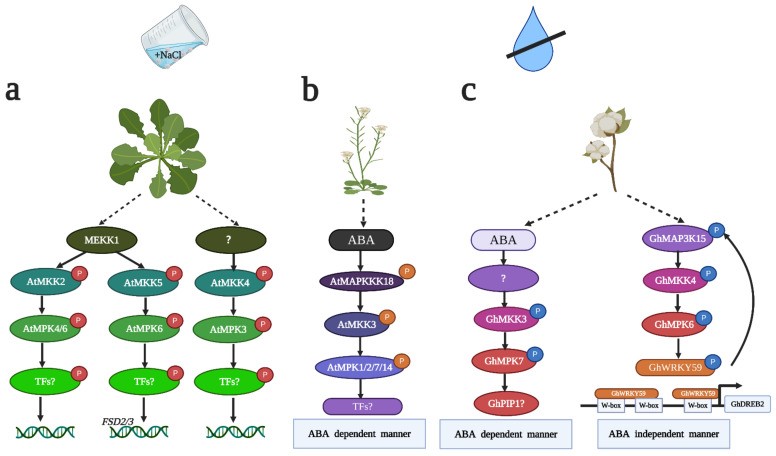 Fig1. MAPK cascade in salt and drought stress.
(Source: Int J Mol Sci, 2021)
Drought stress affecting food productivity has become a troublesome problem worldwide. Drought stress is a complex stress that causes multidimensional changes, such as physiological processes, molecular mechanisms and morphological adjustments. Moreover, the effect caused by drought stress differs across developmental stages and plant species. As a major signal transducer, the MAPK cascade plays a vital role in drought stress, generally by responding to ABA and regulating ROS production. Moreover, several WRKY transcription factors have been identified as substrates of the MAPK cascade in drought stress. According to RNA-Seq analyses, numerous components of MAPK cascades have been reported to respond to drought in crops. These findings highlight the importance of MAPKs in drought, but knowledge regarding their biological functions under drought stress is limited. Further studies should expand efforts to uncover their biological functions in drought stress. To date, the substrate of the MAPK cascade under drought stress has been identified, but the upstream MAPK cascade in drought stress remains unknown. Further studies should exert efforts to identify the RLKs and receptor-like proteins (RLPs) upstream of MAP3K and their function in drought stress.
Due to global warming, the frequency of extreme weather has already increased, especially during the winter and summer. Temperature stress induces a broad spectrum of physiological processes and molecular mechanisms. To survive, plants need to adjust at the cellular, metabolic and molecular levels to increase tolerance to temperature stress. As a major signal transducer, the MAPK cascade regulates plant resistance to temperature stress by phosphorylating downstream substrates to directly modify temperature-related gene expression and changing cellular metabolism (increasing compatible solutes and antioxidative enzyme activities). In addition to the molecular reactions that change under temperature stress, some physiological processes are already changed in adaptation to adverse temperature factors. The MAPK cascade regulates temperature stress by changing compatible solute contents and antioxidative enzyme activities.
View all MPK1 Antibodies / Antigens / ELISA Kits
View all MPK6 Antibodies / Antigens / ELISA Kits
View all MPK7 Antibodies / Antigens / ELISA Kits
Potential pathogens exist in the air and soil and consistently threaten plant adaption and crop productivity. Using chemical pesticides in planting areas is the most common strategy, but this method dramatically destroys the balance between humans and ecology. Cultivating resistant crops has become the most effective and environmentally friendly way to address this serious problem. During a long period of plant–pathogen interactions, plants have evolved sophisticated immune systems to prevent pathogens from invading. The MAPK cascade plays a critical role in the plant defense response. MPK3, MPK4 and MPK6 are activated after pathogen perception to induce an early defense response. MPK3, MPK4 and MPK6 regulate plant disease resistance by regulating phytoalexin and phytohormone biosynthesis in biotic stress and activating downstream substrates, which play a vital role in the early plant defense response. The upstream of MPK3, MPK4 and MPK6 in biotic stress has already been identified. Other studies also showed the function of other MAPK cascade members in biotic stress.
View all MPK3 Antibodies / Antigens / ELISA Kits
View all MPK4 Antibodies / Antigens / ELISA Kits
View all MPK6 Antibodies / Antigens / ELISA Kits
Approximately 20 MAPKs have been identified in Arabidopsis, but only three MAPKs (MPK3, MPK4 and MPK6) are well studied in environmental stress. A few advances have revealed the functions of 17 other MAPKs in environmental stress. Hence, the regulatory network of the MAPK cascade seems to be generally single. With the development of high-throughput phospho-proteomics analysis, many transcription factors, enzymes and proteins have been shown to be candidate substrates of MAPKs. Further studies should exert efforts to reveal the function of the 17 other MAPKs in environmental stresses. More importantly, identifying novel substrates of MAPKs is essential to enrich the current understanding of MAPK regulation under environmental stress.
References
| Target | Cat. No. | Product Name | Application | |
| MAPK1 | DAG-KO171 | MAPK1 Knockout Cell Lysate | WB | Inquiry |
| MAPK10 | DAG-P1762 | Human MAPK10 peptide | ELISA | Inquiry |
| MAPK6 | DAG-KO233 | MAPK6 Knockout Cell Lysate | WB | Inquiry |
| MAPK9 | DAG-KO259 | MAPK9 Knockout Cell Lysate | WB | Inquiry |
| MAPKAPK3 | DAG-KO297 | MAPKAPK3 Knockout Cell Lysate | WB | Inquiry |
| Target | Cat. No. | Product Name | Size | Application | Detection Sample | |
| MAPK1 | DEIA-XYA1368 | p42 MAPK ELISA Kit | 96T | Qualitative | cultured cells | Inquiry |
| MAPK12 | DEIA-BJ2947 | Chicken P 38 Mitogen-activated Protein Kinase ELISA Kit | 96T | Quantitative | Serum, plasma, cell culture supernatants, body fluid and tissue homogenate | Inquiry |
| MAPK13 | ABPR-0549 | Human MAPK13 ELISA Matched Antibody Pair | ELISA | Inquiry | ||
| MAPK14 | DEIA-BJ1083 | Rat MAPK (P38 Mitogen-Activated Protein Kinase) ELISA Kit | 96T | Quantitative | Serum, plasma, tissue homogenates, other biological fluids | Inquiry |
| DEIA6456 | [pThr180/Tyr182] p38 ELISA Kit | 96T | Quantitative | cell lysates | Inquiry | |
| DEIA-XYA1928 | p38 MAPK ELISA Kit | 96T | Qualitative | cultured cells | Inquiry | |
| DEIA-BJ2223 | Rat Phosphorylation P38 Mitogen-activated Protein Kinase ELISA Kit | 96T | Quantitative | Serum, plasma, cell culture supernatants, body fluid and tissue homogenate | Inquiry | |
| DEIA-XYA1929 | p38 MAPK (Phospho-Thr179+Tyr181) ELISA Kit | 2 x 96T | Qualitative | cultured cells | Inquiry | |
| DEIA-XYA1930 | p38 MAPK (Phospho-Thr180) ELISA Kit | 2 x 96T | Qualitative | cultured cells | Inquiry | |
| DEIA-XYA1931 | p38 MAPK (Phospho-Tyr182) ELISA Kit | 2 x 96T | Qualitative | cultured cells | Inquiry | |
| DEIA-XYA1932 | p38 MAPK (Phospho-Tyr322) ELISA Kit | 2 x 96T | Qualitative | cultured cells | Inquiry | |
| MAPK15 | DEIA-XYA617 | ERK8 ELISA Kit | 96T | Qualitative | cultured cells | Inquiry |
| DEIA-FN875 | Mouse Mapk15 (Mitogen-activated protein kinase 15) ELISA Kit | 96T | Quantitative | serum, plasma, cell culture supernatants, tissue homogenate | Inquiry | |
| DEIA-XYA618 | ERK8 (Phospho-Thr175+Tyr177) ELISA Kit | 2 x 96T | Qualitative | cultured cells | Inquiry | |
| MAPK3 | DEIA-XYA2028 | MAPK3 ELISA Kit | 96T | Qualitative | cultured cells | Inquiry |
| DEIA-XYA1369 | p44/42 MAP Kinase ELISA Kit | 96T | Qualitative | cultured cells | Inquiry | |
| DEIA6371 | [pThr202/Tyr204] Erk1/2 ELISA Kit | 96T | Quantitative | cell lysates | Inquiry | |
| DEIA7187 | ERK 1/2 ELISA Kit | 96T | Quantitative | cell lysis | Inquiry | |
| DEIA-XYA1370 | p44/42 MAP Kinase (Phospho-Thr202) ELISA Kit | 2 x 96T | Qualitative | cultured cells | Inquiry | |
| DEIA-XYA1371 | p44/42 MAP Kinase (Phospho-Tyr204) ELISA Kit | 2 x 96T | Qualitative | cultured cells | Inquiry | |
| MAPK6 | DEIA-XYA615 | ERK3 ELISA Kit | 96T | Qualitative | cultured cells | Inquiry |
| DEIA-XYA616 | ERK3 (Phospho-Ser189) ELISA Kit | 2 x 96T | Qualitative | cultured cells | Inquiry | |
| MAPK8 | DEIA-XYA1080 | JNK1/2/3 ELISA Kit | 96T | Qualitative | cultured cells | Inquiry |
| DEIA-XYA1081 | JNK1/2/3 (Phospho-Thr183) ELISA Kit | 2 x 96T | Qualitative | cultured cells | Inquiry | |
| DEIA-XYA1082 | JNK1/2/3 (Phospho-Thr183+Tyr185) ELISA Kit | 2 x 96T | Qualitative | cultured cells | Inquiry |
Loading ......
