
Inquiry Basket
 Loading ......
Food allergy is defined differently from food intolerance, which is generally defined as a non-immune response that includes metabolism, toxicity, pharmacology, and a number of unidentified mechanisms, whereas food allergy is defined as an adverse immune response to food proteins. Immune-mediated food allergy may result in the induction of enteropathy in patients and may also present with conditions such as acute urticaria, atopic dermatitis, and allergic contact dermatitis. Celiac disease triggered by gluten in food is generally not categorized as a food allergy disorder.
The manifestations of food allergy vary greatly depending on the immune mechanisms involved and the target organs affected, ranging from the typical acute urticaria to chronic conditions such as eczema or eosinophilic gastrointestinal disease. A combination of clinical symptoms and laboratory tests is required to accurately diagnose the type of disease.
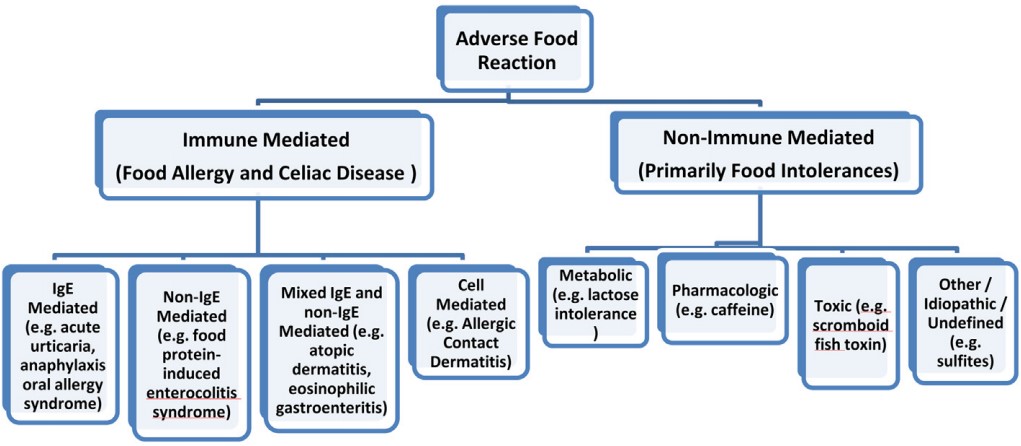 Figure 1. Classification of adverse reactions to food
(Source: Sampson HA, et al. 2014)
Food allergies are categorized into two types of allergies depending on whether they are mediated by IgE. IgE-mediated reactions usually start rapidly, with clinical symptoms appearing within minutes to hours after eating. Non-IgE-mediated allergic reactions are usually chronic and less likely to be controlled by avoiding food. IgE-mediated food allergic diseases associated with fatal anaphylaxis, especially peanuts, tree nuts, and seafood. The possibility of serious consequences of IgE-mediated food allergy and its widespread media coverage have raised awareness of food allergy, while also deepening fears about the disease. In fact, the number of patients who actually suffer from food allergy is significantly lower than the number of people who believe they have the disease, with a prevalence of about 5% in adults and 8% in children. With the increasing prevalence of food allergies, physicians are recognizing the limitations of the accuracy of diagnosing food allergies based on clinical history alone and that incorporating the rest of the tests will help reduce misdiagnosis.
IgE-mediated food allergy is the result of loss of integrity of key immune components that maintain tolerance and prevent recognition of benign food antigens as pathogens. Tolerance to food is the process by which food antigens cross the mucosal barrier and are processed by dendritic cells in their inactivated state, and these antigen-presenting cells also induce inhibitory cytokines such as IL-10. This, in turn, leads to differentiation of naïve T cells into T regulatory cells, suppression of food antigen-specific T helper 2 (Th2) cells, and increased production of IgA and IgG4 and decreased production of IgE by B cells. Eosinophils, basophils and mast cells are immunosuppressed.
A state of detectable food-specific IgE is defined as sensitization, which may be a precursor to the development of food allergy. When food passes through the broken barrier, danger signals and inflammatory cytokines are released, which activates dendritic cells to form a phenotype normally acquired in defense against pathogens. These activated dendritic cells, in turn, activate naïve T cells to acquire a Th2 phenotype, which in turn promotes inflammatory signaling, induces food antigen-specific B cells to undergo class switching and produce food antigen-specific IgE. All patients with IgE-mediated food allergy are allergic to food allergens. The development of a food allergic reaction consists of five key components: epithelial cells, innate immune cells, T cells, B cells, and effector cells (mast cells, eosinophils, and basophils).
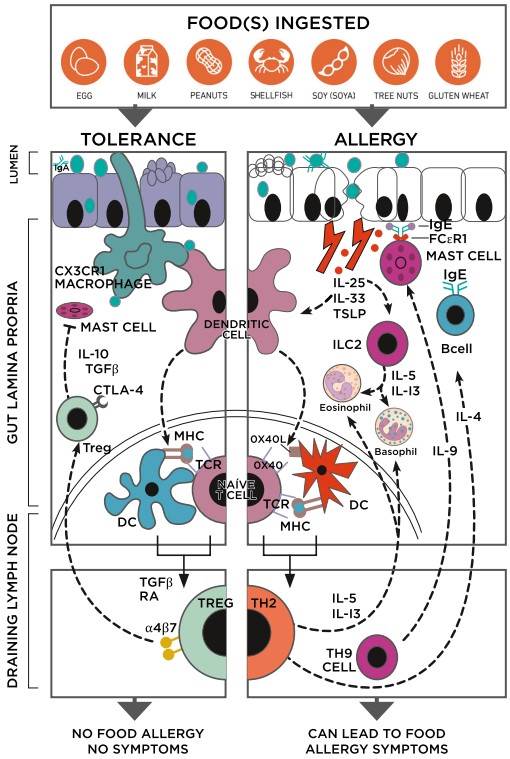 Figure 2. Comparative overview of the tolerogenic versus allergic response to food antigen in the gut
(Source: Anvari S, et al. 2019)
IgE-mediated food allergic reactions are type I hypersensitivity reactions, which occur on re-exposure when the patient develops IgE antibodies against a food allergen. Typically, circulating IgE antibodies that have developed are present in the peripheral circulation, and when their sensitizing proteins cross the intestinal wall again, the IgE antibodies bind to food proteins. Two neighboring IgE molecules bound to food proteins cause degranulation of mast cells and basophils, followed by release of preformed mediators within minutes of exposure.
The typical symptoms of IgE-mediated food allergies are usually rapid in onset and can lead to death in severe cases. Typical symptoms can involve almost all organ systems, including the skin, respiratory, gastrointestinal, cardiovascular, and nervous systems. The most serious of these are cardiovascular and neurologic symptoms. Patients may experience tachycardia, hypotension, severe cardiovascular collapse, and coma, as well as dizziness or weakness. In addition, cardiovascular and neurologic symptoms are usually accompanied by involvement of other organs, such as the respiratory system or the skin.
Skin symptoms are the most common symptoms in IgE-mediated food allergies and can manifest as erythema rash, pruritus, urticaria, and angioedema, with or without urticaria in milder cases. Urticaria usually occurs immediately after ingestion of the causative food and can last for hours without treatment. Angioedema usually manifests as swelling of the eyelids, face, and lips and can cause severe discomfort to the patient. The severity of skin symptoms in IgE-mediated food allergies can be determined by the percentage of skin involved.
IgE-mediated respiratory symptoms of food allergy can involve both the upper and lower airways. Moderate to severe symptoms may manifest as persistent nasal leakage or nasal congestion, including complete blockage of the nasal passages. Respiratory symptoms also include wheezing, which in mild cases is expiratory wheezing, and worsening symptoms can lead to inspiratory wheezing, use of assistive muscles, and asthma. Asthma exacerbation occurs after inhalation of food proteins mediated by type I hypersensitivity reactions. Conjunctival involvement in ocular symptoms may be characterized by tearing and redness of the eyes, and severe ocular symptoms may be characterized by marked periorbital swelling. Laryngeal manifestations include throat clearing, coughing, throat tightness or sore throat. The most serious symptom may be stridor, an abnormally high-pitched sound that occurs during the inhalation phase and is caused by allergic mediators in the laryngeal tissues that lead to swelling of the tissues, which in turn interrupts and narrows the airway passages. Gastrointestinal allergy symptoms include subjective and objective symptoms. Subjective symptoms include itching of the mouth or throat, nausea, or abdominal pain. Objective symptoms include vomiting, intermittent or persistent diarrhea. Symptoms of the gastrointestinal system usually appear immediately and do not last more than 2 to 4 hours.
Eight foods cause 90% of IgE-mediated food allergic reactions: milk, eggs, soy, wheat, shellfish, fish, peanuts and nuts. IgE-mediated allergies to milk, eggs, soy, and wheat subside as patients age; in contrast, shellfish, fish, peanut, and nut allergies rarely resolve. Remission of food-allergic disease is accompanied by a decrease in serum levels of food-specific IgE, so serial tracking of IgE levels can help predict remission.
Table 1. Levels of food allergic reactions as defined by the World Health Organization
| Grade | Definition |
| Grade Ⅰ | Only 1 organ system is involved—including cutaneous, respiratory, ocular |
| Grade Ⅱ | 2 organ systems involved or lower respiratory tract, gastrointestinal involvement, or uterine cramping |
| Grade Ⅲ | Symptoms of laryngeal, uvular, or tongue tissue edema occur with or without stridor or when the FEV1 drops by 40% with no bronchodilator response. |
| Grade Ⅳ | Respiratory failure or hypotension |
| Grade Ⅴ | Death |
(Source: Anvari S, et al. 2019)
IgE-mediated food allergy testing initially relied on taking a history and physical examination, however, this diagnostic method is not highly accurate. The double-blind placebo-controlled food test (DBPCFC) is the gold standard for diagnosing food allergy in clinical trials or standardized studies. Oral food challenge can definitively diagnose IgE-mediated food allergy, but requires clinicians who can quickly recognize and treat food allergy. Patients need to be evaluated prior to testing for the presence of comorbidities such as asthma, uncontrolled urticaria or eczema, or concurrent respiratory infections, which carry the risk of exposing the patient to a serious and fatal reaction. During the test, patients should first eat a very small amount of food and increase the dose every 15-30 minutes until all steps are completed or symptoms appear. In addition, when preparing for an oral challenge, patients should stop taking antihistamines or corticosteroids that may interfere with the outcome of the challenge.
Commonly used methods for detecting IgE-induced food allergies include the immediate hypersensitivity skin test (IHST) and the food-specific IgE antibody test. It is important to note that patients who have already had an allergic reaction need to wait 4-6 weeks before undergoing skin testing. The IHST rapidly screens for the presence of food-specific IgE antibodies on skin mast cells. The test is performed using a device coated with a commercial extract or fresh food, which is scraped against the skin surface, allowing food proteins to enter the skin, bind to specific IgE on skin mast cells and trigger a degranulation reaction with preformed mediators such as histamine. Local mast cells are activated to produce visualized wheals and erythema at the site of allergen entry through the skin, with the diameter of the wheals providing information on the likelihood of a clinical reaction. Skin test results were positive if the mean diameter of the wheal was ≥ 3 mm compared with negative controls. However, the food skin test has a low specificity, does not distinguish between sensitization and true IgE-mediated allergic reactions, and is not directly diagnostic of clinical reactivity.
References
| Target | Cat. No. | Product Name | Size | Species Reactivity | Application | Detection Sample | |
| Food Allergens | DEIA2429 | Human Allergen Specific IgE ELISA Kit | 2 x 96T | Human | Quantitative, Qualitative | Serum | Inquiry |
| DEIA1185 | Food specific IgG ELISA Kit | 96T | Human | Quantitative | Serum | Inquiry | |
| DEIA6227 | FinTest TM IgG4 Screen 88 ELISA Kit | 96T | Human | Quantitative | Serum, plasma, capillary blood | Inquiry | |
| DEIA-FA001 | Brazil Nut ELISA Kit | 96T | N/A | Quantitative | Food | Inquiry | |
| DEIA-FA002 | Cashew ELISA Kit | 96T | N/A | Quantitative | Food | Inquiry | |
| DEIA-FA003 | Coconut ELISA Kit | 96T | N/A | Quantitative | Food | Inquiry | |
| DEIA-FA004 | Fish ELISA Kit | 96T | N/A | Quantitative | Food | Inquiry | |
| DEIA-FA005 | Pistachio ELISA Kit | 96T | N/A | Quantitative | Food | Inquiry | |
| DEIA-FA006 | Lysozyne ELISA Kit | 96T | N/A | Quantitative | Food | Inquiry | |
| DEIA-FA007 | Ovalbumin ELISA Kit | 96T | N/A | Quantitative | Food | Inquiry | |
| DEIA-FA008 | Pecan nut ELISA Kit | 96T | N/A | Quantitative | Food | Inquiry | |
| DEIA-FA009 | Macadamia nut ELISA Kit | 96T | N/A | Quantitative | Food | Inquiry | |
| DEIA-FA010 | Milk ELISA Kit | 96T | N/A | Quantitative | Food | Inquiry | |
| Allergen | DEIA-XY78 | Food Allergens IgG Screen 24 ELISA kit | 96T | Quantitative | Serum, plasma | Inquiry | |
| DEIA-XY79 | Food Allergens IgG Screen 88 ELISA kit | 96T | Quantitative | Serum, plasma | Inquiry |
| Target | Cat. No. | Product Name | Expression System | Tag/Conjugate | Application | |
| Food Allergens | DAGS015 | Crustaceans and shellfish Allergen reference material | N/A | N/A | ELISA | Inquiry |
| DAGS017 | Fish Allergen reference material | N/A | N/A | ELISA | Inquiry | |
| DAGS018 | Gluten Allergen reference material | N/A | N/A | ELISA | Inquiry | |
| DAGS021 | Milk Allergen reference material | N/A | N/A | ELISA | Inquiry |
| Target | Cat. No. | Product Name | Host | Isotype | Application | |
| Food Allergens | DPATB-H81072 | Anti-Allergen Jun a 3 (aa 61-160) polyclonal antibody | Mouse | IgG | WB | Inquiry |
Loading ......
