
Inquiry Basket
 Loading ......
In recent decades, mycotoxin contamination has been detected in a wide variety of grains and foods, including cereals (e.g., corn, rice, wheat), spices (e.g., black pepper, chili pepper, ginger), nuts (e.g., walnuts, peanuts, pistachios), teas, drinking water, and seeds, which has caused worldwide concern. Aflatoxins (AFTs) are the most important class of mycotoxins and are produced by a number of fungal species, including Aspergillus (A.) flavus, A. nomius, and A. parasiticus. The aflatoxin-producing gene is located on cluster 54 of Aspergillus chromosome 8, 80 kb away from telomeres on chromosome 3. The cluster consists of 30 genes whose activation is mainly regulated by aflR and aflS.
 Figure 1. Organization of the aflatoxin gene cluster including the old and new cluster gene nomenclatures.
(Source: Caceres I, et al. 2020)
Aflatoxin B1 (AFB1) is considered the most common and most harmful of these toxins, and the International Agency for Research on Cancer classifies it as a Group I carcinogen (i.e. a substance that is carcinogenic to humans).
Aflatoxins are a class of compounds classified as difuranocoumarins, i.e., highly substituted coumarin derivatives containing fused dihydrofuran molecules. AFB1 is characterized by the fusion of a cyclopentenone ring to the lactone ring of the coumarin structure, and emits strong fluorescence under UV irradiation. AFB1 is slightly soluble in water, insoluble in polar solvents, soluble in polar organic solvents. It is thermally stable and difficult to be thermally degraded at high temperature (>100℃). On the other hand, AFB1 is unstable under UV light or extreme pH conditions, and the lactone molecules in it can react in the presence of ammonia or hypochlorite.
 Figure 2. Chemical structures of Aflatoxin B1
(Source: Bedard LL, et al. 2006)
Aflatoxin B1 (AFB1) contaminates grains such as rice, wheat, corn, and cereals, which are important in the global food supply, as well as other high-use foods such as peanuts, dried fruits, and spices.
AFB1 contamination in rice has been reported in many countries, such as Sweden, India, Brazil, China, and Canada, etc. According to the studies in each country, an average of 55.4% of rice samples were contaminated with AFB1, with the highest average concentration of 73.2 μg/kg. A Japanese survey on peanut butter reported that AFB1 was detected in 10 out of 21 peanut butter samples at concentrations not exceeding 2.59 μg/kg. The highest levels of AFB1 were reported in maize, with an average frequency of 46.1% of AFB1-positive samples and an average maximum concentration of 553.9 µg/kg, with the highest AFB1 levels exceeding 1,000 µg/kg in Croatia, Pakistan, and the Democratic Republic of the Congo. Some studies have investigated the levels of AFB1 in wheat, sorghum and cereals and compared to other foods, sorghum had the highest mean frequency of AFB1 contamination (67.3%), wheat had a relatively high frequency of contamination (44.8%) but had the lowest mean maximum concentration of 6.0 µg/kg, in contrast cereals had the lowest mean frequency of 26.0%.
AFB1 is one of the most potent liver cancer carcinogens that can cause hepatocellular carcinoma (HCC). Due to the high frequency of human exposure to aflatoxins, it is difficult to monitor them in a fully synchronized manner, and therefore the intake of the toxin can lead to chronic liver damage. Early investigations found high levels of AFB1 in foods from areas with a high incidence of liver cancer as well, and later studies found that AFB1 synergized with hepatitis B virus (HBV) to significantly increase the risk of liver cancer, with the odds ratios (OR) of exposure to AFB1 or infection with hepatitis B virus resulting in hepatocellular carcinoma ranging from 1.7-6.0 and 7.3-22.8, respectively, and increasing to 59.4-129 after co-infection with both. A similar effect occurs in the hepatitis C virus (HCV). People in developing countries may be highly susceptible to the hepatocarcinogenic effects of AFB1 due to high prevalence of HBV and HCV infection. It is estimated that up to 28% of the global pathogenic factor of HCC is AFB1, which has deepened people's awareness of the hazards of AFB1 exposure and prompted many countries to strictly monitor the level of aflatoxin in import and export commodities.
In addition to its genotoxic and carcinogenic effects, aflatoxin B1 exhibits other toxicities.
AFB1 can lead to malnutrition and growth impairment in humans and animals. Many studies have shown that exposure to AFB1 is associated with severe malnutrition and may affect the normal growth and development of the body by interfering with the absorption of micronutrients. For example, AFB1 occurs more frequently in children with kwashiorkor or marasmic kwashiorkor disease than in healthy children, and serum vitamin A and E levels are reduced in Ghanaians with high AFB1-albumin.
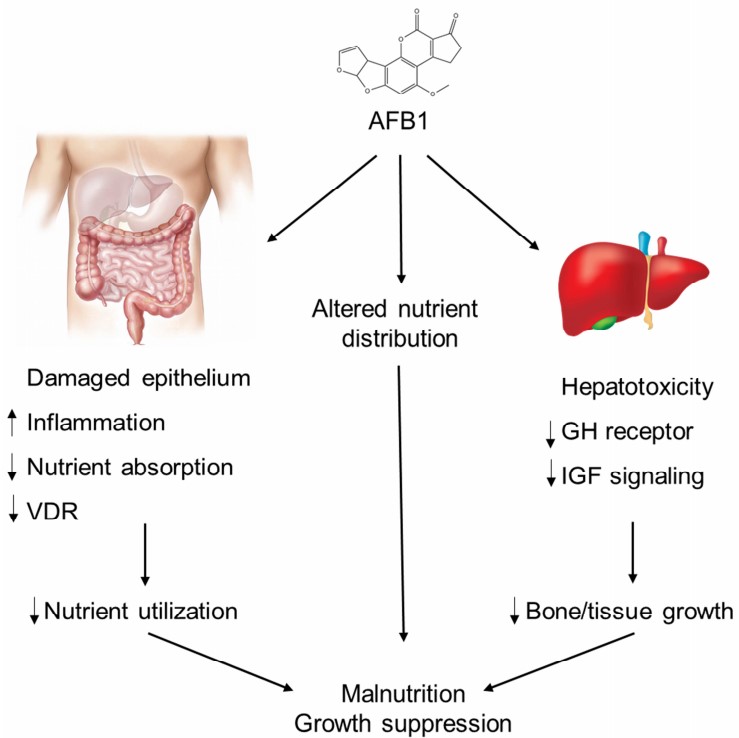 Figure 3. Mechanism of AFB1-induced malnutrition and growth suppression
(Source: Rushing BR, et al. 2019)
One of the main risk factors for growth retardation in children is exposure to aflatoxin. For example, AFB1 or its metabolites in the circulation of mothers during pregnancy can affect fetal development, and the birth weight of aflatoxin-positive mothers is significantly lower than that of normal newborns. Continuous exposure to aflatoxin after birth will further affect the growth and development of children. AFB1 biomarkers in neonates and young children have been found to be significantly associated with their growth disorders. AFB1-albumin levels are significantly negatively correlated with height/weight, and children with developmental delays have 30-40% higher AFB1-albumin levels. Careful monitoring of dietary AFB1 content after weaning can prevent growth disorders.
Aflatoxin B1 also regulates immune function. Studies have found that AFB1 reduces the function of the human immune system and that AFB1-positive children have longer average hospital stays and more complications. A study in Ghanaians showed that participants with high AFB1-albumin levels had lower percentages of CD3+CD69+ T-cells and CD19+CD69+ B-cell subpopulations, and that high AFB1-albumin levels were associated with lower numbers of CD8+ T-cells containing perforin or both perforin and granzyme A. The results of this study showed that AFB1-albumin levels were associated with lower numbers of CD8+ T-cells in the host. These effects reduce host resistance to infection and lead to increased associated morbidity.
At present, many strategies have been developed to prevent or eliminate AFB1 contamination to ensure food safety, which can be divided into pre-harvest and post-receipt technologies.
Pre-harvest strategies include the use of genetically modified crops resistant to Aspergillus infections and environmental stresses, insecticide use, crop rotation and timing of planting. Post-harvest strategies include physical methods such as proper drying, packaging, storage, and preservative/pesticide use. These strategies can be used as preventive measures to reduce contamination of crops. Post-harvest strategies involve the use of physical methods or biochemical methods to reduce AFB1 contamination.
The most common of the physical methods is the use of gamma-ray heating and irradiation, where temperatures of 150-200℃ can remove large quantities of AFB1 at low cost and in a short period of time; however, the technique needs to ensure the integrity of the product after use, and therefore sometimes limits the maximum temperature that can be used, resulting in only a portion of the AFB1 being removed. Another method is gamma radiation, but this technology has safety issues that make it difficult to implement in many developing countries.
Bacterial strains are inoculated in the food matrix and then reduce AFB1 either by metabolism or by direct physical binding to AFB1. Several genera of bacteria such as Lactobacillus, Saccharomyces cerevisiae, and fibrous microorganisms have been investigated. This method has shown a high rate of AFB1 degradation, averaging about 86%. Alternatively, the use of plant extracts to solubilize AFB1 can achieve >95% degradation. AFB1 can also be degraded using purified enzymes from various biological sources, including laccases, manganese peroxidase, and aflatoxin-degrading enzymes. Their efficacy is high, but their effectiveness in food processing is not clear, and their long processing time makes them difficult to apply directly on a large scale.
References
| Target | Cat. No. | Product Name | Size | Species | Application | Detection Sample | |
| Aflatoxin | DEIA-XY22 | Aflatoxin Total ELISA Kit | 96T | Quantitative | Food, feed | Inquiry | |
| DEIA054 | Aflatoxin B1 ELISA Kit | 96T | Quantitative | Cereals, feed, milk, milk powder, enzyme, cookies, soy sauce, vinegar, oils, peanuts | Inquiry | ||
| DEIA6846 | Aflatoxin B1 ELISA Kit | 96T | N/A | Qualitative and Quantitative | Edible oil, Peanut, Cereal, Sauce, Vinegar, Feed (raw feed, compound feed, concentrated feed) | Inquiry | |
| DEIA051 | Aflatoxin B1 ELISA Kit | 1 Kit (96T), 1 Pack (96T×5), 1 Pack (96T×50) | N/A | Quantitative | Wheat and other cereals | Inquiry | |
| DEIAFM1-1 | Aflatoxin M1 ELISA Kit for Cheese Sample | 96T | N/A | Quantitative | Liquid milk, milk powder, yogurt, cheese | Inquiry | |
| DEIA2545 | Aflatoxin B1 ELISA Kit | 96T | N/A | Quantitative | Cereals, feed, milk, milk powder,enzyme,cookies, soy sauce, vinegar, oils, peanuts,serum | Inquiry | |
| DEIA2546 | Aflatoxin M1 ELISA Kit (in Milk and Milk Products) | 96T | Human | Quantitative | Serum, plasma | Inquiry | |
| DEIA051-2 | Aflatoxin Total ELISA Kit | 96T | Qualitative, Quantitative | Edible oil, peanut, cereal | Inquiry |
Loading ......
