
Inquiry Basket
 Loading ......
Kanamycin is a potent aminoglycoside antibiotic that has been widely used in the treatment of various bacterial infections. Derived from the bacterium Streptomyces kanamyceticus, kanamycin exhibits bactericidal activity and is available in oral, intravenous, and intramuscular forms. Its most commonly used form is kanamycin sulfate.
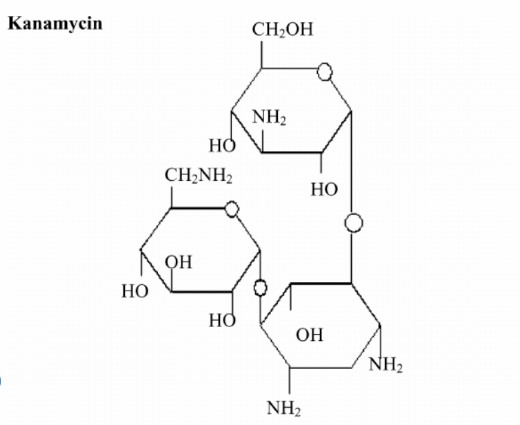 Figure 1. The chemical structure of kanamycin.
(Source: Kim, W. K. et al., 2005)
Aminoglycoside antibiotics are a group of drugs widely used for their broad spectrum of antibacterial activity. They are naturally produced by bacteria, primarily Streptomyces and Micromonospora species. Currently, over 20 natural aminoglycosides are utilized in clinical treatment, and their derivatives are synthesized to enhance their activity due to the rising antibiotic resistance.
The antimicrobial activity of aminoglycosides is attributed to the presence of a unique aminocyclitol moiety, primarily 2-deoxystreptamine (2-DOS), substituted with various sugars at positions C4, C5, or C6. Clinically important aminoglycosides, such as kanamycin, contain a 2-DOS core doubly substituted at positions C4 and C5 or C4 and C6. Kanamycin, derived from Streptomyces kanamyceticus, is a mixture of four compounds, with kanamycin A being the most abundant.
Kanamycin is indicated for the treatment of infections caused by susceptible bacteria. It is effective against a range of pathogens, including E. coli, E. aerogenes, Proteus species (both indole-positive and indole-negative), K. pneumoniae, S. marcescens, and Acinetobacter species.
In clinical practice, kanamycin is primarily employed for the treatment of infectious diseases caused by susceptible pathogens, including gastrointestinal infections, genitourinary tract infections, respiratory system infections, and infections originating from other sites caused by susceptible bacteria. However, it is important to note that kanamycin may induce ototoxicity and nephrotoxicity, which are significant adverse effects commonly associated with aminoglycoside antibiotics. Consequently, the use of kanamycin is not recommended in patients with renal impairment. For patients receiving kanamycin therapy, diligent monitoring of renal function is imperative. Additionally, careful assessment of auditory status should be carried out to ensure early detection of potential hearing impairment.
Kanamycin belongs to the class of aminoglycoside antibiotics, which have a unique mechanism of action compared to other classes of antibiotics. Upon entering the bacterial cell, kanamycin binds irreversibly to specific regions within the 30S ribosomal subunit. It primarily targets the 16S rRNA, a component of the ribosome that plays a crucial role in decoding the genetic information carried by messenger RNA (mRNA).
Within the decoding site of the 30S subunit, kanamycin binds to four nucleotides of the 16S rRNA, as well as a single amino acid of the ribosomal protein S12. This binding disrupts the normal functioning of the decoding site, which is responsible for the accurate pairing of the codon on mRNA with the corresponding anticodon on tRNA during protein synthesis. However, kanamycin's presence prevents this accurate pairing from occurring, leading to the misreading of the genetic code. As a result, incorrect amino acids are inserted into the growing polypeptide chain.
This misreading of the genetic code and the incorporation of incorrect amino acids can lead to the production of nonfunctional or toxic peptides. The presence of these aberrant peptides disrupts the normal functioning of essential bacterial proteins, impairs vital cellular processes, and ultimately inhibits bacterial growth.
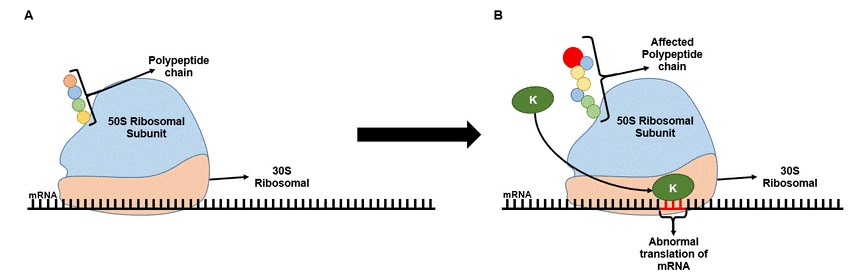 Figure 2. The mechanism of action of kanamycin.
(Source: Correia, A. et al., 2020)
Kanamycin is utilized in the treatment of animal diseases, strain selection, as well as the preparation of cellular and gene therapy drug materials. However, its use is associated with neurotoxicity and nephrotoxicity, specifically damaging the eighth cranial nerve, leading to vestibular and cochlear impairment. Residues of kanamycin in animal-derived food products and biopharmaceuticals can have adverse effects on human health, including the potential to induce allergic reactions.
The presence of kanamycin residues in food and pharmaceuticals is a concern due to its toxic effects. To mitigate these risks, regulatory measures and guidelines have been implemented to control the use of kanamycin in animal husbandry and food production. These measures often include withdrawal periods to ensure that kanamycin is no longer present in animal-derived products before they are consumed by humans.
Accurate and sensitive analytical techniques such as high-performance liquid chromatography (HPLC) or liquid chromatography-mass spectrometry (LC-MS) are employed to detect and quantify kanamycin residues in complex matrices. Monitoring and controlling kanamycin residues play a crucial role in safeguarding food safety, minimizing the spread of antibiotic resistance, and preserving the efficacy of kanamycin as an important antibiotic for both human and veterinary medicine.
References
| Target | Cat. No. | Product Name | Size | Species Reactivity | Application | Detection Sample | |
| kanamycin | DEIAH-004H | Kanamycin ELISA Kit | 96T | Quantitative | milk, milk powder, chicken, pork | Inquiry | |
| DEIA048 | Kanamycin ELISA Kit | 96T | N/A | Quantitative | biological samples | Inquiry | |
| DEIA-WZ048V | High Sensitivity Kanamycin ELISA Test Kit | 96T | Quantitative | biological samples | Inquiry | ||
| DEIA048V | Kanamycin ELISA Kit | 96T | Quantitative | Vaccine | Inquiry | ||
| DEIA-004H | Kanamycin ELISA Kit | 96T | N/A | Quantitative, qualitative | tissue, milk | Inquiry | |
| DTS761 | Kanamycin Residue Rapid Test(milk) | 96T | N/A | Qualitative | Milk | Inquiry | |
| E. coli | DEIA2348 | E. Coli Verotoxin (Fecal) ELISA Kit | 96T | Qualitative | stool supernatant | Inquiry | |
| DEIA2562 | E.coli Antigen In Food ELISA Kit | 96T | Quantitative | food | Inquiry | ||
| DEIA2437 | E.Coli O157 (Fecal) ELISA Kit | 96T | Qualitative | feces | Inquiry |
Loading ......
