
Inquiry Basket
 Loading ......
Vancomycin is a powerful antibiotic that is widely used in the medical field to treat serious but susceptible bacterial infections, such as methicillin-resistant Staphylococcus aureus (MRSA) infections. It belongs to the glycopeptide class of antibiotics and is primarily effective against Gram-positive bacteria. Vancomycin is known for its potency against drug-resistant bacteria, making it an essential tool in combating infections that are difficult to treat with other antibiotics.
Browse all Vancomycin products
Vancomycin is indicated for the treatment of serious infections caused by susceptible Gram-positive bacteria. It is commonly used in the management of complicated skin and soft tissue infections, bloodstream infections, endocarditis, bone and joint infections, and pneumonia. Vancomycin is often considered a drug of last resort, reserved for infections that do not respond to other antibiotics or when the causative pathogen is known or suspected to be resistant to other agents.
Specifically, the clinical uses of vancomycin include:
While vancomycin is generally well-tolerated, it is not without side effects. The most common adverse reactions include nephrotoxicity (kidney toxicity) and ototoxicity (ear toxicity). These side effects are more likely to occur when vancomycin is administered at high doses or for prolonged periods. Risk factors for nephrotoxicity include pre-existing renal dysfunction, concomitant use of other nephrotoxic drugs, and high trough concentrations of vancomycin. Ototoxicity, characterized by hearing loss or tinnitus, is rare but can be irreversible in some cases. Other less common side effects include red man syndrome (flushing and rash), thrombophlebitis (inflammation of the veins), and hypersensitivity reactions.
Vancomycin works by inhibiting the synthesis of the bacterial cell wall, a crucial protective layer in Gram-positive bacteria. It specifically targets the D-alanyl-D-alanine precursor required for cell wall synthesis. Specifically, vancomycin prevents the incorporation of N-acetylmuramic acid (NAM) and N-acetylglucosamine (NAG)-peptide subunits into the peptidoglycan matrix, which forms the major structural component of these cell walls. By forming hydrogen bonds with the terminal D-alanyl-D-alanine moieties of the NAM/NAG-peptides, vancomycin inhibits their incorporation into the matrix, leading to the weakening and eventual lysis of the bacterial cell wall.
In addition to its effect on peptidoglycan synthesis, vancomycin also alters bacterial-cell-membrane permeability and inhibits RNA synthesis. These additional actions contribute to its overall antibacterial activity. It is important to note that vancomycin does not exhibit cross-resistance with other antibiotics, making it a valuable option for the treatment of infections caused by multidrug-resistant Gram-positive bacteria. Significantly, vancomycin is not active in vitro against gram-negative bacilli, mycobacteria, or fungi.
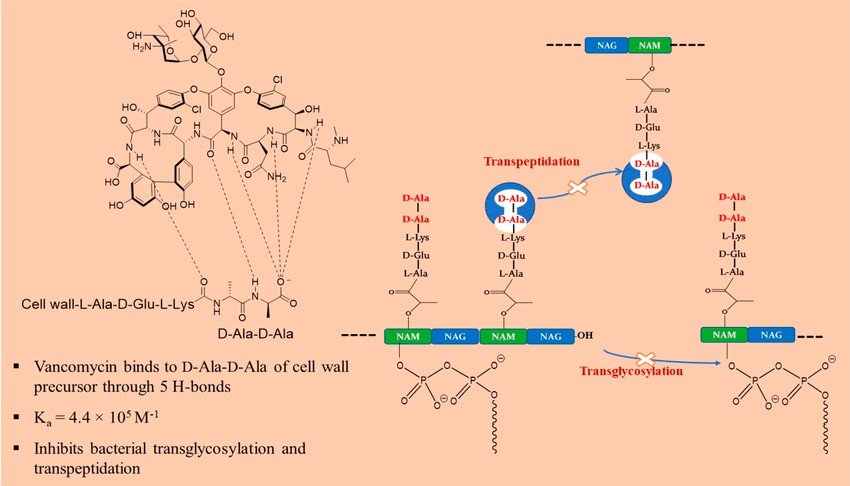 Figure 1. Mechanism of action of vancomycin.
(Source: Dhanda, G. et al., 2018)
Vancomycin is primarily eliminated through the kidneys, with more than 80%-90% of a single dose being recovered unchanged in the urine within 24 hours. The pharmacokinetic profile of vancomycin is complex and can be characterized by either a 2- or 3-compartment pattern. It is administered intravenously with a standard infusion time of at least 1 hour to minimize adverse effects. In patients with normal kidney function, vancomycin has an initial distribution phase of approximately 30 minutes to 1 hour and an elimination half-life of 6-12 hours. The volume of distribution for vancomycin ranges from 0.4 to 1 L/kg. It is known to bind to proteins, with reported binding ranging from 10% to 50%. These protein-binding effects, along with factors such as tissue distribution and inoculum size, can impact the overall activity of vancomycin.
Ongoing research on Vancomycin aims to address several areas of interest. One area of focus is the development of new derivatives or analogs with enhanced antimicrobial activity or improved pharmacokinetic profiles. Other research efforts aim to overcome resistance mechanisms and explore combination therapies to enhance Vancomycin's effectiveness. Additionally, research into alternative administration routes, such as inhalation or rectal delivery, may offer potential advantages in specific clinical scenarios.
Reference
| Target | Cat. No. | Product Name | Expression System | Tag/Conjugate | Application | |
| Vancomycin | DAGA-053K | Vancomycin [KLH] | N/A | KLH | Immunogen | Inquiry |
| DAG3035O | Vancomycin [OVA] | N/A | OVA | N/A | Inquiry | |
| DAG152S | Vancomycin [HSA] | N/A | HSA | ELISA | Inquiry | |
| DAG465S | Vancomycin [HSA-Biotin] | N/A | HSA-Biotin | ELISA | Inquiry | |
| DAG3035 | Vancomycin [BSA] | N/A | BSA | N/A | Inquiry | |
| DAG3036 | Vancomycin [HRP] | N/A | HRP | N/A | Inquiry | |
| C. difficile Toxin A | DAGB141 | Recombinant Clostridium difficile Binary Toxin A Subunit (a.a. 44-463) | E. coli | Unconjugated | ELISA | Inquiry |
| DAGH048 | C. difficile Toxin A | N/A | Unconjugated | N/A | Inquiry | |
| DAGH049 | C. difficile Toxin A (ribotype 027) | N/A | Unconjugated | N/A | Inquiry | |
| DAGH050 | C. difficile Toxin A (ribotype 078) | N/A | Unconjugated | N/A | Inquiry | |
| Staphylococcal | DAGF-015 | Native Staphylococcal Enterotoxin B | S. aureus | Unconjugated | Inquiry |
| Target | Cat. No. | Product Name | Size | Species Reactivity | Application | Detection Sample | |
| Vancomycin | DEIANJ11 | Human Vancomycin ELISA Kit | 96T | Human | Quantitative and Qualitative | Human serum, plasma | Inquiry |
Loading ......
