
Inquiry Basket
 Loading ......
Rotavirus VP6, a pivotal protein in the life cycle of rotaviruses, holds immense promise for biomedical research. This highly conserved structural protein, renowned for its exceptional immunogenicity, possesses a myriad of beneficial properties that make it an invaluable asset in the field. With its potential applications as adjuvants, immunological carriers, drug delivery vehicles, and scaffolds for nanobiomaterial production, Rotavirus VP6 emerges as a multifaceted protagonist in the quest for innovative biomedical solutions.
Browse all Rotavirus Vp6 products
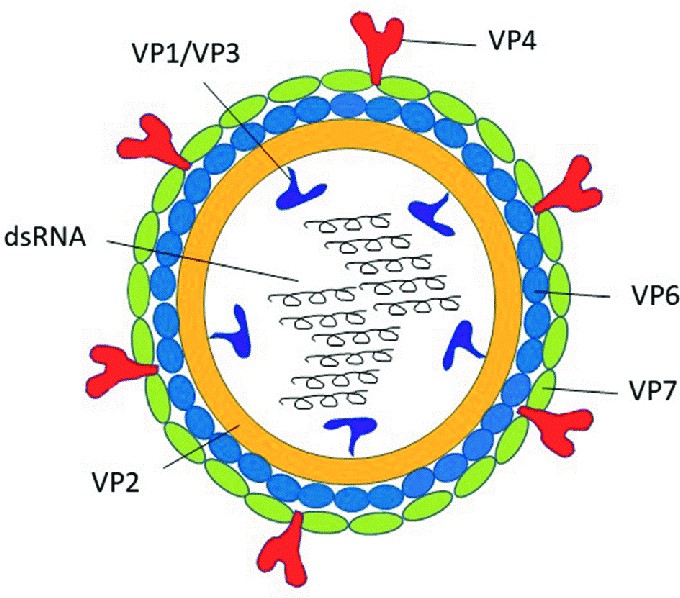 Figure 1. Rotavirus structure and potential vaccine targets.
(Source: Vetter, V. et al., 2021)
VP6, a highly conserved structural protein of rotaviruses, has played a crucial role in strain classification. Serological cross-reactivity to VP6 led to the identification of 10 groups (A-J) and two tentative groups (K and L). VP6 classification further includes four subgroups (SGI, II, I+II, and non-I, non-II) based on reactivity with specific monoclonal antibodies. Additionally, classification systems based on the genotypes of outer capsid proteins VP7 and VP4, protease-sensitive protein 51P, and glycoprotein 36G have been described. A whole-genome-based classification system defining the genotypes of all 11 genomic RNA segments has also been introduced.
VP6 not only exhibits high immunogenicity with dominant antigenic epitopes but is also abundantly expressed within the virus. It has the unique ability to self-assemble into complex structures, including trimeric, spherical, tubular, and sheet forms. Other viral structural proteins, such as those from HBV, HPV, HIV, AAV, Coronaviruses, NoV, influenza virus, HCV, RSV, and bacteriophages, have also been shown to produce immunogenic virus-like particles (VLPs) for vaccine development. However, VP6 stands out as one of the few structured viral protein assemblies that can serve as carrier proteins with potent adjuvant activity. It is particularly noteworthy that VP6 is one of the few immune carrier/adjuvant systems that can produce tubular and sheet-like structures. This is a feature not shared by other well-known carrier proteins like HBcAg.
Different types of vaccines encoding the Rotavirus VP6 antigen, such as DNA vaccines, subunit vaccines containing recombinant VP6 protein, and self-assembled structures, have been shown to induce immune responses and provide protection in animal models. Interestingly, studies have demonstrated that immunization with VP6 alone, even in the absence of neutralizing antibodies, can confer protection. While neutralizing epitopes are found on VP4 and VP7 proteins of Rotavirus, the protective effect observed in animals immunized with VP6 preparations lacking VP4 and VP7 suggests that neutralizing antibodies may not be necessary for protection against Rotavirus infection.
Non-neutralizing antibodies, specifically IgA and IgG, have been shown to clear Rotavirus infection by inhibiting viral replication intracellularly via transcytosis. Notably, among the different VP6 preparations, self-assembled structures such as VP6 tubes or VLPs have been found to be highly immunogenic, eliciting robust immune responses and providing superior immunogenicity, protection, and exhibiting adjuvant and immunological carrier properties.
Rotavirus VP6 has also been explored as a vector for heterologous peptides, enabling the delivery of therapeutic molecules and antigens. The ability of VP6 to self-assemble into nano-sized structures provides a suitable platform for the display of foreign peptides or antigens. By fusing the target peptide or antigen with VP6, researchers can exploit the immunogenicity and stability of VP6 to enhance the immune response against the target molecule.
This approach has shown promise in the development of novel vaccine candidates and targeted drug delivery systems. For example, VP6-based carriers have been utilized to deliver antigens of hepatitis E virus, rotavirus, and astrovirus. Such vaccine candidates hold great potential for combating these infectious diseases and providing broader protection against viral pathogens.
In addition to serving as immunological carriers, VP6-based systems have been explored for drug delivery applications. The self-assembled structures of VP6 can encapsulate therapeutic agents, protecting them from degradation and targeting specific cells or tissues. This targeted drug delivery approach holds promise for the treatment of various diseases, including cancer, where precise drug delivery is critical for minimizing off-target effects and maximizing therapeutic efficacy.
Self-assembling biological molecules, such as viral protein assemblies, offer an attractive platform for synthesizing natural nanomaterials. Rotavirus VP6, a protein with ordered complex structures, is particularly well-suited for constructing organized nanomaterials. VP6 can form tubes or virus-like particles (VLPs) that serve as versatile scaffolds with multifunctional binding properties. These VP6 assemblies have been utilized as frameworks for synthesizing metallic nanoparticles, including silver, gold, platinum, and palladium. Typically, the metals are attached to the external surface of the nanotubes/particles, although in some cases, reduction of the metal inside the nanotubes to form nanorods and nanowires has also been achieved. Molecular docking simulations have indicated that specific residues of VP6 can bind to palladium ions, providing nucleation sites for the growth, stabilization, and control of palladium particles.
References
| Target | Cat. No. | Product Name | Size | Species Reactivity | Application | Detection Sample | |
| Rotavirus | DEIAFY102 | Rotavirus Antigen ELISA Kit | 2 x 96T | Human | Qualitative | Complex sample matrices(human and veterinary sources) | Inquiry |
| IgA | DEIABL406 | Monkey IgA ELISA Kit | 96T | Quantitative | Milk, Plasma, Serum | Inquiry | |
| HBcAg | DEIA005 | Human Anti-Hepatitis B Virus Core Antigen (HBc) Antibody ELISA Kit | 96T | Human | Qualitative | Serum, plasma | Inquiry |
| DEIA-ZH0011-H | Human HBcAg ELISA Kit | 96T | Quantitative | biological samples | Inquiry |
Loading ......
