
Inquiry Basket
 Loading ......
Glutamate dehydrogenase (GDH) is a pivotal enzyme essential for the metabolism of glutamate, a vital amino acid involved in a myriad of biological processes. In the context of Clostridium difficile infection, the timely and accurate detection of C. difficile GDH assumes paramount importance. By detecting the presence of GDH, healthcare professionals can ensure accurate diagnosis, achieve timely and optimized patient management, infection control, and reliable monitoring.
C. difficile, an obligate anaerobic Gram-positive bacillus, is a normal component of intestinal flora. However, an imbalance in intestinal flora can occur due to the excessive use of broad-spectrum antibiotics, immunosuppressants, or chemotherapy drugs. This imbalance provides an opportunity for C. difficile to flourish, leading to the production and secretion of toxins that cause C. difficile infection (CDI). The clinical manifestations of CDI primarily include diarrhea, abdominal pain, and fever. In severe cases, CDI can progress to pseudomembranous colitis, which is associated with complications such as toxic megacolon, intestinal perforation, septic shock, and even mortality. Studies have demonstrated that CDI is responsible for approximately 10-25% of clinical cases of antibiotic-associated diarrhea, 50-75% of antimicrobial-associated colitis, and 90-100% of pseudomembranous colitis cases.
In addition, C. difficile strains are divided into toxin-producing strains and non-toxigenic strains. Toxigenic strains mainly produce two toxins, A (enterotoxin) and B (cytotoxin). C. difficile-related diarrhea caused by highly virus-producing strains has high recurrence and mortality rates in children and has caused nosocomial outbreaks in many countries and regions. It is estimated that CDI affects >1% of hospitalized patients, has a mortality rate of nearly 25% in the elderly, and costs the U.S. healthcare system $1-3 billion annually.
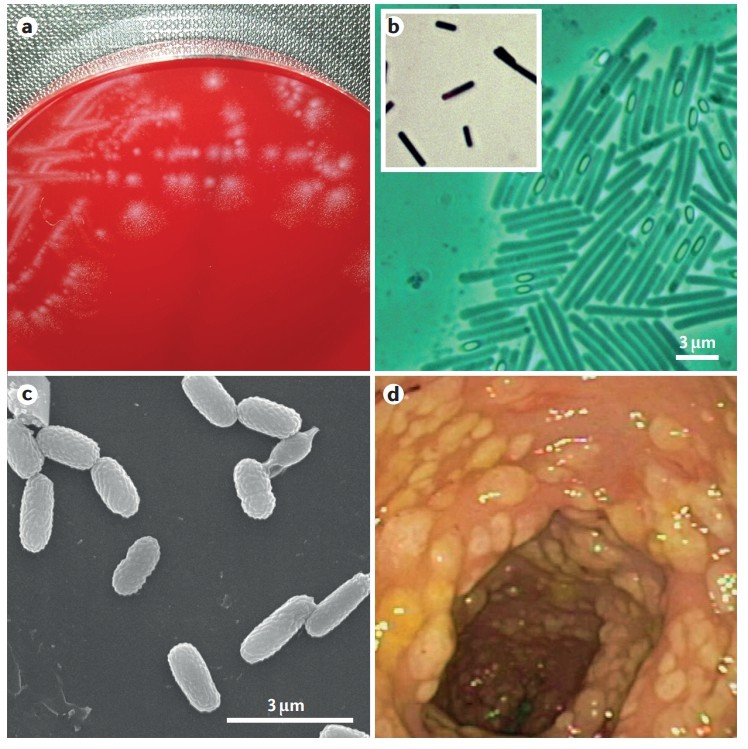 Figure 1. Clostridium difficile.
(Source: Smits, W. K. et al., 2016)
GDHs are a diverse group of enzymes that are widely found in various organisms. They facilitate the conversion of glutamate to α-ketoglutarate and ammonia through oxidative deamination or can catalyze the reverse reaction of synthesizing glutamate from ammonia and α-ketoglutarate. The specific role of GDH as either an anabolic or catabolic enzyme depends on its cofactor specificity, such as NAD or NADH, NADP or NADPH. Some GDH enzymes can operate in both directions depending on the availability of substrates. In the case of C. difficile, the GDH enzyme is NAD-specific and participates in the oxidative deamination of glutamate to produce α-ketoglutarate and ammonia. The α-ketoglutarate enters the tricarboxylic acid (TCA) cycle, contributing to ATP production and the generation of reducing equivalents.
The current diagnosis of Clostridium difficile infection (CDI) involves detecting C. difficile toxins directly in the patient's feces using methods such as cell line cytotoxicity assay (CTA), enzyme-linked immunosorbent assay (ELISA), or immunochromatography (IC). CTA is considered the "gold standard" but is less commonly used due to its expense and longer turnaround time. Most diagnostic laboratories prefer the cheaper, quicker, and less technically demanding ELISA or IC methods. Toxigenic culture, which involves isolating and testing C. difficile from fecal samples, has been proposed as an alternative gold standard but has limitations, including potential overdiagnosis and longer processing time. ELISA and IC methods have lower sensitivity and positive predictive value, leading to potential false negatives and occasional false positives in CDI cases.
In an effort to improve the accuracy of diagnosing CDI, some researchers have incorporated a test for C. difficile GDH as an initial screening method for detecting the presence of the bacterium in fecal samples. If the GDH test yields a positive result, further tests are conducted to confirm the presence of a toxin or a toxigenic isolate. The detection of GDH indicates the presence of C. difficile in the feces but does not indicate toxin production. GDH is an enzyme produced by all strains of C. difficile regardless of their ability to produce toxins, making it a reliable screening marker. Monoclonal antibodies specific to C. difficile GDH are used in modern test formats to avoid cross-reactivity with GDH produced by other anaerobic bacteria. Various studies have investigated the GDH test and have shown it to be sensitive and specific for detecting the presence of C. difficile, with high negative predictive values reported.
References
| Target | Cat. No. | Product Name | Size | Species Reactivity | Application | Detection Sample | |
| C. difficile | DEIA05711 | Clostridium difficile Toxin A/B ELISA Kit | 96T | N/A | Qualitative | feces | Inquiry |
| GDH | DEIA-BJ2138 | Rat Glutamate Dehydrogenase 1 ELISA Kit | 96T | Quantitative | Serum, plasma, cell culture supernatants, body fluid and tissue homogenate | Inquiry | |
| DEIA-BJ2469 | Mouse Glutamate Dehydrogenase 1 ELISA Kit | 96T | Quantitative | Serum, plasma, cell culture supernatants, body fluid and tissue homogenate | Inquiry | ||
| DEIA-BJ630 | Human GLUD1(Glutamate dehydrogenase 1, mitochondrial) ELISA Kit | 96T | Human | Quantitative | Serum, plasma, tissue homogenates, other biological fluids | Inquiry | |
| Glu | DEIA3517 | Glutamate ELISA Kit | 96T | N/A | Quantitative | Urine and various biological samples. | Inquiry |
| NADPH | DEIA-BJ2209 | Rat Nicotinamide adenine dinucleotide phosphate ELISA Kit | 96T | Quantitative | Serum, plasma, cell culture supernatants, body fluid and tissue homogenate | Inquiry | |
| ATP | DEIA-BJ2007 | Rat Adenosine Triphosphate ELISA Kit | 96T | Quantitative | Serum, plasma, cell culture supernatants, body fluid and tissue homogenate | Inquiry | |
| DEIA-BJ2331 | Mouse Adenosine Triphosphate ELISA Kit | 96T | Quantitative | Serum, plasma, cell culture supernatants, body fluid and tissue homogenate | Inquiry |
Loading ......
