
Inquiry Basket
 Loading ......
The enzyme-linked immunosorbent assay (ELISA) analytical method achieves sensitive detections while maintaining easy use which makes it broadly adopted in pharmacokinetic (PK) research. ELISA produces essential ADME information for macromolecular medicines such as monoclonal antibodies and peptide drugs. The results of these studies provide essential information to create dosing schedules that optimize therapeutic advantages and reduce toxic side effects. In monoclonal antibody PK research scientists use ELISA to detect anti-drug antibody formation which reveals how ADA immunogenicity impacts the drug's effectiveness and safety. Personalized treatment plan design requires this data especially when notable individual variability in mAb PK shows up.
Rituximab: The chimeric monoclonal antibody rituximab which targets CD20 antigen on B cells serves as a common treatment for B cell malignancies and immune system disorders. The effectiveness of this treatment is well-known although its serum levels show significant variation between different patients. The ELISA technique measures serum rituximab concentrations which support the establishment of the best dosing schedule.
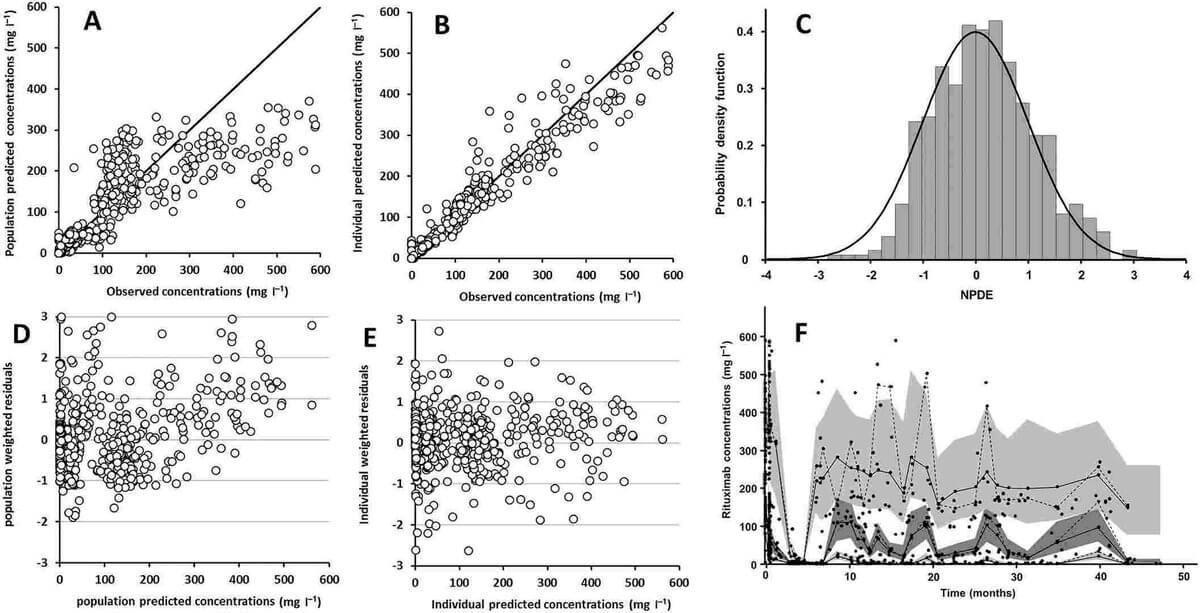 Figure 1. Detection of Rituximab Concentration Using ELISA (Diagnostic Plots of Pharmacokinetic Model) (Source: Lioger B, et al. 2017)
Bevacizumab: This anti-VEGF monoclonal antibody is extensively used in the treatment of various tumors. ELISA measures bevacizumab concentrations in serum—using VEGF antigen to capture the drug and an HRP-labeled antibody for detection—to study its PK and pharmacodynamic relationships. Its high sensitivity and broad dynamic range make it ideal for therapeutic drug monitoring (TDM) and dose adjustments.
Panitumumab: A fully human anti-EGFR monoclonal antibody used in treating KRAS wild-type colorectal cancer, panitumumab's clinical efficacy is closely linked to its blood concentration. ELISA quantitatively measures its plasma levels by capturing the complex of panitumumab and its specific antigen, EGFR, and detecting it with an HRP-labeled antibody, thereby providing precise data for PK modeling.
 Figure 2. Comparison of Adalimumab Detection: pAb-based ELISA vs. MA-based Infliximab ELISA (Source: Van Stappen T, et al. 2015)
During mAb therapy treatments patients often develop anti-drug antibodies (ADA) which have the potential to alter treatment efficacy and safety. ELISA has the capability to sensitively identify the formation of ADAs which plays a critical role in assessing a drug's immunogenicity. The ELISA technique is employed to track immunogenic responses for anti-TNF drugs including infliximab and adalimumab.
As the gold standard for TDM, ELISA helps determine the trough concentrations of drugs in patients. By regularly measuring drug levels, ELISA facilitates the optimization of dosing to reduce adverse reactions and improve therapeutic outcomes—especially important in immunosuppressive therapies.
ELISA may look simple but requires multiple exact procedures that guarantee accurate and sensitive results.
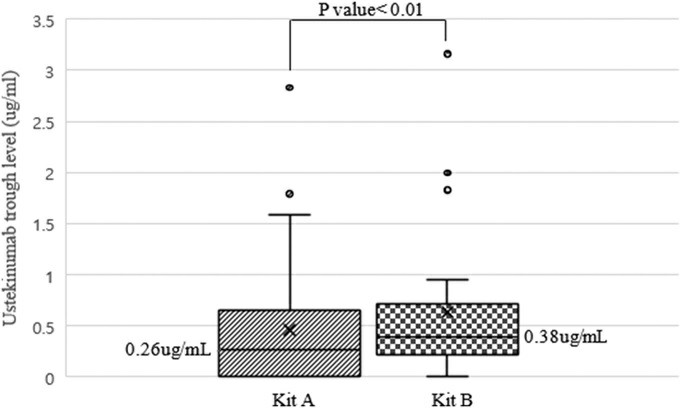 Figure 3. Evaluation of Ustekinumab Trough Concentrations Using Two ELISA Kits in Crohn's Disease (Source: Kwon Y, et al. 2022)
With ongoing technological advances, the application of ELISA in PK research will continue to be refined, and its role in ADA immunogenicity studies will become even more pivotal. Creative Diagnostics offers a range of high-quality ELISA kits for various mAb PK analyses. You can click on the "Reagent Solutions" link at the top of our page to view our highly rated products or search for a specific mAb on our homepage to filter ELISA kits. Not sure which one to choose? Contact our team for professional recommendations.
References
| Target | Cat. No. | Product Name | Size | Species | Application | Detection Sample | |
| Exendin-4 | DEIABL206 | Exendin-4 ADA ELISA kit | 96T | Human | Quantitative | Serum, plasma | Inquiry |
| TNF | DEIA068J | TNF α-Blocker ADA, Antibodies against infliximab ELISA Kit | 96T | Human | Qualitative | serum, EDTA plasma | Inquiry |
| DEIA069J | TNF α-Blocker ADA, Total Antibodies against infliximab ELISA Kit | 96T | Human | Qualitative | serum, EDTA plasma | Inquiry | |
| DEIA018J | TNF α-Blocker ADA, Antibodies against etanercept ELISA Kit | 96T | Human | Qualitative | EDTA plasma, serum | Inquiry | |
| DEIA019J | TNF α-Blocker ADA, Antibodies against infliximab ELISA Kit | 96T | Human | Qualitative | EDTA plasma, serum | Inquiry | |
| DEIA020J | TNF α-Blocker ADA, Total Antibodies against infliximab ELISA Kit | 96T | Human | Qualitative | EDTA plasma, serum | Inquiry |
| Target | Cat. No. | Product Name | Size | Species | Application | Detection Sample | |
| Semaglutide | DEIASL092 | Semaglutide ELISA Kit | 96T | NA | Quantitative | Serum, plasma | Inquiry |
| Ramucirumab | DEIAZ0009 | Anti-Ramucirumab ELISA Kit | 96T | Human | Qualitative | Serum, plasma | Inquiry |
| Filgrastim | DEIABL228 | Filgrastim Elisa kit | 2 x 96T | Human | Quantitative | Serum, plasma | Inquiry |
| Liraglutide | DEIA-XYZ95 | Liraglutide High Sensitivity Elisa Kit | 96T | NA | Quantitative | Serum, plasma | Inquiry |
| MMAE | DEIABL314 | Intact MMAE ADC ELISA Kit | 96T | Human | Quantitative | Serum, plasma | Inquiry |
| DM1 | DEIABL311 | DM1 ADC ELISA Kit | 96T | Human | Quantitative | Serum, plasma | Inquiry |
| SN38 | DEIABL316 | SN38 ADC ELISA Kit | 96T | Human | Quantitative | Serum, plasma | Inquiry |
| Eculizumab | DEIAZ0063 | Eculizumab ELISA kit | 96T | NA | Quantitative | Serum, plasma, cell culture samples | Inquiry |
Loading ......
