
Inquiry Basket
 Loading ......
Tetracycline antibiotics have broad-spectrum activity and can be used extensively against Gram-positive and negative bacteria, spirochetes, intrinsic intracellular bacteria, and protozoan parasites. Thus, tetracyclines were widely used in humans and animals soon after their discovery. Tetracyclines are recommended as a first-line treatment option for many indications, which include pneumonia, skin infections, sexually transmitted infections, bone and joint infections, abdominal infections, and specific bacterial pathogens. The basic structure of tetracyclines consists of four linearly condensed benzene rings forming a hydronaphtacene nucleus, and the essential difference between the analogs in this class is the difference in the C5, C6, C7, and C9 substituents.
 Figure 1. Tetracyclines—the general chemical structure and conventional numbering of the condensed rings and key positions
(Source: Rusu A, et al. 2021)
In Gram-negative cells such as Escherichia coli, tetracycline diffuses passively through the outer membrane pore proteins OmpF and OmpC, most likely as Mg2+ chelates, which is consistent with the finding that mutants of outer membrane pore proteins have reduced susceptibility to tetracycline. Tetracycline accumulation in the peripheral plasma is driven by the Donnan potential on the outer membrane. After dissociation of tetracycline from Mg2+, the uncharged tetracycline can diffuse through the inner membrane to the cytoplasm, where it complexes with magnesium and reaches the ribosomes. Tetracycline uptake in the cytoplasm is partly energy-dependent and involves proton dynamics and hydrolysis of phosphate bonds in addition to passive diffusion.
Tetracyclines bind preferentially to bacterial ribosomes and interact with the highly conserved 16S ribosomal RNA (rRNA) target in the 30S ribosomal subunit, preventing translation by sterically interfering with the docking of aminoacyl transfer RNA (tRNA) during elongation.
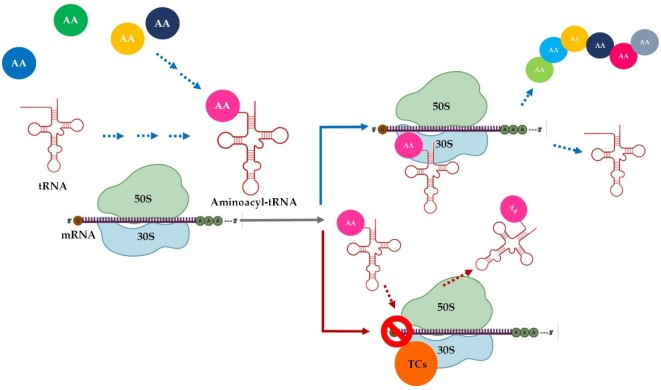 Figure 2. Scheme of the tetracyclines' mechanism of action
(Source: Rusu A, et al. 2021)
The utility of tetracyclines declines over time due to the emergence of tetracycline resistance. Reasons for the development of tetracycline resistance in bacteria include the acquisition of mobile genetic elements carrying tetracycline-specific resistance genes, mutations within ribosome binding sites, and chromosomal mutations leading to increased expression of intrinsic resistance mechanisms. Resistance mechanisms specific for tetracyclines include efflux of tetracyclines, ribosome protection, and enzyme inactivation. Drug efflux and ribosome protection are the most common resistance mechanisms. The efflux pump is an antiporter that exchanges a single ionized magnesium tetracycline complex with a proton, thereby actively pumping the antibiotic out of the bacterial cell. The efflux pump is present in both Gram-positive and Gram-negative bacteria, including staphylococci, streptococci, and Klebsiella. Ribosome-protective proteins, such as Tet(O) and Tet(M), protect the ribosome from tetracycline analog inhibition, and they do so, in all probability, by inducing a conformational change in the structure of the ribosome that either prevents tetracycline binding or results in the separation of tetracycline from the ribosome. There are also fewer common mechanisms of acquired tetracycline resistance, such as target modification and drug degradation. Target modification is a mutation in the ribosomal RNA at the target binding site that reduces the binding affinity of the antibiotic, and drug degradation is the degradation of the antibiotic product by enzymatic action mediated by the tet(X) gene.
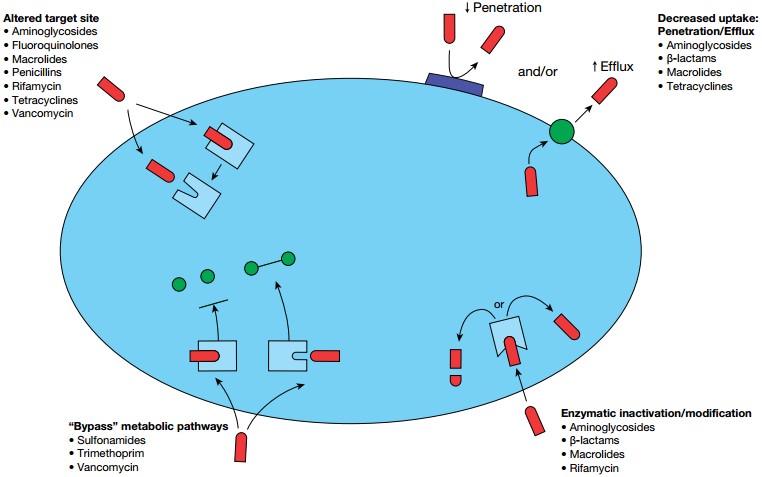 Figure 3. Overview of the four major mechanisms of antibiotic resistance, and antibiotic classes affected by each mechanism
(Source: LaPlante KL, et al. 2022)
The earliest tetracyclines were produced by actinomycetes, and the first tetracycline used in the clinic was chlortetracycline produced by Streptomyces aureus. Over the next two decades, other tetracyclines, such as methacycline, rolitetracycline, lymecycline, doxycycline, and minocycline, were also produced by streptomycetes as natural products or semisynthetic derivatives with improved antimicrobial potency, antimicrobial spectrum, solubility, oral bioavailability.
Tetracyclines share a core chemical structure and they differ in that the side group molecules are different. Tetracyclines can be categorized into several generations depending on the method used to develop the drug; the first generation is obtained by biosynthesis, the second is a semi-synthetic drug, and the third is a fully synthetic product. Oral bioavailability of second-generation drugs has improved compared to first-generation drugs, but most drugs still do not escape drug efflux and ribosome-protecting protein resistance mechanisms. Third-generation drugs increase antibiotic activity to overcome major tetracycline resistance mechanisms by designing more complex side chains.
Table 1. Tetracyclines—classification into generations
| Generations | Obtaining Method | Representatives |
| First | Biosynthesis | Chlortetracycline, oxytetracycline, tetracycline, demeclocycline |
| Second | Semi-synthesis | Doxycycline, minocycline, lymecycline, meclocycline, methacycline, rolitetracycline |
| Third | Semi-synthesis | Tigecycline, omadacycline, sarecycline |
| Total synthesis | Eravacycline |
(Source: Rusu A, et al. 2021)
Third-generation tetracyclines were developed to overcome growing bacterial resistance to antibiotics, and researchers focused on modifications to the C7 and C9 positions of the D-ring in the structure of sancycline in their development, leading to the discovery of a new class of C9-amino tetracycline drugs that carry a glycyl moiety known as glycylcycline. Modern tetracyclines include derivatives with broadly similar chemical structures: glycylcycline (tigecycline), aminomethylcycline (omadacycline), fluorocycline (eravacycline), and 7-[(methoxy-(methyl)-amino)-methyl]methyl] derivatives (sarecycline). Tigecycline is a synthetic derivative of minocycline and the first tetracycline to be used therapeutically in over 30 years. Thus, tigecycline can be regarded as the prototype of a new subclass of tetracyclines, a new type of tetracycline that has the advantage of superior efficacy against both Gram-positive and Gram-negative multidrug-resistant bacteria. Omadacycline belongs to the aminomethylcycline subclass and is one of the most popular tetracyclines available for oral and parenteral administration. It has broad-spectrum activity and has been shown to be effective against Gram-positive, Gram-negative, anaerobic and atypical bacteria in in vitro tests. Specially modified with the D-ring of eravacycline's naphtacen nucleus, chemically optimized eravacycline has significant activity against drug-resistant Gram-positive and Gram-negative bacteria and can be used to treat complex intra-abdominal infections in adults. Designed specifically for the treatment of acne, sarecycline is an oral formulation for the treatment of inflammatory lesions in moderate to severe non-nodular acne vulgaris. Compared to the older tetracyclines used for acne treatment, Sarecycline has higher selective activity against C. acnes bacteria and a lower likelihood of developing resistance.
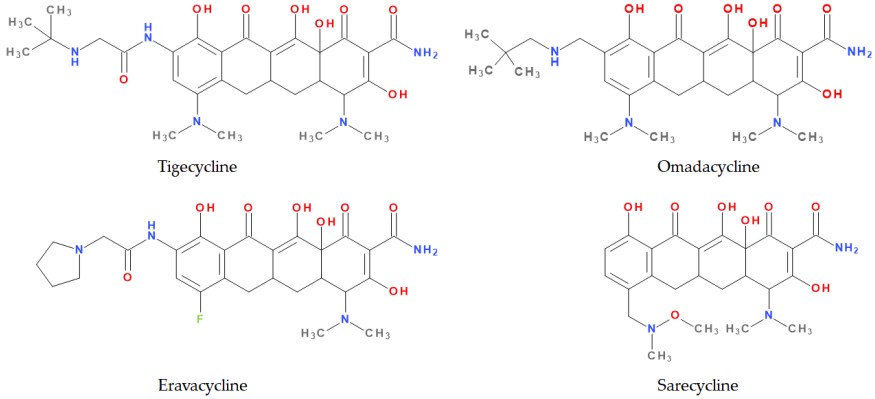 Figure 4. The chemical structure of the representatives of the third-generation tetracyclines
(Source: Rusu A, et al. 2021)
Tetracyclines are well tolerated, but there are some side effects such as frequent gastrointestinal disorders such as abdominal discomfort, nausea, vomiting and epigastric pain. In addition, typical side effects include photosensitization, manifested by erythema and skin blisters, tooth discoloration, and inhibition of bone growth in children. In rare cases, tetracyclines may cause increased intracranial pressure, nephrotoxicity, hepatotoxicity and Clostridium difficile infection. The most common side effects of third-generation tetracycline drugs are gastrointestinal symptoms, with mild to moderate nausea and vomiting possible during the first two days of treatment, and the possibility of diarrhea and colitis during the course of treatment, although side effects such as constipation, anorexia, and dyspepsia are less common. Due to the fetal toxicity and teratogenicity of tetracyclines, clinical use of tetracyclines in pregnant women is generally not recommended.
Tetracycline has been used clinically since as early as 1948, and it has a good antimicrobial effect against rickettsiae, chlamydia and mycoplasma. However, the drug also has certain side effects, the most characteristic of which is staining of teeth. Tetracycline-stained teeth are an oral condition caused by the unregulated use of tetracycline in a patient's early years. Tetracycline-affected teeth fluoresce yellow when exposed to ultraviolet light in dark environments, and researchers have found that the use of tetracycline in children under the age of 8 years old may result in permanent staining of the teeth (ranging from yellow to gray to brown). The staining effect of tetracycline on teeth is influenced by the dose, method of application, duration and the degree of activity of the mineralization stage of the teeth, and the risk of developing tetracycline teeth is significantly increased by taking a daily dose of more than 3g of the drug or by prolonged treatments. During the mineralization stage, tetracycline can bind to calcium ions in the teeth, which will oxidize and change color when exposed to sunlight, so that teeth change color from fluorescent yellow to non-fluorescent brown over time. Tetracycline exposure in children 10-14 months of age may result in staining of deciduous teeth, whereas it may result in staining of anterior permanent teeth in children 6 months to 6 years of age and staining of permanent teeth in children 8 years of age after exposure to tetracycline. With the gradual decrease in the use of tetracyclines, the incidence of tetracycline-stained teeth is decreasing every year. Treatments for tetracycline-stained teeth include micro-abrasion, bleaching, ceramic veneers, and full-coverage crowns, and the main direction of their aesthetic restoration is minimally invasive. The principle is to remove as little tooth structure as possible while obtaining as much aesthetic result as possible.
References
| Target | Cat. No. | Product Name | Size | Species Reactivity | Application | Detection Sample | |
| Tetracycline | DEIA046 | Tetracyclines ELISA Kit | 96T | N/A | Quantitative | Inquiry | |
| DEIA1040 | Tetracycline ELISA Kit | 96T | Chicken | Quantitative | Chicken | Inquiry | |
| Chlortetracycline | DEIA-XYZ27 | Chlortetracycline ELISA Kit | 96T | N/A | Quantitative | Honey, butter, whey, egg, cheese, milk, meat, meat | Inquiry |
| Oxytetracycline | DEIA-XYZ35 | Oxytetracycline ELISA Kit | 96T | N/A | Quantitative | Honey, butter, fermented milk, feed, egg, cheese, milk, meat, meat products (sausage), fish and shrim | Inquiry |
| Target | Cat. No. | Product Name | Expression System | Tag/Conjugate | Application | |
| Tetracycline | DAG1310 | Tetracycline(4) [HRP] | N/A | HRP | N/A | Inquiry |
| DAG4474 | Tetracycline [BSA] | N/A | BSA | N/A | Inquiry | |
| DISNJ06 | Tetracycline Standard (98%) | N/A | N/A | ELISA | Inquiry | |
| DAGA-054B | Tetracycline [BSA] | N/A | BSA | LFIA | Inquiry | |
| DAGA-059K | Tetracycline [KLH] | N/A | KLH | Immunogen | Inquiry | |
| DAG4474O | Tetracycline [OVA] | N/A | OVA | N/A | Inquiry | |
| DAG161S | Tetracycline [HSA] | N/A | HSA | ELISA | Inquiry | |
| DAG472S | Tetracycline [HSA-Biotin] | N/A | HSA-Biotin | ELISA | Inquiry | |
| Oxytetracycline | DISNJ07 | Terramycin Standard | N/A | N/A | ELISA | Inquiry |
| DAGS039 | 4-epi-Oxytetracycline standard | N/A | N/A | ELISA | Inquiry | |
| Chlortetracycline | DISNJ28 | Chlortetracycline Standard (98%) | N/A | N/A | ELISA | Inquiry |
| DAG-WT076 | Chlortetracycline [HRP] | N/A | HRP | N/A | Inquiry | |
| DAG-WT077 | Chlortetracycline [BSA] | N/A | BSA | N/A | Inquiry |
| Target | Cat. No. | Product Name | Host | Isotype | Application | |
| Tetracycline | HMABPY060 | RHA™ anti-Tetracycline monoclonal antibody, clone TC | Mouse | IgG | ELISA, LFIA | Inquiry |
| CABT-L2386 | Mouse Anti-Chlortetracycline monoclonal antibody, clone CTC | Mouse | IgG | ELISA, LFIA | Inquiry | |
| DPATB-H82186 | Anti-Tetracycline polyclonal antibody | Sheep | IgG | cELISA | Inquiry | |
| DCABH-201835 | Anti-Tetracycline monoclonal antibody | Sheep | ELISA, WB, Dot, IHC, IA | Inquiry | ||
| DPABY-990 | Anti-Tetracycline polyclonal antibody | Sheep | Dot, ELISA, Pr*, IHC, WB | Inquiry | ||
| DPAB-DC4814 | Anti-Tetracycline polyclonal antibody | Sheep | EIA | Inquiry | ||
| DMAB8851 | Anti-Tetracycline monoclonal antibody, clone K88Y88 | Mouse | ELISA, LFIA | Inquiry |
Loading ......
