
Inquiry Basket
 Loading ......
SUMO (Small Ubiquitin-like Modifier), an 100-residue protein, modulates protein structure and function by covalent modification of target proteins in eukaryotes. This process is called SUMOylation. SUMOylation is a post-translational modification involved in various cellular processes, such as nuclear-cytosolic transport, transcriptional regulation, apoptosis, protein stability, response to stress, and progression through the cell cycle.
Small ubiquitin-like modifier (SUMO) protein (-11 kDa) has been shown to significantly improve protein stability and solubility as an N-terminal fusion. The SUMO tag can be removed after purification using SUMO protease (catalytic domain of Ulp1) that recognizes the SUMO structure. The SUMO-fusion system has also been adapted for use in insect cells and other eukaryotic expression systems.
Production of recombinant proteins routinely encounters problems, including formation of inclusion bodies, incorrect protein conformation, toxicity to the host cell, and low protein yield. These issues are most often addressed by using an alternative host or genetically fusing the protein of interest (POI) to a carrier protein (fusion tag). Attachment of the C-terminus of SUMO (Small Ubiquitin Like Modifier) to the N-terminus of a protein of interest can dramatically improve protein solubility, achieve native protein folding, and increase total yield by improving expression and decreasing degradation.
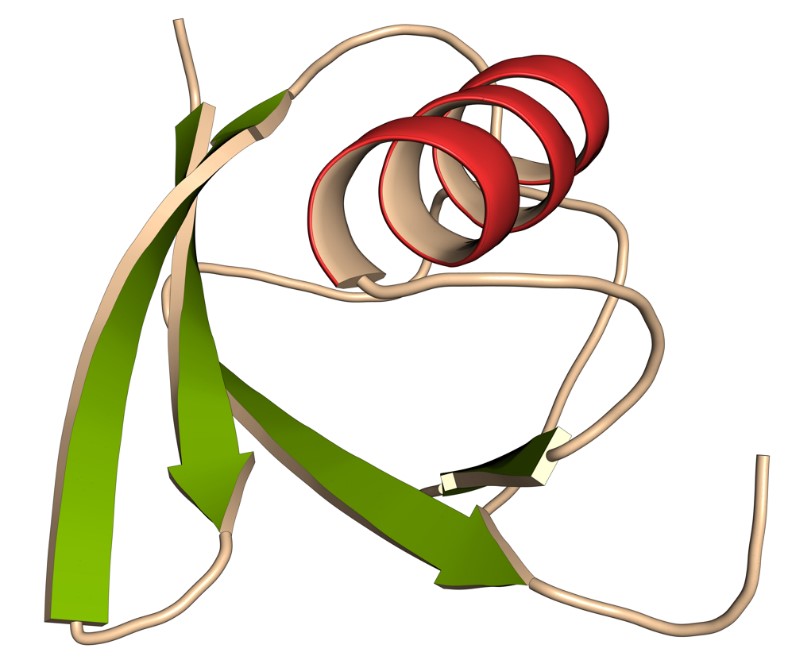 Fig 1. SUMO (Small Ubiquitin-like Modifier, SUMO-1) protein
Unlike GST and MBP, SUMO does not itself serve as a means for purification of fusion proteins; however, the His6 in series with the SUMO tag has been established to facilitate purification of fusion proteins. One unique advantage of the SUMO tag over other expression-enhancing carrier proteins is a specific SUMO protease (S. cerevisiae UlpI), which recognizes and removes the SUMO tag at a Gly-Gly motif. The wild-type SUMO tag is an excellent carrier protein in prokaryotic expression systems but is efficiently removed in eukaryotes in vivo by naturally occurring SUMO proteases.
In its native system, small ubiquitin-like modifier (SUMO) protein, Saccharomyces cerevisiae Smt3, is a form of post-translational modification that plays roles in nuclear-cytosolic transport, apoptosis, protein activation, and stability, response to stress, and the cell cycle. When used as an N-terminal carrier protein during prokaryotic expression, SUMO promotes folding and structural stability, which leads to enhanced functional production compared to untagged protein.
There are 4 confirmed SUMO isoforms in humans; SUMO-1, SUMO-2, SUMO-3 and SUMO-4. The SUMO pathway is highly conserved in eukaryotes and notably absent in prokaryotes. Yeast has a single SUMO gene (SMT3), while three genes have been described in vertebrates (SUMO-1, SUMO-2, and SUMO-3). The three human SUMOs are highly homologous, with human SUMO-1 sharing 50% sequence identity with human SUMO-2 and SUMO-3, and human SUMO- 2 and SUMO-3 sharing 87% sequence identity with each other. SUMO shares 47%sequence identity with human SUMO-1.
Human SUMO1 has been identified by many different names such as sentrin, PIC1 (promyelocytic leukemia protein interacting protein 1), GMP1, UBL1 (Ub-like protein 1), and Smt3C. Human SUMO2 (sentrin 3, Smt3a) and human SUMO3 (sentrin 2, Smt3b) are closely related and share 87–95% identity in their amino acid sequence. They are more distally related with SUMO1, the amino acid sequence identity being close to 50%. SUMO2 and SUMO3, but not SUMO1, have the consensus SUMO-modification site (ψKXD/E, where ψ is a hydrophobic amino acid and X may be any amino acid) at their N-terminus, so that they can form poly-SUMO chains.
Reference
| Target | Cat. No. | Product Name | Expression System | Tag/Conjugate | Application | |
| SUMO1 | DAG-P2004 | Human SUMO1 peptide | N/A | Unconjugated | ELISA | Inquiry |
| Target | Cat. No. | Product Name | Size | Application | Detection Sample | |
| SUMO1 | DEIA-XYA1705 | Sumo1 ELISA Kit | 96T | Qualitative | cultured cells | Inquiry |
| SUMO2 | DEIA-FN1485 | Human SUMO2 (Small Ubiquitin Related Modifier 2) ELISA Kit | 96T | Quantitative | serum, plasma, cell culture supernatants, tissue homogenate | Inquiry |
Loading ......
