
Inquiry Basket
 Loading ......
Rabies is an ancient zoonotic infectious disease caused by rabies virus (RABV). It is mainly transmitted through rabies dogs and has affected people for decades. Worldwide, more than 59,000 people die from rabies every year, the vast majority in developing countries in Asia and Africa. Although some important progress has been made in the prevention and elimination of rabies, there are still many unknowns about the pathogenesis of RABV and the mechanism of evading the host immune response, which affects the clinical treatment and efficient prevention and control of rabies. This article focuses on the latest progress in the molecular mechanisms of RABV in evading the host's natural immune response in recent years.
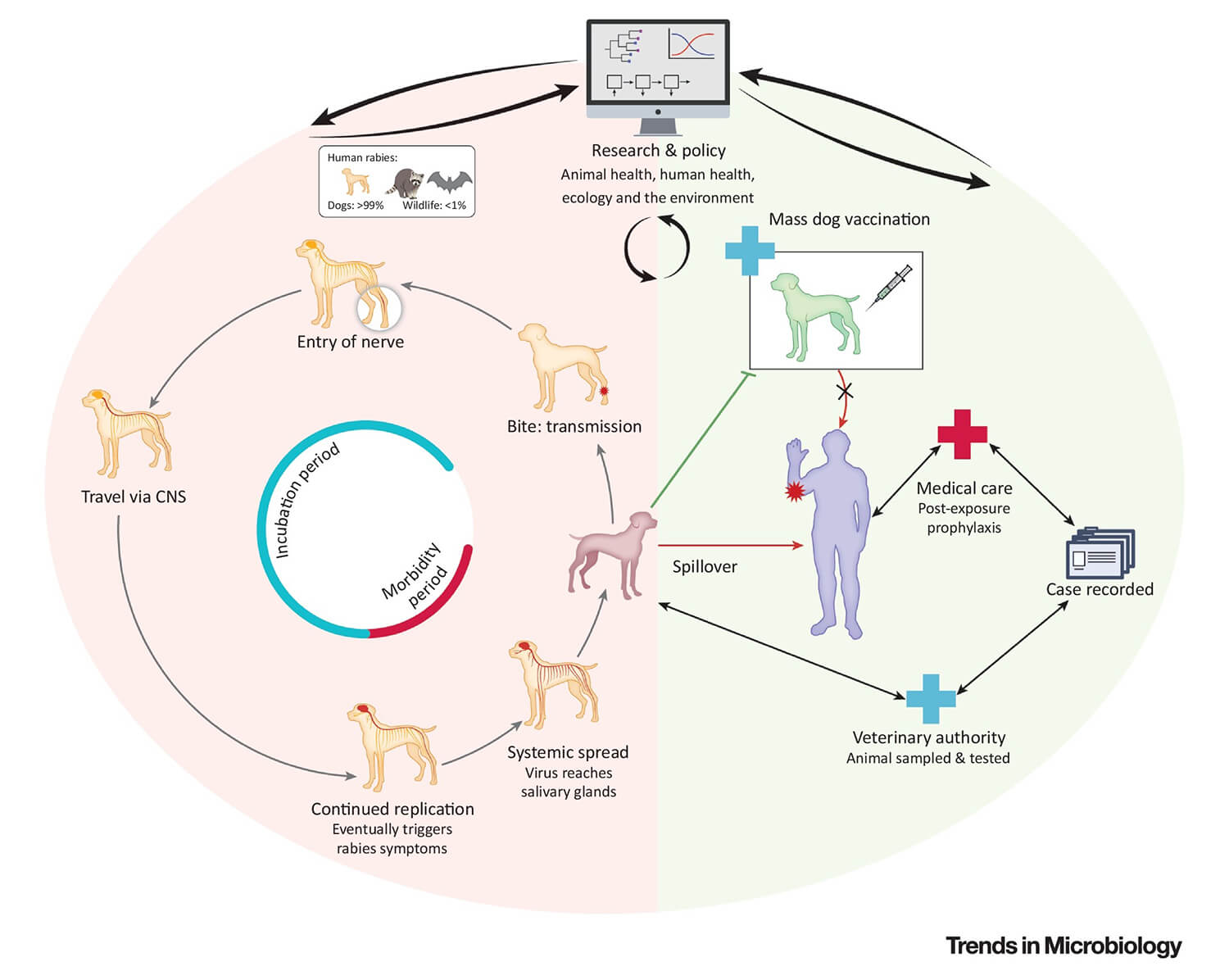 Figure 1. Transmission cycle of rabies virus in domestic dogs. (Brunker K, et al.; 2018)
RABV is the pathogen that causes rabies. It belongs to the family Rhabdoviridae and the genus Lyssavirus. Its genome is a single-stranded negative-sense RNA with a full length of about 12,000 nt. It encodes 5 structural proteins from the 3' end to the 5' end of the genome: nucleoprotein (N), phosphoprotein (P), matrix protein (M), glycoprotein (G), polymerase (L). N protein wraps the viral genome, making it inaccessible to cellular components; P protein is a cofactor of RNA polymerase and a partner protein of N protein; M protein is involved in the assembly and budding of the virus; G protein is a surface membrane protein, involved in receptor Recognition and membrane solubilization; L protein is viral RNA polymerase. The RNA, N protein, P protein and L protein of RABV together form the ribonucleosome (RNP), which is the core component of RABV transcription and replication. RABV mainly enters the wound site of the body through the saliva of infected animals. After a brief incubation in muscle cells, it enters the peripheral nervous system at the neuromuscular junction. After reaching the dorsal root ganglion, the virus multiplies in large numbers, then invades the spinal cord and finally enters the bain, clinical symptoms appear soon after entering the brain. RABV infects almost all mammals. Once the host becomes infected, almost 100% of the hosts die. There is currently no practical treatment. RABV strains are divided into virulent strains and attenuated strains, of which virulent strains include fixed viruses and street viruses. Viruses isolated from the brains of animals that died of rabies are called street viruses; viruses that can still kill adult rats after a series of passages and have a relatively fixed death time are called fixed viruses; after a series of complex domestication processes, A virus that loses its ability to kill adult mice is called attenuated. Attenuated strains of RABV can be recognized by the host's immune system and activate downstream immune responses, while street strains can escape the host's immune response and cause death of the host. During the process of infecting the host, each protein of RABV plays different roles in evading the host immune system.
The immune system of higher mammals includes the innate immune response system and the acquired immune response system. Natural immunity is the first line of defense that the host possesses at birth to defend against the invasion of foreign pathogenic microorganisms. The host recognizes pathogens through pattern recognition receptors (PRRs), produces interferons and a series of cytokines to resist pathogen invasion, and initiates an adaptive immune response. Acquired immunity uses immune cells to specifically recognize pathogens invading the body and produce antibodies or other immune factors to eliminate foreign pathogenic microorganisms. Viral immune evasion means that in order to survive, the virus escapes the host's immune response, resulting in the host's immune system being unable to effectively recognize and eliminate the virus. In the long-term game with the host, RABV has evolved a variety of immune evasion mechanisms to escape the host's natural immune response, so that it can replicate in the central nervous system (CNS), the immune privileged area of the body, causing serious damage or even death to the body.
N protein is an important component of RNP and participates in the encapsidation of genomic RNA. The N-terminal domain (NTD) and C-terminal domain (CTD) of N protein sandwich the genomic RNA strand and completely wrap it. Encapsidation of genomic RNA helps protect viral RNA from recognition by the host's innate immune system, especially Toll-like receptors (TLRs) and retinoic acid-inducible gene-like receptors (RLRs). Street strains of rabies can escape the recognition of host RIG-I by restricting dsRNA produced during virus replication, but the specific mechanism of restricting viral dsRNA requires further study. N protein is an effective inhibitory molecule for retinoic acid-inducible gene I (RIG-I) activation. A series of in vivo and in vitro experiments have confirmed that the inhibitory effect of N protein on RIG-I has nothing to do with viral genomic RNA. The N gene of the pathogenic strain Nishigahara (Ni strain) was replaced and inserted into the attenuated strain Ni-CE strain to construct the CE (NiN) strain. Compared with the attenuated strain Ni-CE strain, the inhibitory effect of CE (NiN) and Ni strain on innate immune response was significantly enhanced, especially the inhibitory effect on IFN-β and cytokine ligand 10 (CXCL10). The inhibitory effect of Ni strain N protein helps inhibit RIG-I activation and the expression of interferon regulatory factor 3 (IRF-3) and downstream interferon-stimulated genes (ISGs). The inhibition of RIG-I activation by N protein is relatively independent and does not depend on the inhibition of STAT1 (signal transducer and activator of transcription 1) and STAT2, nuclear transport and dimerization of IRF3 by P protein. Therefore, the N protein is an important factor for RABV to escape the host's natural immune response and enhances the replication of the virus in the brain and central nervous system, thereby increasing the body's morbidity and mortality.
P protein mainly includes five forms: full-length P protein and truncated forms of P2, P3, P4, and P5 proteins. Different forms of P protein have different cellular localizations and different ways of functioning. P protein mainly inhibits the interferon signaling pathway through three relatively independent pathways, thereby weakening the body's natural and acquired immune responses. The ability to inhibit interferon determines the pathogenicity of the virus and its ability to evade the host's immune response. Weak RABV has a weak ability to inhibit interferon, while strong RABV has a strong ability to inhibit interferon. Recent studies have shown that host BECN1/Beclin1 can bind to P protein during RABV infection, thereby inducing incomplete autophagy. However, the impact of autophagy induction on the innate immune response is unclear.
During RABV replication, the main function of the M protein is to recruit RNP and fix it to the cell membrane, which facilitates the budding of the enveloped virus. To ensure efficient replication and diffusion, M protein interacts with eukaryotic initiation factor 3 (eIF3), which facilitates "hijacking" the host transcription and translation system. M protein can be localized in mitochondria and participate in the apoptosis process. In order to facilitate viral replication and efficient budding, the late budding domain of M protein can bind to ubiquitin ligase, which plays an important role in innate immune responses. Recent studies have shown that M protein is involved in autophagy triggered by RABV street virus in NA cells. The stimulation of autophagy may facilitate RABV replication and budding, and at the same time reduce apoptosis caused by viral infection. The above studies show that in order to facilitate its own transcription and replication, RABV "hijacks" the host's transcription and translation system through M protein and limits the stimulation of innate immune responses.
G protein is the ligand that binds the virus to host cells and is the only protein that induces neutralizing antibodies in the host. It is closely related to the virulence and pathogenicity of the virus and is the main protective antigen of RABV. The expression of G proteins of different RABV strains is positively correlated with the level of host apoptosis induced by the virus, and negatively correlated with the strength of the innate immune response stimulated by the virus. Studies have shown that G protein is an important molecule for RABV to stimulate innate immunity. Compared with attenuated RABV strains, RABV street strains have lower G protein expression levels and lower glycosylation levels, which induce the level of apoptosis and innate immunity is also lower. DCs play a key role in immune protection against rabies, and RABV street virus can escape the activation of DCs. Studies have shown that RABV attenuated G protein can activate DCs, thereby causing the body's immune response and producing neutralizing antibodies; while RABV street virus can inhibit the expression and packaging of its own G protein, reduce the ability to invade DCs, and reduce the transcription level of lead RNA, thus escape the host's natural immune recognition. Therefore, inhibiting the expression and packaging level of its own G protein is an important strategy for RABV street virus to evade host immune recognition. However, the detailed mechanism of RABV street virus inhibiting G protein expression and packaging is currently unclear, and further research is needed.
In addition to RNA-dependent RNA polymerase activity (RDRP), L protein also functions as an mRNA capping enzyme. RABV has a non-classical capping mechanism. It can use the host's transcription and translation system to cap the 5' end of viral mRNA and perform 7-N- and 2'-O-methylation of the cap structure. 2'-O-methyl ionization can cause the host's natural immune recognition molecules (mainly MDA5 and IFIT1/2) to be unable to distinguish between viral mRNA and self-mRNA, thereby evading the host's natural immune recognition. Recent research shows that mutating key viral mRNA methylation sites in the L protein will significantly reduce the pathogenicity of RABV in mice. The level of interferon produced by the mutated virus does not increase, but it is more sensitive to IFIT2. Significant improvement, which provides new ideas for the development of new rabies vaccines.
Reference
| Target | Cat. No. | Product Name | Expression System | Tag/Conjugate | Application | |
| Rabies Virus | DAGC695 | Native RABV Antigen | Human diploid cells | Unconjugated | Immunogen, WB, ELISA | Inquiry |
| Rabies virus | DAGF-021 | Recombinant Rabies virus Glycoprotein (aa 20-458)[His] | E. coli | His | WB, Standard, ELISA, Immunogen | Inquiry |
| Target | Cat. No. | Product Name | Size | Species Reactivity | Application | Detection Sample | |
| RABV | DEIA-NS2310-2 | Human Rabies Virus Antibody (IgG) ELISA Kit | 96T | Human | Quantitative | serum and plasma | Inquiry |
| DEIA-RV2310-6 | Rabbit Anti-Rabies Virus IgM ELISA kit | 96T | Rabbit | Quantitative | Rabbit serum | Inquiry | |
| DEIA-RV2310-7 | Monkey Anti-Rabies IgG ELISA Kit | 96T | Monkey | Quantitative | Serum, plasma or other biological fluids | Inquiry | |
| DEIA-RV2310-9 | Rabbit Anti-Rabies Virus IgG ELISA Kit | 96T | Rabbit | Quantitative | Rabbit serum | Inquiry | |
| DEIA-RV2310-14 | G. Pig Anti-Rabies Virus IgG ELISA Kit | 96T | Guinea pig | Quantitative | serum or plasma | Inquiry | |
| DEIA-RV2310-15 | Rabies Virus Vaccine ELISA Kit | 96T | N/A | Quantitative | vaccines formulated in Aluminum hydroxide or Alum gel | Inquiry | |
| DEIA-RV2310-17 | Human Anti-Rabies NP IgG ELISA Kit | 96T | Human | Quantitative | Serum/Plasma/Biological Samples | Inquiry | |
| DEIA-RV2310-18 | Mouse Anti-Rabies NP IgG ELISA Kit | 96T | Mouse | Quantitative | Serum/Plasma/Biological Samples | Inquiry | |
| DEIA-RV2310-19 | Rabbit Anti-Rabies NP IgG ELISA Kit | 96T | Rabbit | Quantitative | Serum/Plasma/Biological Samples | Inquiry | |
| DEIAHRVPY28 | Human Anti-RVG IgG ELISA Kit | 96T | Human | Quantitative | Serum/Plasma or other biological fluids | Inquiry | |
| Rabies Virus | DEIA1027 | Human Rabies Virus antibody IgG ELISA Kit | 96T | Human | Quantitative | serum, plasma | Inquiry |
Loading ......
