
Inquiry Basket
 Loading ......
A parasite disease called malaria is brought on by Plasmodium species and is mostly spread by the bite of an infected female Anopheles mosquito. Particularly in areas like Africa, Asia, and Latin America, the illness represents a serious threat to global public health. The World Health Organization estimates that 435,000 people died from malaria in 2017, with the majority of those deaths being children, and that 219 million individuals contracted the disease. Despite continuous international efforts to prevent and manage malaria, the disease's incidence and mortality rates are still high, particularly in tropical regions where it is endemic. The study of malaria has advanced recently, revealing new information on its etiology, spread, prevention, and management.
Malaria has been around for thousands of years. The Huangdi Neijing in China (2700 BCE) and the Ebers Papyrus in Egypt (c. 1550 BCE) contain the first known accounts of malaria. In the 4th century BCE, Hippocrates made the first connection between malaria and swampy regions, an association that lasted until the 19th century. Alphonse Laveran, a French physician who won the Nobel Prize in Medicine in 1907, identified Plasmodium parasites in the blood of malaria victims in 1880.
The primary pathogen of malaria is the Plasmodium parasite, a complex intracellular organism that reproduces and circulates within the human host after being transmitted by mosquitoes. There are five major Plasmodium species that can infect humans: Plasmodium falciparum, Plasmodium malariae, Plasmodium vivax, Plasmodium ovale, and Plasmodium knowlesi. Among them, Plasmodium falciparum causes the most severe form of malaria and is responsible for the majority of malaria-related deaths, while Plasmodium vivax is associated with widespread non-lethal infections. In Southeast Asia, the zoonotic transmission of Plasmodium knowlesi has also garnered increasing attention from the scientific community.
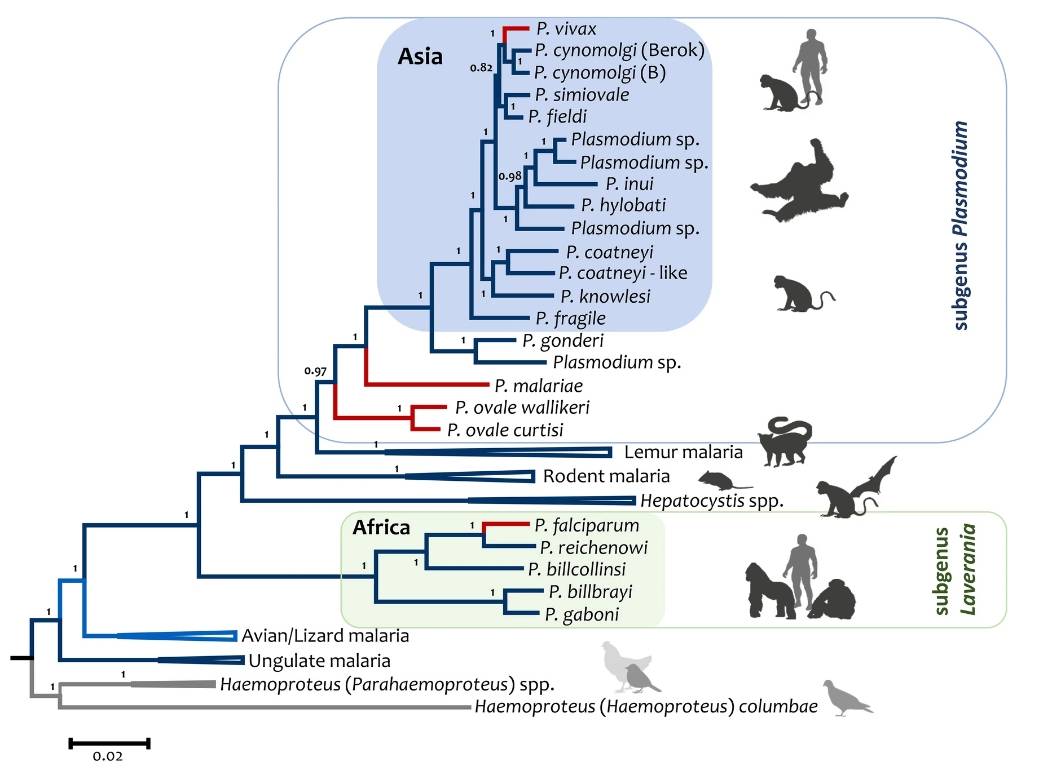 Figure 1. Phylogenetic tree of the Plasmodium genus
(Source: Escalante, A.A., et al, 2022)
The life cycle of Plasmodium is highly complex, involving two hosts: humans and mosquitoes. The sexual reproduction stage occurs within the mosquito, while asexual reproduction takes place in the human host. Malaria transmission begins when an infected female Anopheles mosquito bites a human, injecting Plasmodium sporozoites into the bloodstream. These sporozoites quickly invade liver cells and undergo the first round of replication, producing thousands of merozoites. Merozoites are then released into the bloodstream, where they infect red blood cells, causing their rupture and releasing more merozoites to infect new red blood cells. This process triggers clinical symptoms of malaria, such as fever, chills, and anemia.
 Figure 2. Structure and function of Plasmodium invasion proteins
(Source: Kumar H, et al, 2019)
Malaria is a global issue, but its burden is unevenly distributed. Africa bears over 90% of the world's malaria cases and deaths, particularly among children in sub-Saharan Africa. Plasmodium falciparum is most prevalent in these regions, leading to severe complications and high mortality rates. However, in recent years, the spread of malaria has become more complex, and global attention has increasingly focused on other Plasmodium species. For example, Plasmodium vivax is prevalent in the Americas and Southeast Asia, contributing to an underestimated malaria burden, while Plasmodium knowlesi has emerged as a significant zoonotic infection in Southeast Asia.
Malaria symptoms usually appear 7 to 30 days after infection, depending on the Plasmodium species. Typical symptoms include periodic fever, chills, sweating, headaches, nausea, and vomiting. Malaria caused by Plasmodium falciparum progresses rapidly and, if left untreated, can lead to severe complications such as cerebral malaria, acute respiratory distress syndrome (ARDS), kidney failure, and death. On the other hand, Plasmodium vivax and Plasmodium ovale can form dormant hypnozoites in the liver, which can reactivate months or even years later, causing malaria relapses
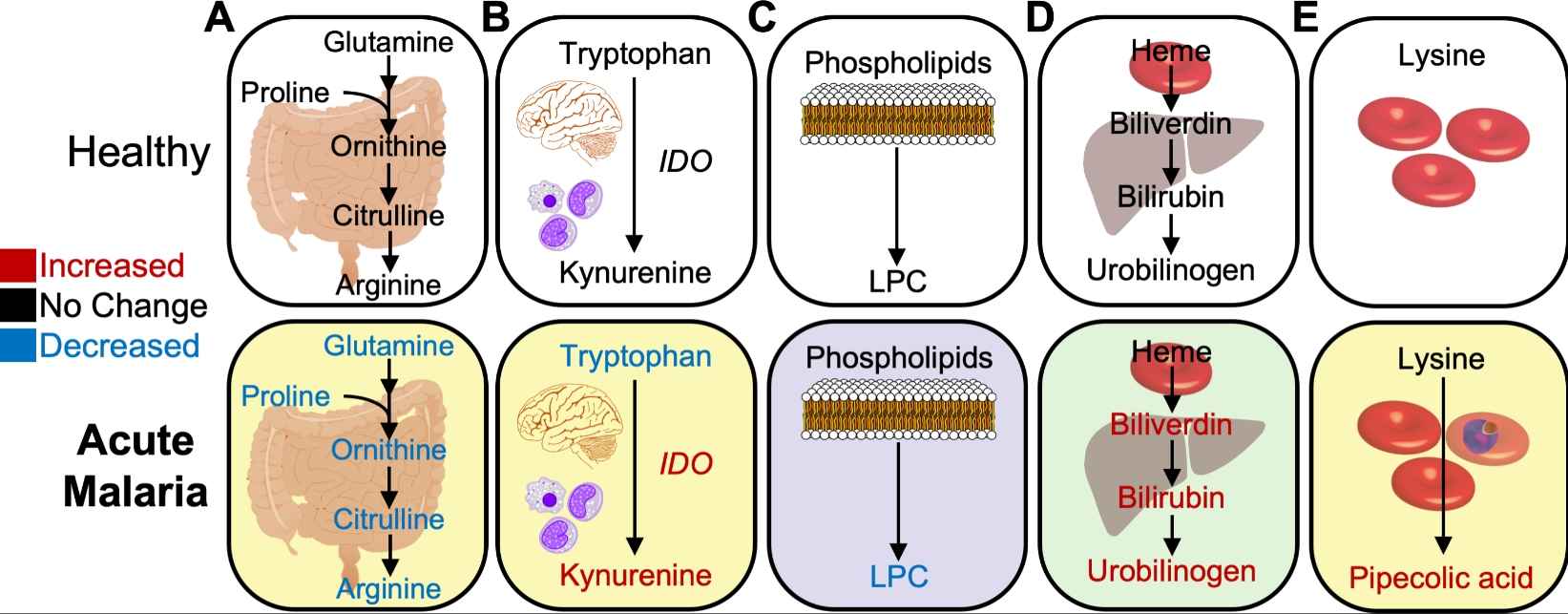 Figure 3. Example of disrupted host metabolic pathways during acute malaria
(Source: Colvin HN, et al, 2020)
The fight against malaria faces numerous challenges, the most critical of which is drug resistance. Since the mid-20th century, chloroquine was the drug of choice for treating malaria. However, over time, Plasmodium falciparum rapidly developed resistance to chloroquine. Currently, artemisinin-based combination therapies (ACTs) are the standard treatment for Plasmodium falciparum malaria, but resistance to artemisinin has been reported in some parts of Southeast Asia. The development of drug resistance has posed a major challenge to malaria treatment, driving scientists to explore new therapeutic approaches.
In terms of prevention, one of the most effective measures is the use of insecticide-treated bed nets (ITNs) and indoor residual spraying (IRS) to reduce mosquito transmission. Vaccine development is another crucial focus in malaria prevention. In 2021, the WHO approved the widespread use of the RTS, S/AS01 malaria vaccine, which specifically targets Plasmodium falciparum and has shown moderate efficacy in trials in sub-Saharan Africa. However, the vaccine's limited efficacy, particularly in light of the spread of drug resistance, underscores the need for the development of more effective vaccines in the future.
In recent years, advances in gene-editing technologies have opened new avenues for malaria control. Scientists are exploring the use of gene drive technology to manipulate mosquito populations and reduce malaria transmission risk. This method involves altering the mosquito genome to carry traits unfavorable for Plasmodium transmission, thereby suppressing the disease at the genetic level. However, this approach faces biosecurity and ethical challenges that need to be addressed before widespread implementation.
Malaria control and elimination remain long-term goals for global health initiatives. Despite a decline in malaria incidence since the 20th century, particularly in parts of South America and Asia, the disease remains a leading cause of morbidity and mortality in many African countries. International collaborative efforts, such as the Global Malaria Programme, are continuously working towards these objectives. Future research will focus on several key areas: 1) developing more effective antimalarial drugs to combat drug resistance; 2) improving vaccine efficacy, particularly for children; 3) enhancing mosquito control strategies to reduce transmission; and 4) advancing new technologies such as gene drives to manage mosquito populations. Through these concerted efforts, the global community aspires to achieve the control and eventual eradication of malaria in the coming decades.
In summary, malaria is a severe public health issue characterized by complex pathogenesis, rapidly evolving drug resistance, and widespread global prevalence. However, with ongoing scientific advancements, future malaria control strategies are expected to address these challenges more effectively.
References
| Target | Cat. No. | Product Name | Size | Species Reactivity | Application | Detection Sample | |
| Malaria | DEIABL353 | Malaria-Ab ELISA Kit | 96T | Human | Qualitative | Human serum or plasma (citrate, heparin). | Inquiry |
| DEIA1929 | Human Malaria ELISA Kit | 96T | Human | Qualitative | Human serum or plasma | Inquiry | |
| DEIA2220 | Malaria Antigen ELISA Kit | 192T | Plasmodium | Qualitative | Blood samples, culture samples | Inquiry |
Loading ......
