
Inquiry Basket
 Loading ......
Newcastle disease virus (NDV) belongs to the family Paramyxoviridae, subfamily Paramyxinae, and genus Mumps virus. It is a single stranded non segmented negative stranded RNA virus. It was first discovered in Java, India in 1926, and the following year it was discovered and named after New Castle on the banks of the River Tyne in England. Virus particles have various forms (such as tadpole shaped and circular), with a diameter of about 100-500nm. They have an envelope and protein like spikes can be seen on the surface of the envelope. The nucleic acid length is about 15kb, and the entire sequence contains six genomes, namely NP, HN, M, F, P, L, etc. And viruses can be divided into two categories: weak strains and strong strains. The agglutination ability of NDV on red blood cells can be inhibited by anti Newcastle disease serum, and this inhibitory effect is specific.
Newcastle disease virus (NDV) belongs to the family Paramyxoviridae, subfamily Paramyxinae, and genus Mumps virus. It is a single stranded non segmented negative stranded RNA virus. It was first discovered in Java, India in 1926, and the following year it was discovered and named after New Castle on the banks of the River Tyne in England. Virus particles have various forms (such as tadpole shaped and circular), with a diameter of about 100-500nm. They have an envelope and protein like spikes can be seen on the surface of the envelope. The nucleic acid length is about 15kb, and the entire sequence contains six genomes, namely NP, HN, M, F, P, L, etc. And viruses can be divided into two categories: weak strains and strong strains. The agglutination ability of NDV on red blood cells can be inhibited by anti Newcastle disease serum, and this inhibitory effect is specific.
The Newcastle disease virus can enter the body through the digestive tract or respiratory tract, as well as through the conjunctiva, injured skin, and cloaca mucosa. The virus quickly reproduces at the site of invasion within 24 hours and then enters the bloodstream to spread throughout the body, causing viremia. At this point, the virus adsorbs onto the cells, causing red blood cells to aggregate, swell, and subsequently undergo hemolysis. At the same time, the virus also causes serious damage to the heart and vascular system, leading to myocardial degeneration and heart failure, thereby causing high levels of circulatory disorders. Due to capillary permeability necrotic inflammation, severe digestive disorders and diarrhea are clinically manifested. In the respiratory tract, mainly catarrhal inflammation and bleeding occur, causing the trachea to be blocked by exudate of mucus, resulting in high respiratory distress. In the later stages of the disease, the virus invades the central nervous system, often causing changes in non purulent encephalitis and leading to neurological symptoms.
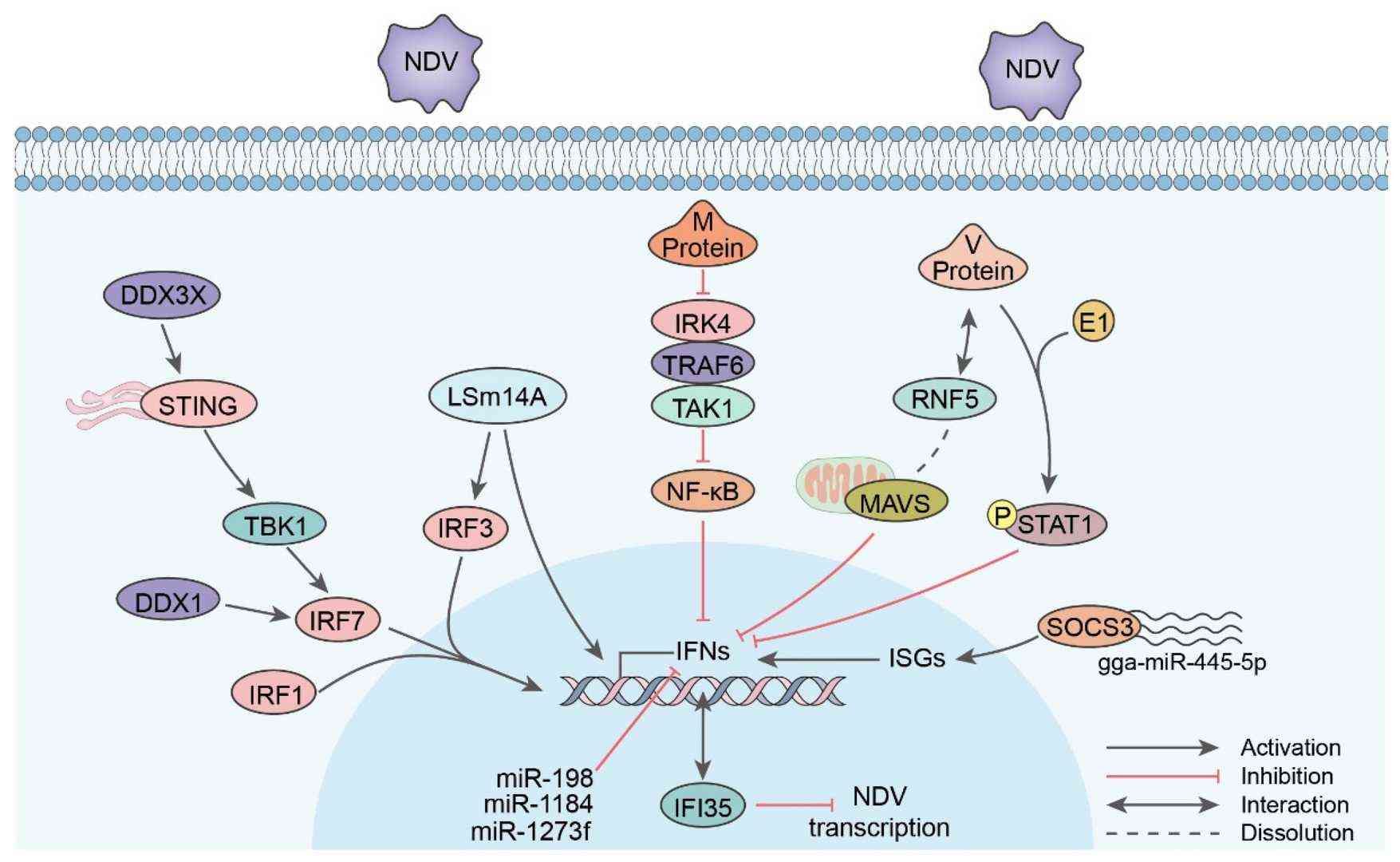 Figure 1. Pathologic Mechanisms of the Newcastle Disease Virus.( Zhang, Di, et al. 2023)
Newcastle disease virus is an avian paramyxovirus type I (APMV-1) of the Avulavirus genus in the family Paramyxoviridae. The virus exists in all tissues, organs, body fluids, secretions, and excretions of diseased poultry, with the highest virus content in the brain, spleen, and lungs, and the longest virus duration in the bone marrow. Strong resistance under low temperature conditions, able to survive for 12 years at 4 ℃ and over 10 years at -20 ℃. Vacuum freeze-dried viruses can be stored for 30 days at 30 ℃ and 230 days at 15 ℃. There are significant differences in the stability of different strains to heat. The virus has weak resistance to disinfectants, sunlight, and high temperatures. The commonly used concentration of disinfectants can quickly kill it. Many factors can affect the effectiveness of disinfectants, such as the number of viruses, the type of strain, temperature, humidity, sunlight exposure, storage conditions, and the presence of organic matter. The presence of organic matter and low temperature have the greatest impact.
The molecular interplay between NDV and host involves critical viral proteins and host factors essential for the viral life cycle and immune response. Understanding these interactions provides key insights for developing antiviral strategies and vaccines. The Newcastle Disease Virus antibody (NDV Ab) ELISA Kit exemplifies practical application of these interactions. Newcastle disease virus positive serum serves as a crucial reagent in this context, containing polyclonal antibodies against various NDV proteins. It acts as a positive control in serological assays like ELISA and HI tests, and is indispensable for research applications including immunohistochemistry and neutralization studies. Designed for NDV antibody detection in chicken samples, these kits typically employ indirect or competitive ELISA formats to monitor vaccine efficacy and conduct serological surveillance.
| Target Name | Type | Description / Function | Research & Therapeutic Significance |
| HSP90β | Host Factor | A host heat shock protein that interacts with the viral L protein. | Critical for NDV proliferation; inhibition of HSP90β destabilizes the L protein and reduces viral replication. |
| GSK-3β | Host Factor | Glycogen synthase kinase-3 beta, a host kinase. | Inhibition of GSK-3β activates the Wnt/β-catenin pathway, boosting interferon and interferon-stimulated gene (ISG) expression to inhibit NDV. |
| TMPRSS2 | Host Factor | A transmembrane serine protease. | Insertion into the NDV genome can alter cell tropism, allowing viral replication in cells without exogenous trypsin, a potential tool for vaccine development. |
| Cellular miRNAs | Host Factor | Small non-coding RNAs that regulate gene expression. | Can target viral genes and inhibit replication; also involved in regulating host antiviral genes like TGM2. |
| Clinical Symptoms | Details |
| Rapid visceral type (VVND) | Sudden onset of illness, sometimes chickens die without showing any symptoms. At first, the sick chicken was exhausted, with increased breathing, weakness, and pre death exhaustion, and died within 4-8 days. Common swelling of tissues around the eyes and throat, accompanied by green and sometimes bloody stools. The mortality rate can reach over 90%. |
| Rapid onset lung brain type (NVND) | Obvious respiratory distress, coughing, and wheezing are visible. Sometimes you can hear the sound of panting or sudden strange noises, followed by a state of unconsciousness. Decreased appetite, unwillingness to walk, drooping head and necking, decreased or stopped egg production. Within one or two days or later, neurological symptoms such as leg or wing paralysis and neck torsion may appear. |
| Moderate Newcastle Disease (MND) | It is mainly characterized by acute respiratory symptoms in adult chickens, with coughing as the main feature, but rarely wheezing. Sick chickens have decreased appetite, reduced egg production, and may stop laying eggs. Suspending egg production may last for 1-3 weeks, and occasional sick chickens may not be able to restore normal production, affecting the quality of eggs. |
| Delayed type Newcastle disease (LND) | In adult chickens, symptoms may not be obvious and can be caused by less virulent strains, resulting in a mild or asymptomatic respiratory infection. Chickens of all ages rarely die, but the mortality rate can reach 30% when chicks develop other infectious diseases. |
Due to virus invasion of the cardiovascular system, it causes severe circulatory disorders, leading to systemic inflammatory bleeding and edema. In the later stages of the disease, the virus invades the central nervous system, often causing changes in non purulent encephalitis and leading to neurological symptoms. Gastrointestinal lesions are most characterized by the glandular stomach, small intestine, and cecum. Swelling, bleeding, or ulceration of the glandular gastric papilla. Enlargement, bleeding, and necrosis of the cecal tonsils. The respiratory tract is mainly characterized by catarrhal inflammation, tracheal congestion, and bleeding. There is serous or catarrhal exudate in the nasal, throat, and trachea. Weak strain infection, chronic or atypical cases may present with cystitis, thickening of the cyst wall, and catarrhal or caseous exudation. Egg laying chickens often have yolk leakage into the abdominal cavity, leading to yolk peritonitis, softening and degeneration of ovarian follicles, and bleeding or fading of other reproductive organs.
| Prevention and Control | Details |
| Elimination of diseased quails and emergency immunization of healthy quails | Sick quails have no therapeutic value and cannot be treated, and must be eliminated early. In the early stage of the disease, on the basis of eliminating diseased quails, other presumed healthy quails were immediately immunized with Newcastle disease IV strain vaccine, with 2 doses injected into each quail muscle. |
| Daily Newcastle Disease Immunization Program Standards | It is important to pay attention to immunization in daily life. The immunization program for Newcastle disease can only be determined scientifically through HI antibody testing. Generally speaking, the first immunization is administered at 10 days of age, followed by a second immunization 10-15 days later. For egg quails or breeding quails, subcutaneous injection of 0.2 milliliters of Newcastle disease oil emulsion vaccine 2 weeks before egg laying can achieve more effective immunity. |
| Characteristics of quail disease course and clinical antiviral treatment | Chicken diseases often present as acute, subacute, and chronic processes, and in clinical treatment, they are mostly subacute cases. Ribavirin, a western medicine, is commonly used for antiviral treatment. |
The Newcastle disease virus remains a major threat to global poultry health and the poultry industry. Its high genetic diversity and virulence require continuous monitoring and research. The current focus of work is to understand the interaction between viruses and hosts at the molecular level, develop more effective and extensive protective vaccines, and explore new antiviral drugs. The research on Newcastle disease virus not only helps to control diseases in poultry, but also advances our understanding of the pathogenesis of the virus and the treatment of oncolytic viruses, proving that the significant impact of the virus goes beyond veterinary medicine.
References
| Cat. No. | Product Name | Size | Species Reactivity | Application | Detection Method | |
| DElABL41 | Chicken Newcastle Disease Virus antibody (NDV Ab) ELISA Kit | 96T | / | Quantitative | / | Inquiry |
| DEIABL41 | Chicken Newcastle Disease Virus antibody (NDV Ab) ELISA Kit | 96T | Chick | Quantitative | iELISA | Inquiry |
| DEIA-VT005 | Chicken newcastle disease virus(NDV) antibody ELISA Kit | 96T | Chicken | Qualitative | iELISA | Inquiry |
| DEIA1064 | NDV antibody ELISA Kit | 96T | / | Qualitative | Indirect ELISA | Inquiry |
Loading ......
