



Inquiry Basket
 Loading ......
Marine biotoxins are mainly produced by algae, phytoplankton or microorganisms. They can exist in shellfish, fish and other Marine organisms for a long time and have heat resistance. Therefore, conventional processing methods such as heating and microwave cannot inactivate them. When it enters the human body through the food chain, it is easy to produce toxic side effects on the liver, cells, cardiovascular system and nervous system, thus causing human poisoning. In recent years, Marine toxins have become the most rapidly developed field in the study of Marine bioactive substances due to the problems of food safety, ecological safety and public safety.
Through the specific interaction with target receptors, Marine biotoxins can change the function of ion channels, hinder the transmission of electrical signals, and disrupt the physiological function of the body, thus producing toxicological effects. Ion channels are essentially hydrophilic protein micropores, which play an important role in maintaining normal life activities as the medium of information transmission between cells and the external environment. There are mainly two kinds of ion channels affected by Marine biotoxins. One is voltage-gated ion channels (such as Na+, K+, Ca2+ channels). The other is ligand-gated ion channels (such as acetylcholine receptor channels and glutamate receptor channels).
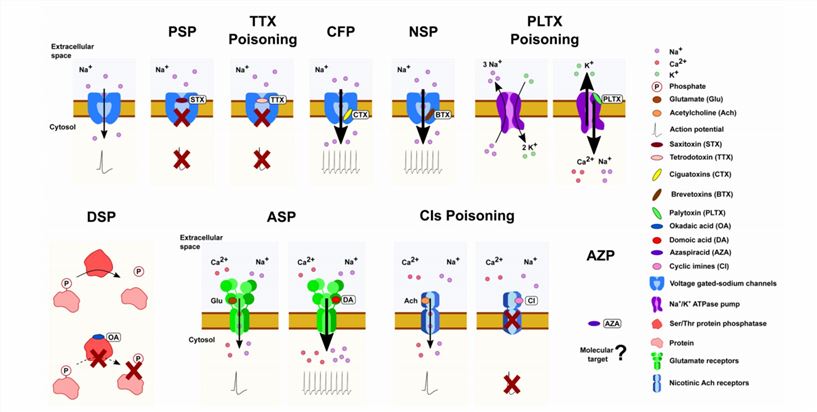 Fig. 1 Mechanisms of action of marine biotoxins. (Louzao MC.; et al. 2022)
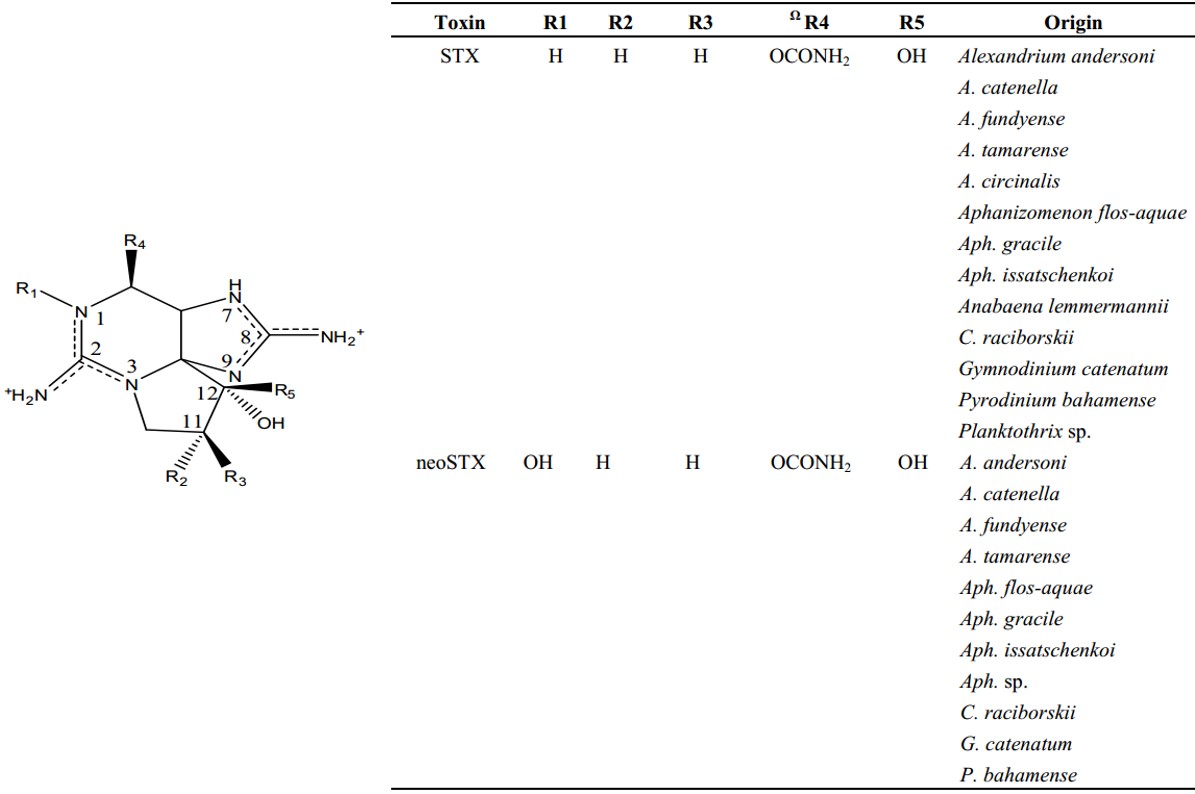
Saxitoxin (STX) is a kind of toxin accumulated in the body after Alexandrium sp. and Gymnodinium sp. filtered by the saxidomus giganteus. It produces paralytic poisoning effect after poisoning, also known as paralytic shellfish toxin, which is a class of amino phthaloid toxin. Saxitoxin acts on sodium ion channels, making nerve conduction difficult, paralyzing the central and peripheral nervous systems, and causing death in humans or animals due to respiratory failure.
Okadaic acid (OA) was first isolated from Halichondria okadai in 1981 and later from H. Melonodocia. OA is a tumor promoter. It also inhibits calcium-activated phospholipid-dependent protein kinases, is an inhibitor of protein phosphatase 1, 2A, and 2B, and can be used as a tool for studying cell regulation.
TTX can be derived from a variety of Marine and even terrestrial animals, and may initially be synthesized by symbiotic microorganisms in venomous organisms. TTX is highly toxic, with an LD50 of 8.7μg/kg. At very low concentrations, TTX can selectively inhibit the passage of Na+ ions and allow the passage of K+ ions. Clinically, it is used to treat various neuromuscular pain, trauma and spasm.
AZP is structurally distinct from other toxins in that it is a nitrogenous polyether containing spirals and ends with carboxyl groups. The main symptoms of poisoning are nausea, vomiting, diarrhea and stomach cramps.
Yessotoxin (YTXs) and Pectenotoxins (PTXs) are collectively called HSP, based on their hepatotoxic effects. PTXs is a class of polyether macrolides isolated from escallop. PTX2 has strong cytotoxic selective effect on human lung, rectum and breast cancer cells.
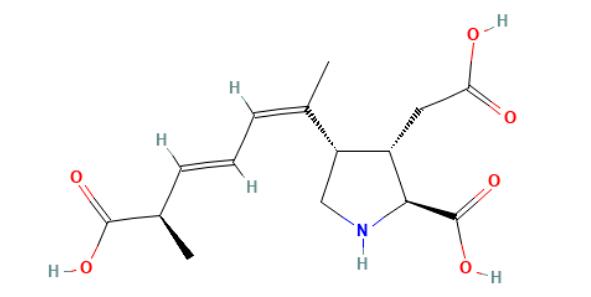
Domoic acid was first isolated from Chondria armata in Japan by the Japanese scholar Daigo et al. in 1958, and can be used as a tool to study neurodegenerative diseases.
Brevetoxins (BTX) are isolated from Ptychodiscus brevis, which produce red tides in the Gulf of Mexico. BTX can cause Na+ influx, which leads to depolarization of muscle and nerve cells.
CTX comes mainly from Gynnothorax jauanicus. CTX is a novel sodium channel agonist with high selectivity on nervous system, digestive system, cardiovascular system and cell membrane.
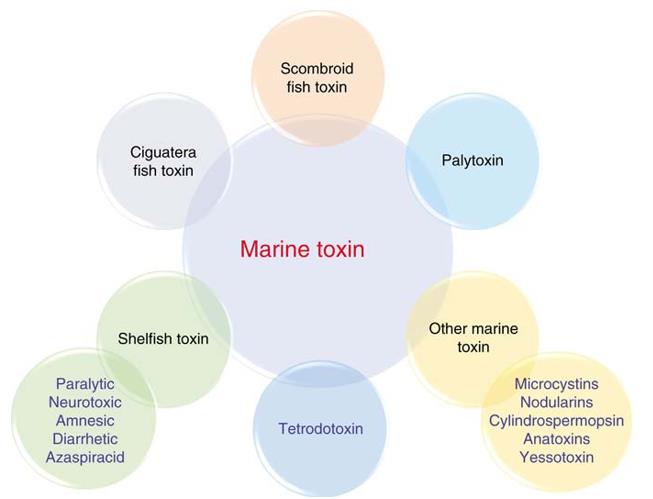 Fig. 2 Classifications of Marine Based-Toxins. (Fatih Özogul.; et al. 2018)
Several countries have legislation regarding the permitted levels of marine biotoxins in shellfish, which must be monitored to prevent intoxication. There are a variety of methods used in these monitoring programs.
MBA is used in many countries to quantify the toxicity of toxins and is the most commonly used test method. The extract of the sample was intraperitoneally injected into mice, and the time of death was recorded. The virulence of the sample was calculated according to the dose-effect curve established by the standard substance, and the results were expressed by mouseunit (MU).
Immunoassays are qualitative and quantitative tests of toxins based on the specific combination of antigens and antibodies, and mainly include ELISA, RIA, EIA and S-PIA, etc. ELISA is commonly used, which is simple in operation and highly sensitive. It is suitable for field monitoring and rapid detection of large quantities of samples, and its sensitivity is higher than that of mouse biological method.
The marine toxins consumed by humans interact specifically with cellular receptors that recognize the toxin's structure. The interaction of the toxin with such receptors can trigger a cascade of cellular effects, which often culminate in the illness symptoms that are observed. A variety of different cytotoxicity analyses have been developed for marine toxins that are based on molecular toxin targets. Some are cell based, others cell free and they use a range of detection strategies including colorimetric, fluorimetric and scintillation methodologies.
Based on the ability of OA to inhibit the activity of PP2A, a substance that can produce fluorescence products after enzyme-catalyzed reaction was selected as the substrate, and the degree of inhibition of enzyme activity was represented according to the rate of product production, and then the concentration of OA was calculated. This method has the advantages of high sensitivity and recovery, but can only reflect the relative toxicity.
References
| Domoic Acid | ||||
| Product Type | Cat. No. | Product Name | Application | |
| Antibody | CABT-JXM16 | Mouse Anti-Domoic acid Monoclonal Antibody, clone 9F1F11 | ELISA | Inquiry |
| Antigen | DAG-WT092 | Domoic Acid [OVA] | ELISA | Inquiry |
| DAGPY1219B | Domoic 6 8Acid 6 8[BSA] | ELISA | Inquiry | |
| DAG-WT093 | Domoic 6 8Acid 6 8[BSA] | ELISA | Inquiry | |
| Okadaic Acid | ||||
| Product Type | Cat. No. | Product Name | Application | |
| Antibody | DMAB8908 | Mouse Anti-Okadaic Acid Mab, clone Dpw8F2 | ELISA | Inquiry |
| DMABT-Z59853 | Mouse Anti-Okadaic Acid Mab, clone 9G3 | IA | Inquiry | |
| DPATB-H81855 | Rabbit Anti-Okadaic Acid Pab | ELISA | Inquiry | |
| Antigen | DAG-WT094 | Okadaic Acid [OVA] | IA | Inquiry |
| DAG-WT095 | Okadaic Acid [BSA] | IA | Inquiry | |
| ELISA Kit | DEIA6822 | Okadaic Acid (DSP) ELISA Kit | Quantitative | Inquiry |
| Microcystin Lr | ||||
| Product Type | Cat. No. | Product Name | Application | |
| Antibody | DMAB3921 | Anti-Microcystin-LR monoclonal antibody, clone C763M | ELISA | Inquiry |
| DMAB3922 | Anti-Microcystin-LR monoclonal antibody, clone C765M | ELISA | Inquiry | |
| HMABPY018 | RHA 6 4 anti-Microcystin 6 8LR monoclonal antibody, clone MC | ELISA, LFIA | Inquiry | |
| DMAB-CS24947 | HiResNb 6 4 Alpaca Anti-Microcystis aeruginosa MC-LR Monoclonal Antibody, clone A5244 6 8 | ELISA | Inquiry | |
| Antigen | DAGA-016 | Microcystin-LR ( 95%) | IA | Inquiry |
| DAGA-016F | Microcystin Lr [FITC] | IA | Inquiry | |
| DAGA-016H | Microcystin Lr [HRP] | IA | Inquiry | |
| DAGA-018K | Microcystin Lr [KLH] | IA | Inquiry | |
| ELISA Kit | DEIA6442 | Microcystins (Adda specific) ELISA | Quantitative | Inquiry |
| DEIA6442L | Microcystins ELISA | Quantitative | Inquiry | |
| DEIA-NS2306-3 | Microcystin ELISA | Quantitative | Inquiry | |
| DEIA3935 | Microcystin-LR ELISA | Quantitative | Inquiry | |
| Saxitoxin | ||||
| Product Type | Cat. No. | Product Name | Application | |
| Antibody | DMABB-JX310 | Mouse Anti-STX/Saxitoxin monoclonal antibody, clone STX | ELISA, IA | Inquiry |
| CABT-CS030 | Rabbit Anti-STX Polyclonal antibody | ELISA | Inquiry | |
| CABT-L6478Z | Mouse Anti-STX monoclonal antibody, Clone TBB1674 | ELISA | Inquiry | |
| Antigen | DAG-WT090 | Saxitoxin [OVA] | IA | Inquiry |
| DAG-WT091 | Saxitoxin [BSA] | IA | Inquiry | |
| DAG-WT1202 | Saxitoxin Dihydrochloride | IA | Inquiry | |
| Tetrodotoxin | ||||
| Product Type | Cat. No. | Product Name | Application | |
| Antibody | DPAB-DC4815 | Anti-Tetrodotoxin polyclonal antibody | ELISA | Inquiry |
| CABT-L3089 | Mouse Anti-Tetrodotoxin monoclonal antibody, clone TTX | ELISA, LFIA | Inquiry | |
| DMABA-0215 | Anti-TTX monoclonal antibody, clone psc214778 [FITC] | IA | Inquiry | |
| Antigen | DAG035K | Tetrodotoxin [KLH] | ELISA, LF | Inquiry |
| DAG-WT1763 | Tetrodotoxin (>98%) | ELISA | Inquiry | |
| DAG3416O | Tetrodotoxin [OVA] | ELISA, LFIA | Inquiry | |
| DAG034S | Tetrodotoxin [HRP] | ELISA, LF | Inquiry | |
| DAG035S | Tetrodotoxin [BSA] | ELISA, LFIA | Inquiry | |
| DAG3416 | Tetrodotoxin [BSA] | ELISA, LFIA | Inquiry | |
| ELISA Kit | DEIANJ48NS | Tetrodotoxin ELISA Kit | Quantitative | Inquiry |
| DEIANJ48 | Tetrodotoxin ELISA Kit | Quantitative | Inquiry | |
Loading ......
