
Inquiry Basket
 Loading ......
Paralytic shellfish toxins (PSTs) are a kind of natural neurotoxic alkaloids, of which saxitoxin (STX) is the most studied PST since 1957. 57 Saxitonxins analogues have been found. PSTs is mainly produced at harmful concentrations during harmful algal bloom events (HAB). In the past few decades, HAB has become more frequent and more intense. PSTs can be widely characterized as hydrophilic or hydrophobic and can be divided into subunits according to substituent side chains such as carbamate, sulfate, hydroxyl, hydroxybenzoate or acetate. Then, each part will produce varying degrees of toxicity.
In marine environments, PSTs are primarily produced by the eukaryotic dinoflagellates, belonging to the genera Alexandrium, Gymnodinium and Pyrodinium. In freshwater environments the PSTs are produced by prokaryotic cyanobacteria belonging to the genera Anabaena, Cylindrospermopsis, Aphanizomenon, Planktothrix and Lyngbya. Cyanobacterial PST produces blooms and pollutes water for drinking and entertainment. In the past, high levels of toxins have been detected in freshwater resources in Australia, Brazil, the United States, Mexico, Germany, and China.
Saxitonxin (STX) is one of the most effective natural neurotoxins known, and ingestion of about 1 mg of toxin in a single serving of contaminated shellfish can be fatal. Saxitonxin is an alkaloid with a molecular formula of C10H17N7O4 (molecular weight = 299). It consists of a tricyclic system of 3-propyl-dihydropurine. STX is a large class of marine natural products containing guanidine, and its high polarity is caused by the existence of two guanidine groups. Since its initial discovery, 57 naturally occurring saxitonxin analogues, collectively referred to as PSTs, have been identified in many organisms. A novel group of PSTs with a hydrophobic side chain were identified within the cyanobacterium Lyngbya wollei and are characterized by the presence of an acetate at C13 (LWTX 1–3,5,6) and a carbinol at C12 (LWTX 2,3,5) in place of a hydrated ketone.
The strangest saxitonxin isolates found so far was isolated from the Panamanian golden frog Atelopus zeteki and named Zetekitoxin AB. Zetekitoxin AB has been proved to be a kind of PST containing unique 1-line 2-oxazolidine ring fused lactam. It has strong binding affinity to brain, heart, and muscle Na+ channels, and its toxicity to each channel is about 580,160 and 63 times higher than that of saxitonxin, respectively. The continuous discovery of new and more diverse saxitonxin analogues is a challenge to the identification and monitoring of PST.
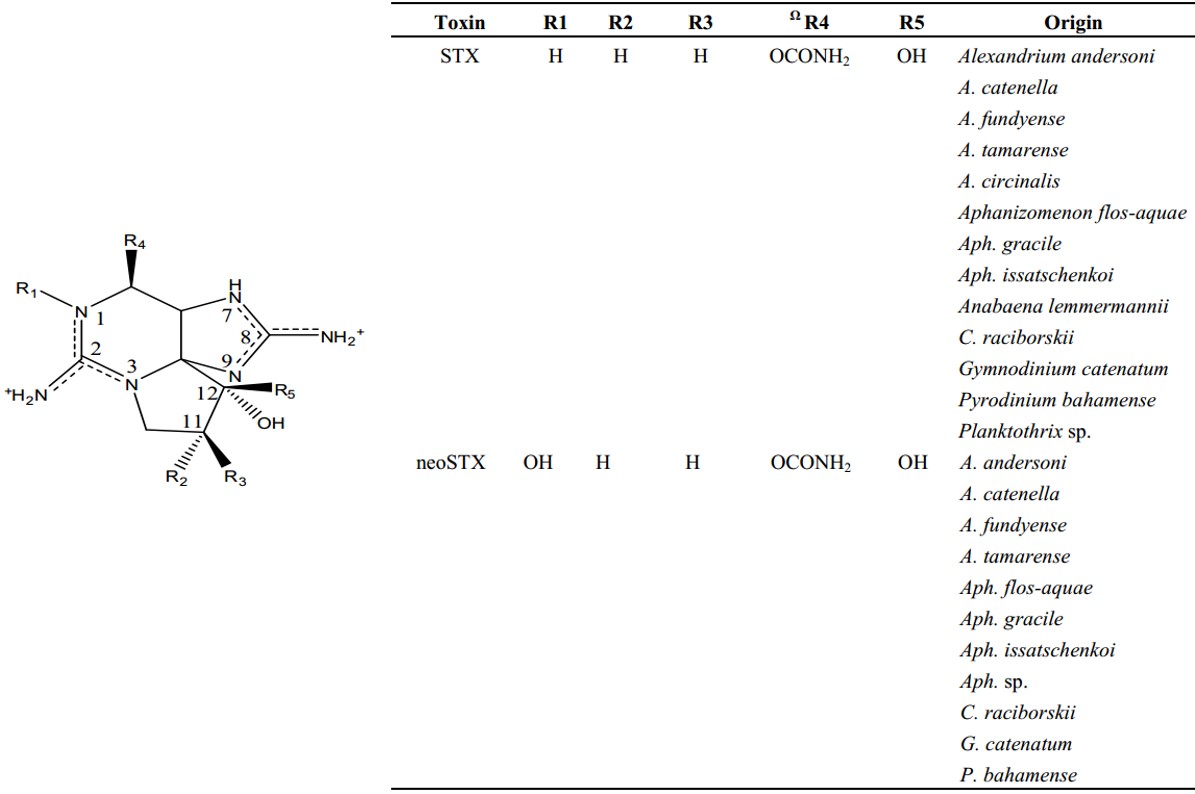 Figure 1. The structure of saxitonxin and its analogues
(Source: Wiese M, et al. 2010)
Saxitoxin and some closely related derivatives are produced by various unicellular dinoflagellates and freshwater cyanobacteria. PST producing dinoflagellates belong to the genera Alexandrium, Gymnodinium and Pyrodinium whilst production has been identified in several cyanobacterial genera including Anabaena, Cylindrospermopsis, Aphanizomenon Planktothrix and Lyngbya. Toxins are transmitted through marine food webs by vectors, which accumulate toxins by feeding on the PST that produces dinoflagellates without causing significant damage to themselves. These include filter-feeding invertebrates such as shellfish, crustaceans, molluscs, and other non-traditional media, such as gastropods and floating fish.
Predatory molluscs can accumulate toxins to lethal levels, especially during the bloom of algae associated with HAB phenomena. From a series of accidental poisoning cases, 0.5-1 mg saxitonxin is considered to be the lethal dose for ordinary people. Shellfish known to accumulate PSP contain up to 20000 mg of toxin per 100g of shellfish. The US Food and Drug Administration believes that shellfish containing more than 80 mg of saxitonxin per 100g of shellfish is unsafe.
PSTs poisoning can lead to a serious and sometimes fatal disease, paralytic shellfish poisoning (PSP). This disease occurs when PST reversibly binds the voltage-gated Na+ channel at an equal molar ratio. This is regulated by the interaction between the positively charged guanidine group of saxitonxin (STX) and the negatively charged carboxyl group at position 1 of the Na+ channel, thus blocking the channel. saxitonxin block sodium channels on nerve cells, thereby inhibiting the transmission of nerve impulses. Subsequently, stimulation of muscles is inhibited, including those associated with breathing, leading to respiratory paralysis and eventual death from respiratory failure. The threat of PSPs is not only a major cause for public health concern, but it is also detrimental to the economy. Outbreaks of PSTs often result in the death of marine life and livestock, the closure of contaminated fisheries, and the ongoing expenditures required to maintain and operate monitoring programs, all of which add up to a significant economic burden around the world.
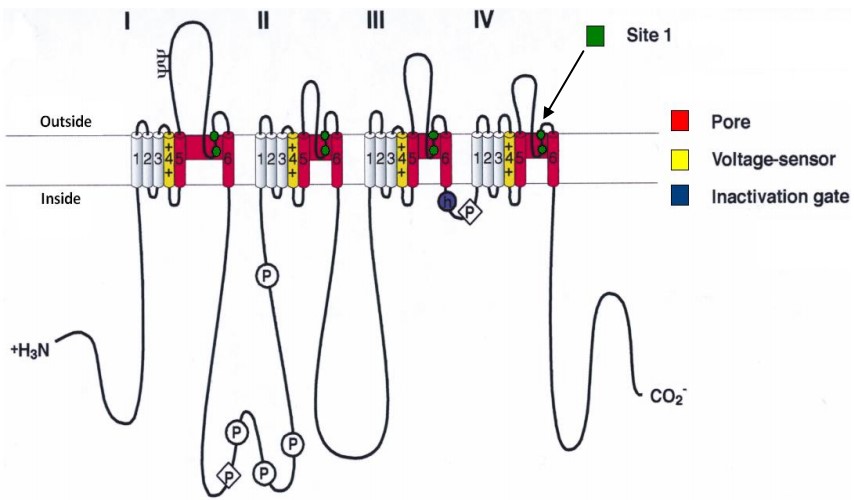 Figure 2. The proposed transmembrane arrangement of the α-subunit of Na+ channels
(Source: Wiese M, et al. 2010)
The most common PST is hydrophilic. In some studies, it has been found that the introduction of hydrophobic side chains into the structure of saxitoxin analogues can reduce the binding to receptors on sodium channels, thus reducing toxicity. saxitoxin is also lipophilic, so it can be adsorbed on fat, perhaps related to bioaccumulation.
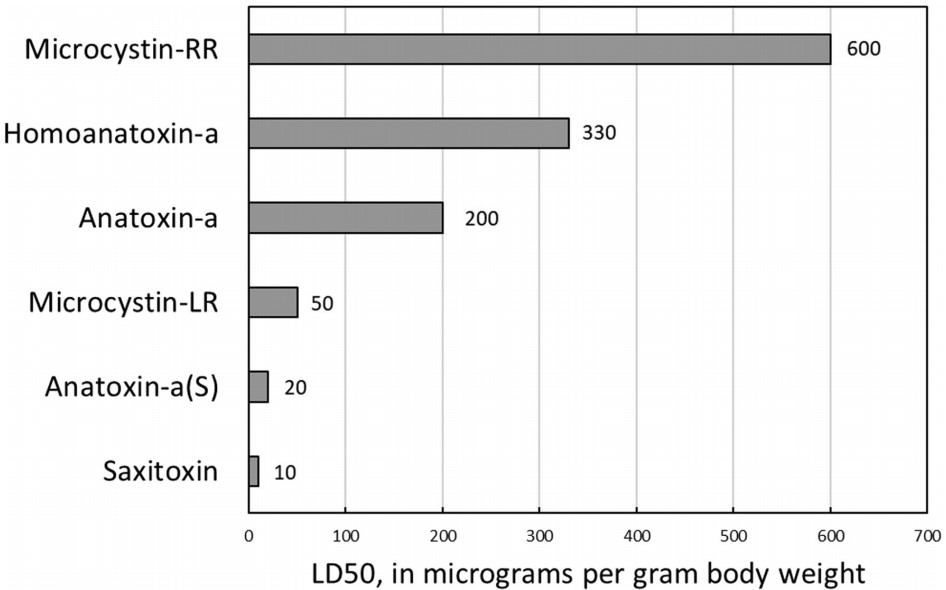 Figure 3. The toxicity of saxitoxin is compared to other toxins
(Source: Christensen VG, et al. 2020)
Currently, the only treatment for PSP is artificial respiration and infusion therapy, with no specialized antidote. The metabolism of PSTs in humans has not been thoroughly studied. However, the investigators found saxitoxin (STX) biotransformation to neosaxitoxin and oxidation of the GTX2+3 isomer to GTX1+4 in postmortem pancreas, bile, urine, brain, and heart samples from patients with PSP. Further studies confirmed their findings of biotransformation in humans. In vitro, when GTX2+3 was incubated with microfractions isolated from healthy human livers, the N1-oxidation reaction of GTX2+3 was confirmed to be converted into the corresponding hydroxylamine analogue GTX1+4. In addition, it was also reported that GTX2+3 was acidified to hydrophilic compounds GTX3-Gluc and GTX2-Gluc through the conjugation of hydroxyl-C12 group in vitro. In humans and other mammals, the oxidation and glucuronation of saxitoxin and GTX2+3 isomers to produce neosaxitoxin or GTX1+4 isomers are considered to be important detoxification pathways for GTX2+3 and other PSTs. After analyzing the serum and urine of patients with PSP, it was found that PSTC1 was significantly increased compared with GTX2, and the difference was that there was an extra sulfate on the carbamoyl side group.
The above studies highlight the need to determine the diversity of PSTs biotransformation. The detoxification pathway can be manipulated to improve the biological clearance strategy, and further characterization of the detoxification of PST in the human body may improve the treatment of PSP.
In recent years, there has been a renewed interest in PSTs as a therapeutic agent or as a drug leader. Biological activity studies and molecular simulations of a series of PSTs may also lead to the design of unnatural analogues with improved pharmaceutical properties. For example, ω-conotoxin MVIIA analogs act by targeting N-type voltage-sensitive calcium channels for the treatment of chronic pain caused by spinal cord injury.
Saxitoxin also has great pharmaceutical potential because it can induce anesthesia by interacting with the first site of the voltage-gated Na+ channel, but its systemic toxicity prevents it from entering clinical trials. The use of a controlled release system in male SD rats has proved that saxitoxin can be used as a slow-release, long-term anesthetic. The liposome preparation of saxitoxin alone or in combination with dexamethasone can block the sciatic nerve of rats for a long time without muscle toxicity, cytotoxicity or neurotoxicity and no related inflammation. Therefore, the liposome preparation of saxitoxin is expected to be used for slow and local targeted release and to prolong the time of anesthesia.
Gene identification of PST biosynthesis pathways from different biological sources improves our molecular understanding of the specific mechanism of PST synthesis. This will eventually promote the study of the pharmaceutical potential of PST as a sodium channel blocker by producing new analogues or increasing the availability of analogues that are otherwise biosynthesized at low concentrations. Bioengineering can also further enhance the structural diversity of bioactive small molecules by using enzymes for chemical synthesis in vitro and combinatorial biosynthesis in vivo.
References
| Target | Cat. No. | Product Name | Host | Isotype | Application | |
| STX | CABT-L6478Z | Mouse Anti-STX monoclonal antibody, Clone TBB1674 | Mouse | IgG2a | ELISA, SPR | Inquiry |
| CABT-CS030 | Rabbit Anti-STX Polyclonal antibody | Rabbit | IgG | ELISA | Inquiry |
| Target | Cat. No. | Product Name | Expression System | Tag/Conjugate | Application | |
| STX | DAG-WT1202 | Saxitoxin Dihydrochloride (≥ 97%) | N/A | N/A | Standard | Inquiry |
| DAG-WT090 | Saxitoxin [OVA] | N/A | OVA | N/A | Inquiry |
Loading ......
